
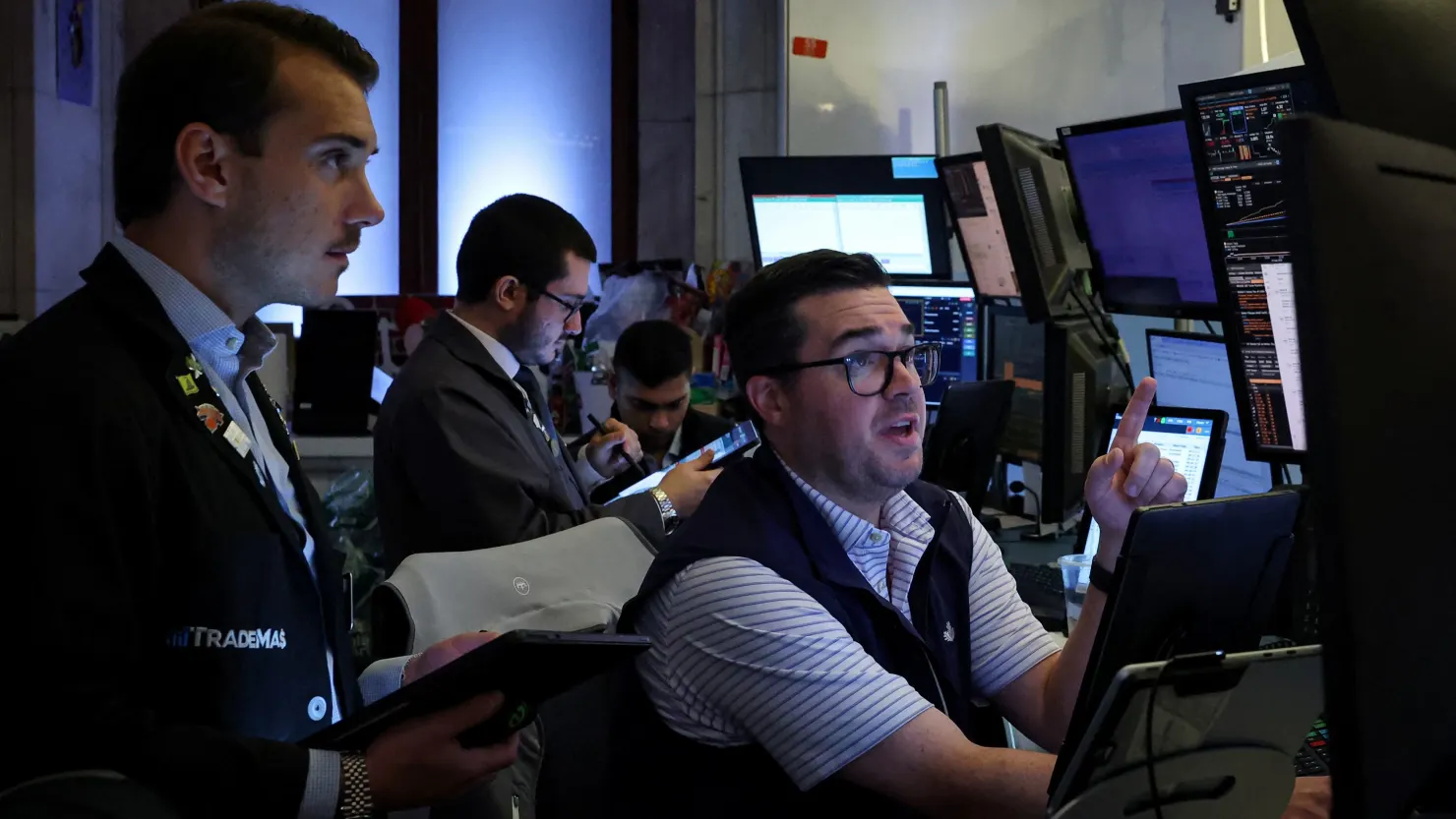
Nasdaq-100 futures climb 3%, but Asian markets remain under pressure as investors question whether the AI-driven sell-off has run its course.
MARKET INSIDER — U.S. stock futures rallied Monday, signaling a potential rebound after a bruising week pushed all three major Wall Street indexes into correction territory. S&P 500 futures rose 2.16%, Nasdaq-100 futures gained 3.03%, and Dow Jones Industrial Average futures added 745 points, or 1.55%. The advance came as investors returned to AI-linked shares following widespread selling, although Asian markets mostly declined. With Thanksgiving shortening the U.S. trading week, attention is turning to whether the rebound can develop into a sustained recovery or merely interrupt the recent downturn, according to freekonomist.com
Key Highlights
- Nasdaq-100 futures led the rebound after all three major U.S. indexes finished Friday in correction territory.
- South Korea’s Kospi fell 3.31%, while Australian stocks extended their losing streak to eight sessions.
- U.S. stock markets will close Thursday for Thanksgiving and end Friday’s regular session at 1 p.m. Eastern Time.
Wall Street rebounds after a punishing week
Monday’s futures gains followed the worst weekly declines for the Dow and Nasdaq Composite in more than six years. The S&P 500 recorded its largest weekly loss since April 2025.
By Friday’s close, all three benchmarks were in correction territory, generally defined as a decline of at least 10% from a recent peak. The Nasdaq Composite also turned negative for the year.
The Nasdaq-100 had crossed the 20% bear-market threshold when measured against its intraday peak. However, its closing decline from the October 6 closing high remained just short of that level.
That distinction matters: an intraday breach and a closing confirmation describe different measures of the market’s retreat.
AI investment concerns remain unresolved
The sell-off reflected persistent doubts about the sustainability of the AI investment boom, including whether spending on computing infrastructure will generate sufficient returns.
Anthropic’s record public-market debut Thursday failed to reverse the broader deterioration in sentiment. Investors continued to reassess technology valuations and the financing demands of the industry’s expansion.
Monday’s stronger Nasdaq-100 futures suggest renewed appetite for technology exposure. They do not, by themselves, establish that concerns about earnings, capital spending or valuations have been resolved.
For the recovery to gain credibility, investors will be looking for buying that persists beyond the opening session and extends across a wider range of stocks.
Asian markets continue to struggle
The rebound in U.S. futures contrasted with continued weakness across much of Asia, where technology-related selling extended from last week.
South Korea’s Kospi dropped 3.31% to close at 4,708.54. Australia’s S&P/ASX 200 declined 0.26% to 8,570.6, marking its eighth consecutive losing session.
Mainland China’s CSI 300 finished essentially unchanged at 3,958.29. Hong Kong’s Hang Seng Index was down 0.15% in its final hour of trading, while Japanese markets were closed for a public holiday.
The divergence highlights the uneven nature of the attempted recovery. A stronger indication for Wall Street’s opening had not yet translated into broad buying across Asian equities.
Investors look for evidence of a lasting bottom
Drew Pettit, chief investment strategist at Roundhill, told CNBC on Friday that indiscriminate selling beyond technology could indicate the decline was approaching its end.
Nevertheless, he said investors expecting a recovery still needed catalysts to demonstrate that the longer-term earnings outlook remained intact.
His assessment captures the central question facing markets: whether last week’s losses reflected a sharp adjustment in positioning and valuations, or the beginning of a more substantial reassessment of corporate prospects.
A strong futures session offers an initial improvement in sentiment. Sustained gains and confidence in earnings would provide firmer evidence of stabilization.
Thanksgiving shortens the trading week
U.S. stock markets will be closed Thursday, November 26, for Thanksgiving. Friday’s regular equity session will finish early at 1 p.m. Eastern Time, according to exchange calendars.
The shorter schedule leaves fewer sessions for investors to assess whether Monday’s rebound can hold. Technology shares remain central to that assessment, particularly whether renewed buying can withstand the concerns that drove last week’s retreat.
