
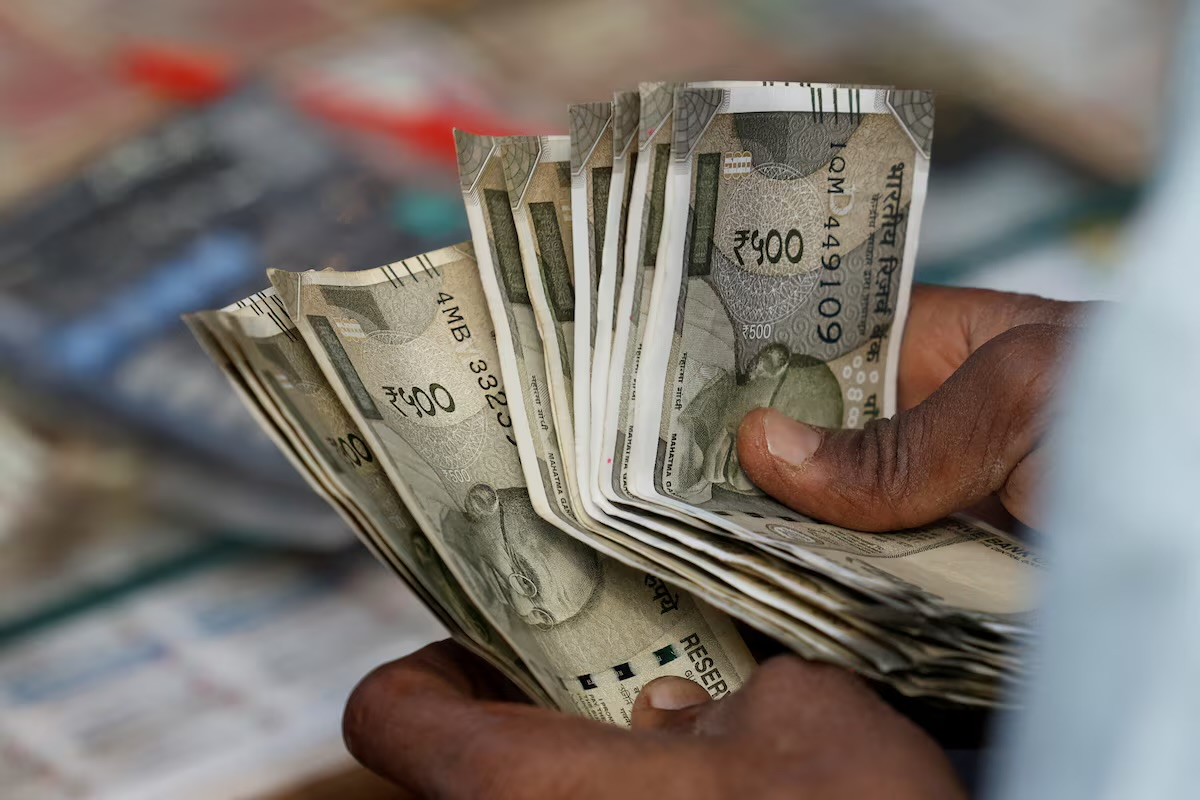
Foreign outflows, rising oil prices and policy dilemmas push India’s currency toward historic lows
MARKET INSIDER – India’s currency is under mounting pressure from a convergence of global shocks that could ripple far beyond its borders. As the U.S.-Iran war drives oil prices higher and capital flees emerging markets, the Indian rupee is on track for its worst annual performance in more than a decade—raising concerns across global FX, energy, and equity markets.
Despite India’s robust economic growth, the currency’s slide highlights a deeper shift in investor sentiment toward emerging economies. With foreign funds pulling back, valuations stretched, and geopolitical risk intensifying, the rupee’s weakness is becoming a proxy for broader stress across Asia’s financial system.
The rupee has fallen roughly 11% over the past fiscal year to near record lows against the U.S. dollar, with forecasts from major institutions suggesting further downside. Analysts warn the currency could weaken to 98 per dollar in a base-case scenario—and as far as 110 if Middle East tensions persist through 2026. The sell-off reflects a toxic mix of declining foreign inflows, limited exposure to high-growth AI sectors, and the impact of U.S. trade tariffs, all of which have dulled India’s appeal to global investors.
At the center of the storm is energy. As one of the world’s largest oil importers, India is acutely vulnerable to price spikes. The conflict has triggered an oil shock that is widening the country’s current account deficit and accelerating capital outflows from both equity and bond markets. According to projections from J.P. Morgan, the deficit could expand sharply if oil sustains above $80–$100 per barrel, compounding downward pressure on the currency.
Policymakers now face a difficult balancing act reminiscent of the 2013 “taper tantrum” crisis. The government has already cut fuel taxes to contain inflation, but the move has strained fiscal revenues and pushed bond yields to multi-year highs. Meanwhile, the Reserve Bank of India has intervened in currency markets and adjusted bank positions, stabilizing short-term volatility at the cost of drawing down foreign exchange reserves.
The core dilemma is structural: shielding consumers from higher fuel prices risks stoking inflation, while passing costs through could slow growth. India’s chief economic advisor has warned that delaying price adjustments may ultimately force tighter monetary policy—raising borrowing costs across the economy and further dampening investment sentiment.
Even India’s corporate sector is not immune. Leadership turmoil at HDFC Bank—the country’s largest private lender—has erased billions in market value, underscoring how governance risks can amplify macroeconomic fragility during periods of external stress.
For global markets, the rupee’s trajectory is more than a domestic story. It signals how quickly capital can rotate away from emerging markets when geopolitical risk, energy shocks, and valuation concerns collide. If pressures intensify, India may be forced to revive unconventional tools—from attracting non-resident deposits to incentivizing dollar inflows—echoing crisis-era playbooks.
The bigger question for investors is whether this is a temporary dislocation or the beginning of a broader repricing of emerging market risk. If oil remains elevated and geopolitical tensions persist, the rupee’s slide may not just reflect India’s vulnerabilities—but a deeper reset in how global capital values growth, stability, and resilience in an increasingly fragmented world.
