
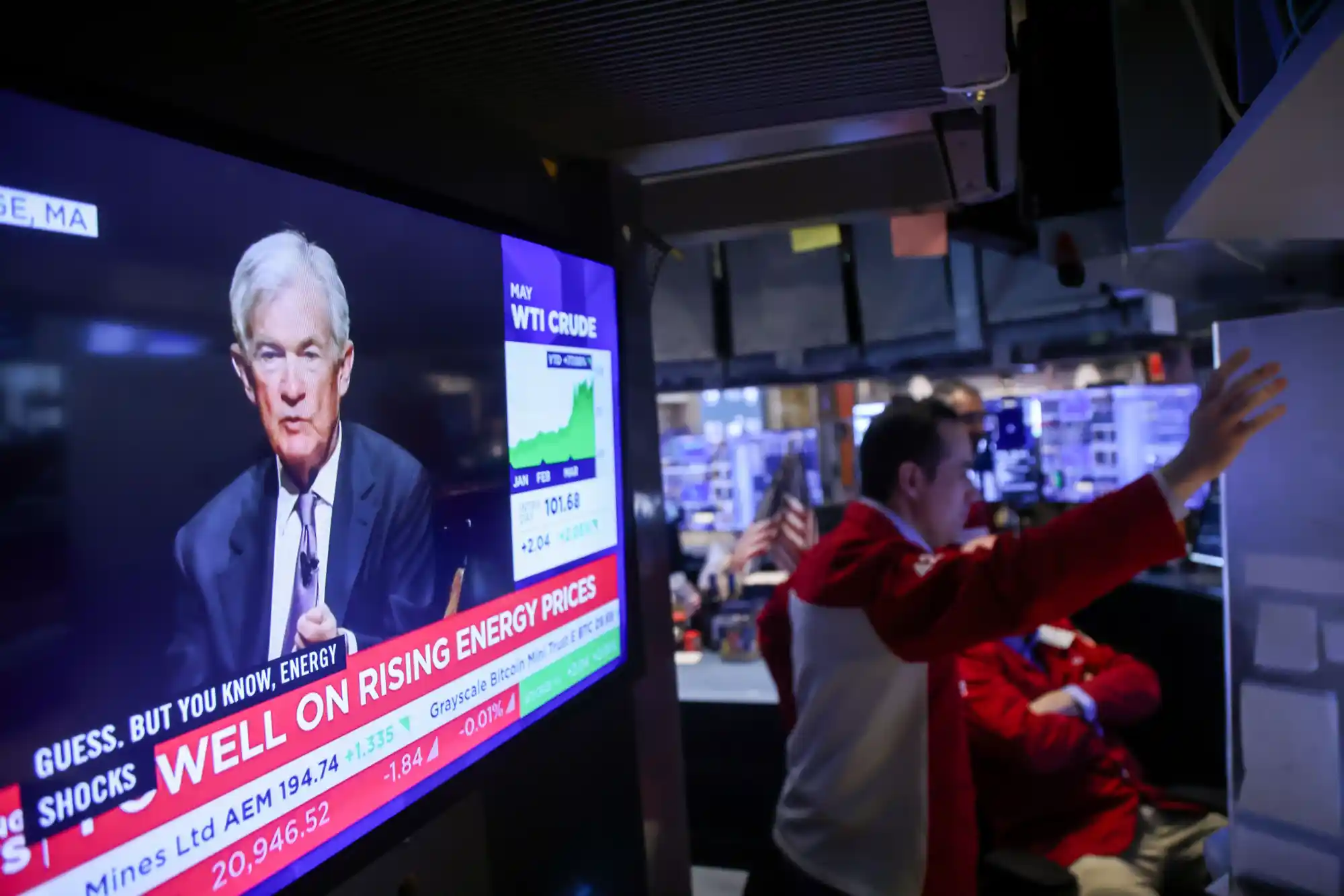
Power struggle over the Federal Reserve rattles markets and raises global concerns over central bank independence
MARKET INSIDER – The world’s most influential central bank is once again at the center of political turbulence, as Donald Trump openly threatens to remove Jerome Powell if he refuses to step down voluntarily. The remarks, delivered in a televised interview, signal a deepening clash that could reverberate far beyond Washington—impacting global markets, interest rate expectations, and investor confidence in U.S. institutional stability.
At stake is not just leadership at the Federal Reserve, but the credibility of central bank independence itself—a pillar that underpins financial systems from New York to Singapore. For global investors, the episode raises a critical question: can monetary policy remain insulated from political pressure in an increasingly polarized era?
Trump’s latest comments come as Powell’s term as Fed chair approaches its May 15 expiration, with former Fed governor Kevin Warsh nominated as his successor. However, Powell still has two years remaining in his role as a Fed governor, setting up a potential constitutional and institutional showdown if he chooses to stay. Trump has made clear he is prepared to act, stating bluntly that he would “have to fire him” if Powell does not step aside.
The situation is further complicated by an ongoing investigation into the Federal Reserve’s headquarters renovation project, which Trump has labeled as potentially “corrupt” or “incompetent.” The probe has already triggered legal friction, with Jeanine Pirro attempting—unsuccessfully so far—to subpoena Powell. Meanwhile, Republican Senator Thom Tillis has moved to block Warsh’s confirmation until the investigation concludes, effectively stalling the transition.
Beyond the political theater lies a more consequential economic narrative. Trump has reiterated his demand for lower interest rates, expressing confidence that Warsh would pursue a more accommodative policy stance. Such pressure risks undermining the Fed’s data-driven approach at a time when inflation dynamics, geopolitical tensions, and global capital flows remain highly sensitive to U.S. monetary signals.
This is not an isolated episode. Trump has previously attempted to remove Fed officials, including efforts targeting Governor Lisa Cook, a case now awaiting review by the U.S. Supreme Court. The pattern suggests a broader strategy to reshape the Fed’s leadership and policy direction—one that could redefine how markets interpret U.S. monetary governance.
For global investors, the implications are immediate. Any perceived erosion of Federal Reserve independence could trigger volatility across equities, bonds, and currencies, particularly in emerging markets that rely heavily on U.S. rate stability. At a time when the S&P 500 and global risk assets remain sensitive to rate signals, even the perception of political interference can shift trillions in capital flows.
The deeper question now is whether this confrontation marks a temporary রাজনৈতিক standoff—or the beginning of a structural shift in how the world’s most powerful central bank operates. If the latter proves true, the real risk may not be Powell’s tenure, but the precedent it sets for the future of monetary policy worldwide.
