
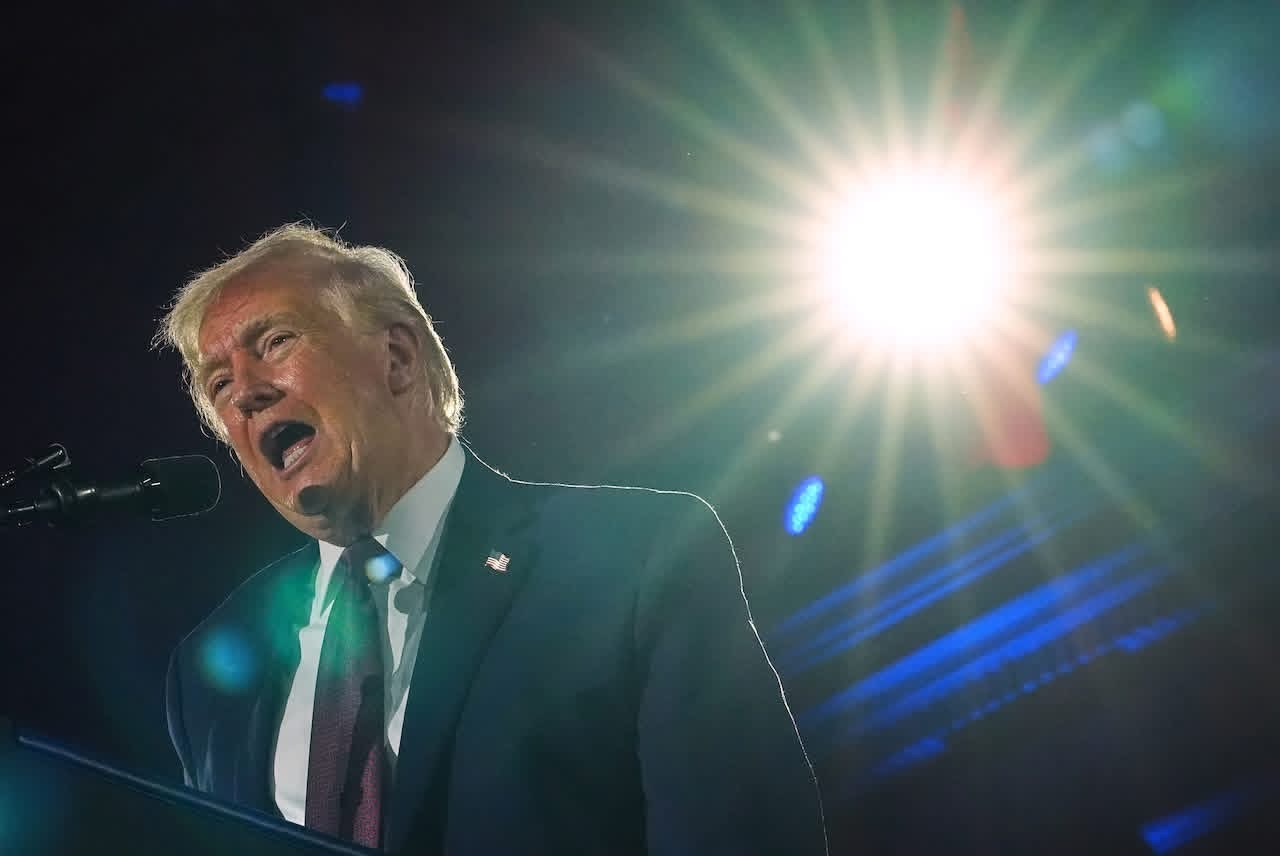
Explosive Truth Social post signals potential regime shift and global shockwaves
A single message from Donald Trump has injected fresh uncertainty into an already volatile geopolitical landscape, warning that “a whole civilization will die tonight” while hinting at a possible regime change in Iran. For global markets and policymakers, the implication is immediate: this is no longer just rhetoric—it signals a potential inflection point with far-reaching consequences for energy flows, regional stability, and investor sentiment worldwide.
The statement, posted on Truth Social, frames the moment as historic, suggesting the end of what Trump describes as “47 years of extortion, corruption, and death.” While offering no operational details, the language strongly implies imminent escalation tied to regime transformation—an outcome that would reshape the political architecture of the Middle East and disrupt global risk calculations overnight.
Markets have long treated Iran as a critical variable in oil supply dynamics, particularly due to its strategic position near the Strait of Hormuz, a chokepoint for roughly one-fifth of global crude shipments. Any sudden destabilization—whether through military action, internal upheaval, or leadership vacuum—could trigger sharp spikes in oil prices, disrupt shipping lanes, and amplify inflationary pressures across both developed and emerging economies. For institutional investors, the scenario introduces asymmetric risk: downside shocks to equities, upside volatility in commodities, and renewed demand for safe-haven assets such as gold and U.S. Treasuries.
Trump’s messaging also underscores a broader geopolitical narrative increasingly relevant to global capital: the re-emergence of regime change as a policy signal. Even without immediate confirmation of action, such rhetoric alone can shift expectations among sovereign funds, multinational corporations, and energy traders, prompting rapid portfolio rebalancing and hedging activity. Historically, similar inflection points—from the Iraq War to the Arab Spring—have triggered cascading effects far beyond their geographic origins.
Whether this moment marks a genuine turning point or a high-stakes escalation in political signaling remains uncertain. But one thing is clear: the global system is once again being tested by the intersection of politics, energy security, and market psychology. If Trump’s prediction materializes, the world may not just witness a regional transformation—it could redefine the next decade of geopolitical risk pricing.
