
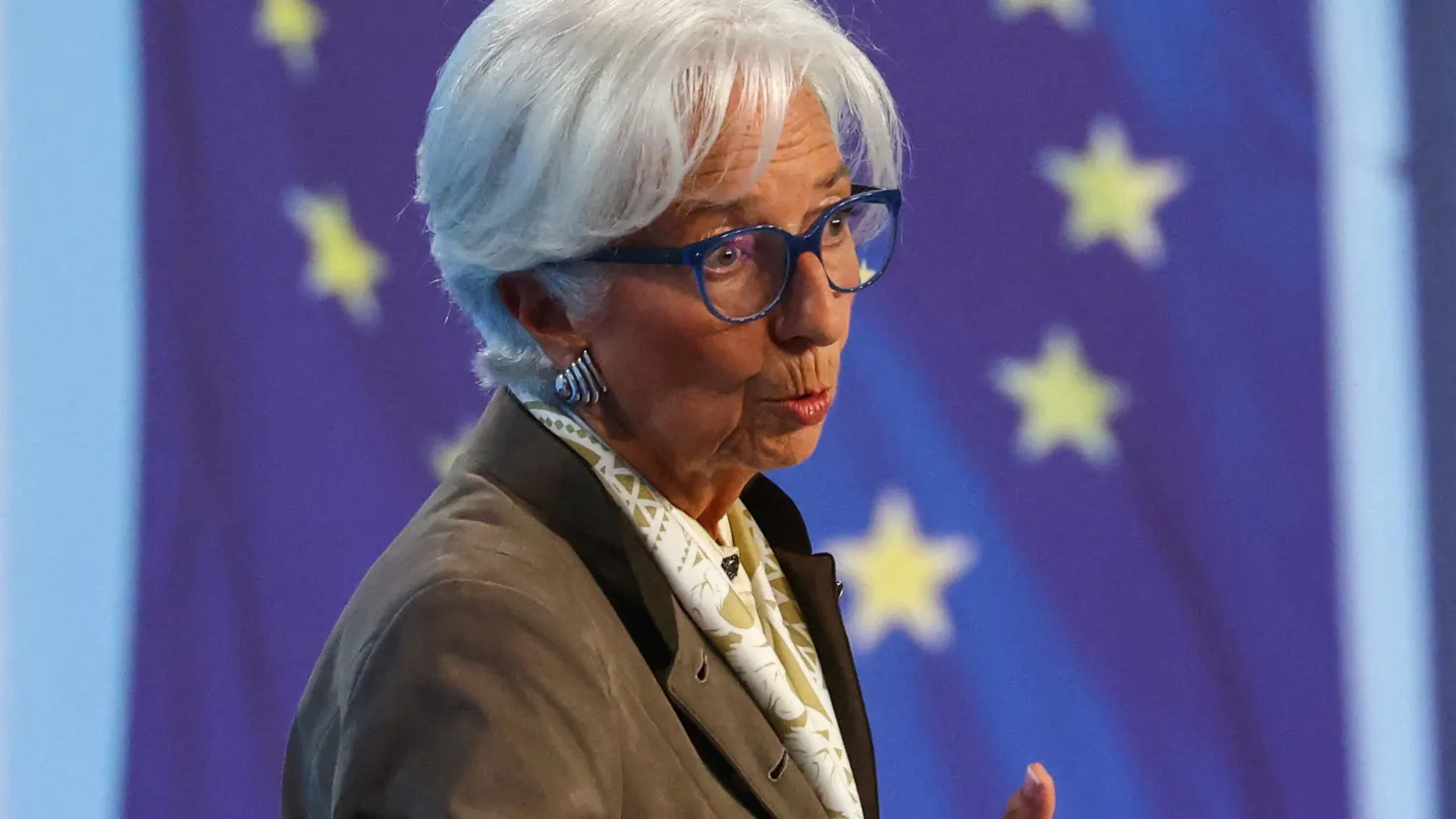
President signals measured policy adjustment possible to protect credibility; 2026 inflation forecast raised to 2.6%
MARKET INSIDER – European Central Bank President Christine Lagarde said Wednesday, March 25, 2026, that policymakers are prepared to raise interest rates even if the expected surge in euro zone inflation from the Iran war turns out to be short-lived. Speaking at “The ECB and Its Watchers” conference in Frankfurt, Lagarde stressed that a “large, though not-too-persistent” overshoot of the 2% target could still warrant a “measured adjustment of policy.”
“If the shock gives rise to a large, though not-too-persistent, overshoot of our inflation target, some measured adjustment of policy could be warranted,” she said. “To leave such an overshoot entirely unaddressed could pose a communication risk: the public may find it difficult to understand a reaction function that does not react.”
The remarks come after the ECB was forced to revise its inflation projections sharply higher due to soaring energy prices triggered by the U.S.-Israel war with Iran and Tehran’s near-total blockade of the Strait of Hormuz. Last week, the ECB kept its key deposit rate at 2% but lifted its baseline forecast for headline inflation to 2.6% in 2026 (from near 2% previously), 2% in 2027, and 2.1% in 2028. In more adverse scenarios, inflation could peak at 4% this year or even above 6% early next year if energy shocks prove stronger and more persistent.
Lagarde made clear the ECB will not automatically look through the shock: “If we expect inflation to deviate significantly and persistently from target, the response must be appropriately forceful or persistent.” She added that the central bank will closely monitor second-round effects, particularly companies’ price-hike expectations and wages for new hires, as highlighted separately by chief economist Philip Lane.
The war’s impact is already visible in the real economy. S&P Global’s flash purchasing managers’ index showed private-sector output in the euro zone’s manufacturing and services sectors sinking to a 10-month low in March, reflecting damaged business confidence and activity.
For investors and policymakers across Europe, Lagarde’s message is sobering: the ECB is willing to act preemptively to safeguard its credibility even if the energy-driven inflation impulse fades relatively quickly. This hawkish tilt—coming amid already elevated bond yields and a fragile growth outlook—raises the bar for any near-term monetary easing and keeps pressure on borrowing costs.
The contrarian insight: while markets have begun pricing in possible rate hikes, a swift diplomatic breakthrough or partial reopening of Hormuz could still cap the inflation overshoot and limit the need for tightening. Until then, Lagarde’s readiness to hike—even for a “not-too-persistent” shock—signals that the ECB will prioritize anchoring inflation expectations over short-term growth concerns. The coming months will test whether this disciplined stance prevents second-round effects or ends up weighing more heavily on an already slowing euro zone economy.
