
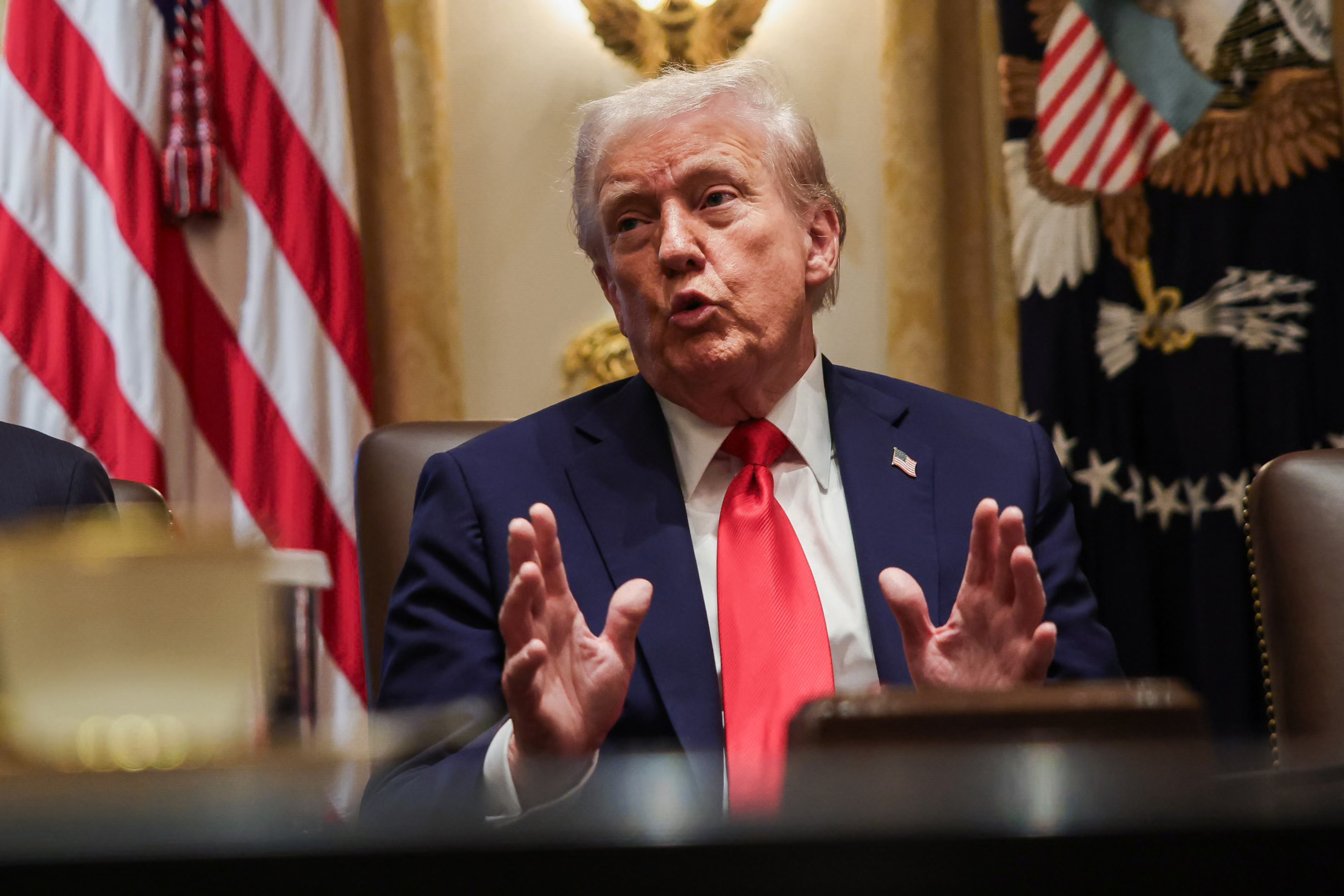
WASHINGTON D.C.—In a move that offered temporary relief to volatile global markets, U.S. President Donald Trump has softened his stance on a proposed 100% tariff on Chinese imports, admitting the unprecedented levy is “not sustainable.” The comments, made in a televised interview, helped stem Wall Street’s early losses, but the underlying tensions in the US-China trade relationship remain high, posing a sustained risk to international investors.
Tariff Threat Blunted, But Not Withdrawn
President Trump’s administration had unveiled the threat of a 100% additional tariff on U.S.-bound Chinese exports last week, along with new export controls on “critical software,” set to take effect on November 1. This aggressive action was a direct response to Beijing’s dramatic expansion of export controls on rare earth elements, materials essential to modern technology and defense manufacturing, a market China overwhelmingly dominates.
“It’s not sustainable, but that’s what the number is,” Trump said of the 100% tariff, a figure he claimed Beijing “forced me to do.”
Crucially, the President confirmed that a previously scheduled meeting with Chinese President Xi Jinping in South Korea in two weeks is still on, a high-stakes encounter he had cast doubt on just days earlier. The affirmation of dialogue and a general “softening in tone” was enough to reassure major U.S. stock indexes on Friday.
High-Level Dialogue and Market Impact
The news of the upcoming meeting, combined with Treasury Secretary Scott Bessent’s announcement that he would speak with his Chinese counterpart, Vice Premier He Lifeng, to discuss ongoing negotiations, has initiated a temporary de-escalation.5
Secretary Bessent expressed optimism, stating, “I think that things have de-escalated… I am confident that President Trump, because of his relationship with President Xi, will be able to get things back on a good course.”
However, this diplomatic language is juxtaposed with persistent conflict. Bessent simultaneously urged global financial bodies like the IMF and World Bank to take a tougher stance on China’s state-driven economic policies, which Washington argues are leading to “excess manufacturing capacity” and a global flood of cheap goods.
WTO Warns of Global Decoupling Risk
For international investors, the underlying risk of a prolonged fracture between the world’s two largest economies remains the most significant concern. World Trade Organization (WTO) Director-General Ngozi Okonjo-Iweala has issued a stark warning, urging both Washington and Beijing to de-escalate.
She cautioned that a “decoupling” between the U.S. and China could reduce global economic output by as much as 7% over the longer term. The WTO is “extremely concerned” about the latest spike in trade tensions and is actively pushing for more dialogue.
China’s Commerce Ministry fired back, accusing the U.S. of undermining the rules-based multilateral trading system and vowing to intensify its use of dispute settlement actions at the WTO.
Outlook for Investors
The trade war’s pivot point remains the looming meeting between Presidents Trump and Xi. While the U.S. President’s comments suggest a full-scale, non-sustainable tariff may be used more as a negotiating leverage than an implementation certainty, the deep ideological gulf on issues like rare earth supply chains, intellectual property, and state industrial subsidies persists.
International investors should remain braced for continued volatility. The market’s reaction confirms that any signal of dialogue and de-escalation will be met with a positive surge, while any renewed aggressive action could trigger sharp, immediate sell-offs. The coming weeks, leading up to and following the Trump-Xi meeting, will be critical in determining the trajectory of global trade and supply chain stability.
