
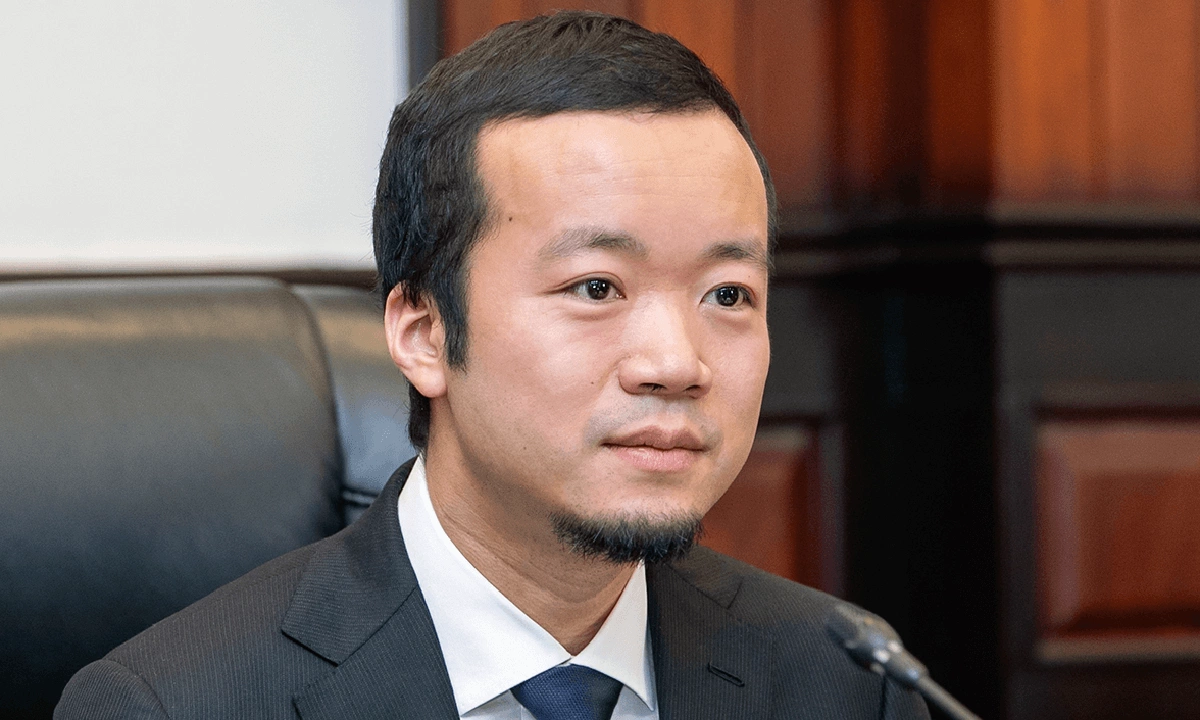
Phnom Penh – Cambodian-Chinese businessman Chen Zhi and his conglomerate, Prince Holding Group, have been thrust into the international spotlight following a massive crackdown by the U.S. and U.K. on what authorities describe as an “industrial-scale online scam empire.”
On October 14, the U.S. and U.K. governments announced a historic financial crime operation, seizing over $14 billion in Bitcoin and filing charges and sanctions against Chen Zhi and the Cambodia-based Prince Holding Group he founded. Washington and London allege the entrepreneur and his group operate a “transnational criminal enterprise” utilizing online investment fraud targeting U.S. citizens and victims worldwide.
The following day, Cambodia’s Ministry of Interior asserted that Prince Group “meets all legal requirements” to operate in the country but pledged cooperation with international investigations if clear evidence is provided.
The Man Behind the Conglomerate
Chen Zhi, born in Fujian, China, in 1987, holds both Chinese and Cambodian nationalities, along with passports from Vanuatu and Cyprus, according to international sanction records from the U.S. Treasury Department’s Office of Foreign Assets Control (OFAC). Some media reports, however, suggest he holds dual U.K.-Cambodian citizenship.
After starting with a modest internet café in Fuzhou, Chen ventured into the Cambodian real estate market in 2011, establishing his company in Phnom Penh. He was granted Cambodian citizenship in 2014 and founded Prince Holding Group a year later.
The Group grew rapidly, playing a significant role in transforming the port city of Sihanoukville into a casino hub. It holds a network of apartments and hotels, expanding into condominiums, supermarkets, commercial centers, and obtaining banking and financial licenses. Chen’s image is often associated with positive community contributions in Cambodia, including a charitable foundation and scholarship programs, with the Prince Group website describing him as a “pioneering entrepreneur” committed to international standards.
The Alleged ‘Dark Side’ of the Empire
Federal prosecutors in New York have charged Chen and his co-conspirators with wire fraud and money laundering. U.S. officials allege Chen directed the construction of at least ten “scam centers” in Cambodia, with the criminal network using cryptocurrency as the backbone for its global fraud and money laundering operations.
The scheme allegedly involved subordinates of Chen approaching victims via messaging apps or social media, posing as trustworthy investment experts or acquaintances. Victims were convinced to transfer cryptocurrency into “high-yield investment” wallets, but the funds were stolen, laundered through a series of anonymous accounts, and diverted for the organization’s benefit.
To sustain this massive operation, Prince Holding Group is accused of buying, selling, and coercing laborers into working at closed-off compounds in Cambodia. These facilities—described as having crowded housing, high walls, and barbed wire—reportedly held “employees” under surveillance, forcing them to execute online scams.
Chen is accused of “directly managing and keeping detailed records” for each camp, from profit ledgers to catalogs of scam tactics. Prosecutors also allege he instructed subordinates to use violence against dissenters, once messaging an order to “hit them but don’t hit them to death.”
The criminal groups allegedly used “phone farms” with thousands of devices and social media accounts to conduct the fraud. Two detected facilities housed 1,250 phones controlling approximately 76,000 accounts. Internal guidance advised employees not to use “overly attractive profile pictures” to make their online personas seem more authentic.
Assistant Attorney General for National Security John Eisenberg called the operation “a criminal enterprise built on human suffering,” highlighting the Group’s alleged involvement in human trafficking, imprisonment in “prison-like conditions,” and forced online scamming.
Global Money Laundering Network
The U.S. Treasury Department states Chen constructed a network of over 100 shell companies in more than 30 countries to legitimize illicit profits. Laundered money was allegedly commingled with legitimate funds in the Cambodian economy, with many transactions routed through companies registered in the British Virgin Islands before being invested in real estate and art in London and New York.
U.S. officials portray Prince Group as an entity operating with a dual nature: a legitimate major investor in infrastructure projects and a hub for global money laundering. They suggest Chen’s use of social sponsorship and scholarship programs was a method to polish his image and conceal the illicit money flow.
“The public promotion of the Prince Group was a smokescreen to conceal a litany of transnational crimes, including the construction, operation, and management of scam centers,” the U.S. Treasury stated.
The Group has previously refuted investigative reports, asserting its leadership was “impersonated by criminal elements.” As of October 16, the Group’s website had not commented on the U.S. and U.K. accusations. If convicted in the U.S. court, Chen could face a maximum sentence of 40 years in prison. The whereabouts of Chen have not been disclosed by U.S. or U.K. authorities, and the indictment notes the “defendant is not currently in custody.”
