
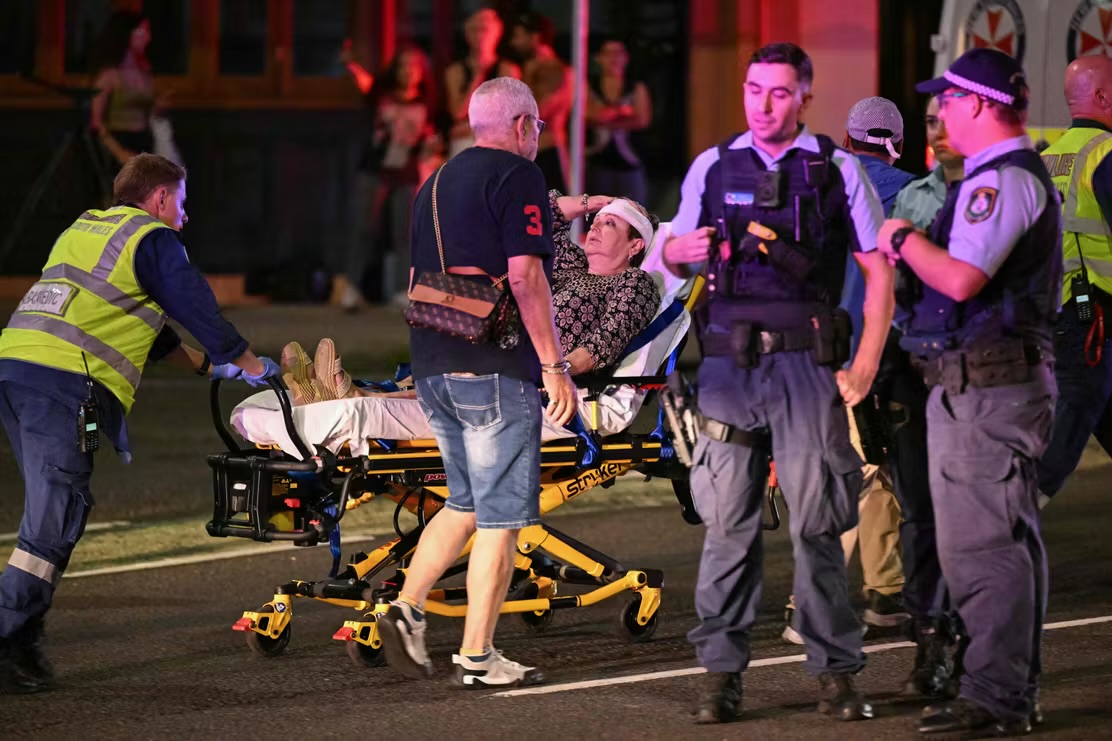
Father-and-son suspects, a targeted antisemitic attack, and renewed scrutiny of firearms regulation shake Australia
MARKET INSIDER – Australia is grappling with the deadliest terrorist attack on its soil in years after a mass shooting at Sydney’s Bondi Beach left at least 15 people dead and 38 others hospitalized, authorities confirmed. The attack, which targeted Jewish Australians celebrating the first night of Hanukkah, has sent shockwaves through the nation and reignited urgent debates over extremism, intelligence failures, and gun control—despite Australia already having some of the world’s strictest firearms laws.
Police say the shooting was deliberately targeted at the Jewish community, marking it as an act of terrorism. Among the victims was a Holocaust survivor, who died while shielding his wife from gunfire—a detail that has come to symbolize the brutality and historical weight of the attack. Prime Minister Anthony Albanese described the incident as an assault “on every Australian,” while Jewish leaders called it one of the darkest moments for the community in decades.
Authorities have identified the suspects as a father and son. The 50-year-old father was shot and killed by police at the scene, while his 24-year-old son remains in critical but stable condition and is expected to be charged. Officials confirmed the younger suspect was Australian-born and had previously come to the attention of authorities in 2019, though assessments at the time found no evidence of imminent violent intent. The father, who migrated to Australia in 1998 and later became a permanent resident, held a recreational hunting license and was a member of a gun club—legally entitled to own firearms under New South Wales law.
Police have since seized six weapons linked to the suspects and raided a Sydney property as part of the investigation. Commissioner Mal Lanyon emphasized that the father met all eligibility criteria for firearm ownership, a revelation that has intensified political pressure on state authorities. NSW Premier Chris Minns confirmed that the government is now reviewing firearms legislation, signaling potential reforms even within Australia’s already tightly regulated system.
The Bondi Beach attack is more than a single act of terror—it is a profound stress test of Australia’s security architecture and social cohesion. The fact that a legally licensed gun owner could carry out such an atrocity will force policymakers to confront uncomfortable questions about radicalization pathways, intelligence oversight, and whether existing gun laws are sufficient in an era of lone-actor and family-based extremism. For Australia, the coming weeks will determine whether this tragedy leads only to mourning—or to structural change aimed at preventing the next one.
