
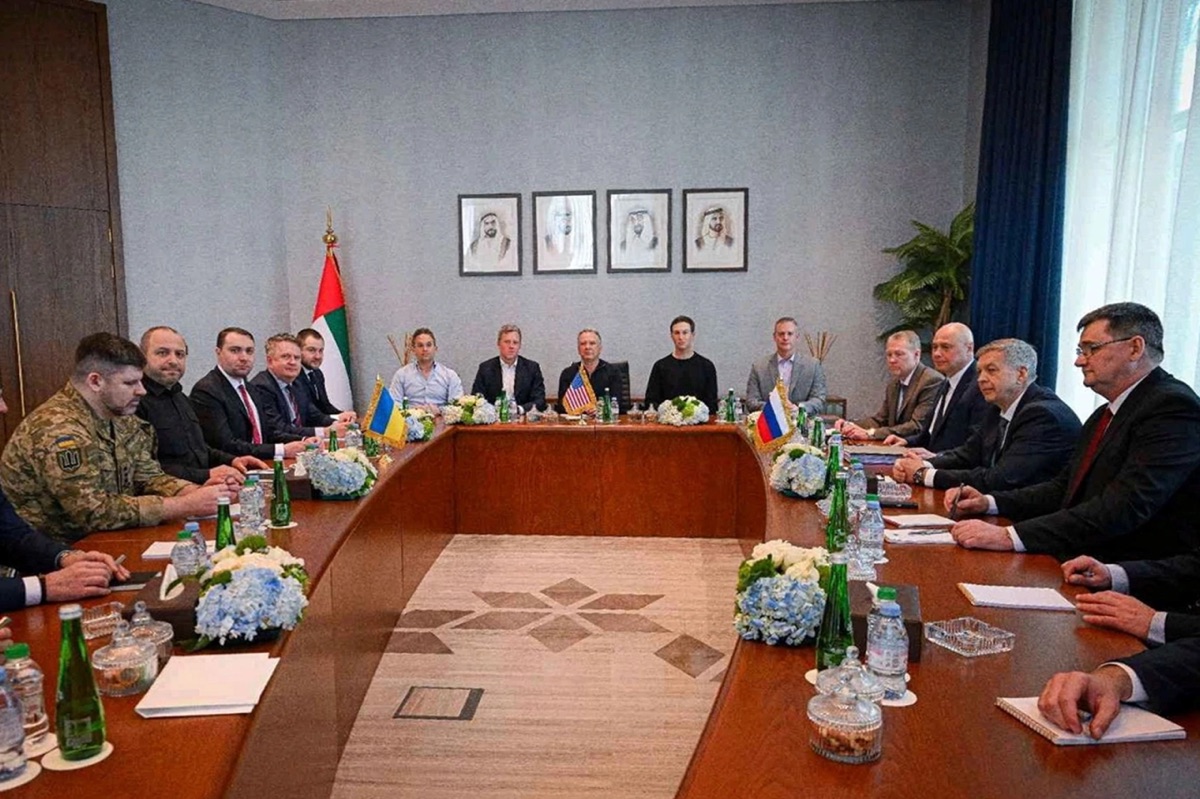
First direct trilateral talks since 2022 yield no agreement, yet signal renewed momentum for diplomacy
After two days of closed-door negotiations in Abu Dhabi, the United States, Russia, and Ukraine ended their first direct trilateral talks since the outbreak of the war in 2022 without reaching a formal agreement. Yet for global investors, diplomats, and security analysts, the mere fact that dialogue has resumed—amid entrenched battlefield positions and rising geopolitical fatigue—marks a notable shift in tone.
Ukrainian President Volodymyr Zelensky described the discussions as “constructive,” emphasizing that all sides engaged seriously on potential pathways to end hostilities. Writing on X, Zelensky said the talks focused on identifying factors that could lead to a cessation of fighting and on possible frameworks to formalize such an outcome—an acknowledgment that diplomacy, while stalled, is no longer off the table.
According to a senior U.S. official speaking anonymously, Washington presented what were described as “very strong” proposed security mechanisms—so robust, the official claimed, that Ukraine, European national security advisers, and even NATO had not previously encountered comparable guarantees. NATO Secretary General Mark Rutte was among those briefed, though no concrete details of the proposals were disclosed, underscoring how sensitive and preliminary the discussions remain.
The United Arab Emirates, which hosted the talks in Abu Dhabi, said negotiations unfolded in a “positive and constructive atmosphere,” with an emphasis on confidence-building measures and unresolved elements of a peace framework linked to proposals attributed to U.S. President Donald Trump. Follow-up discussions are already scheduled for February 1 in Abu Dhabi, with the possibility of future rounds taking place in Moscow or Kyiv—an indicator that all parties see value in keeping channels open.
Still, the core fault lines remain unchanged. Moscow continues to insist that Ukraine withdraw from territories it still controls in the Donbass region, a condition Kyiv has flatly rejected. Russian officials maintain they prefer a diplomatic solution but will pursue their objectives militarily if talks remain deadlocked. On the Ukrainian side, Zelensky has reiterated that ceding territory is politically and socially untenable, a stance supported by public opinion polls showing minimal domestic support for concessions.
Why this matters globally is not just about war and peace in Eastern Europe. These talks test whether great-power diplomacy can reassert itself after years of escalation, sanctions, and proxy dynamics—and whether security guarantees, rather than territorial trade-offs, could become the new currency of conflict resolution. For markets, energy flows, and global risk sentiment, even incremental diplomatic progress can shift expectations. The contrarian question now circulating in policy circles is whether the absence of a deal may actually be the first sign of a more realistic negotiation phase—one where outcomes are shaped not by quick wins, but by endurance, leverage, and the quiet return of diplomacy.
