
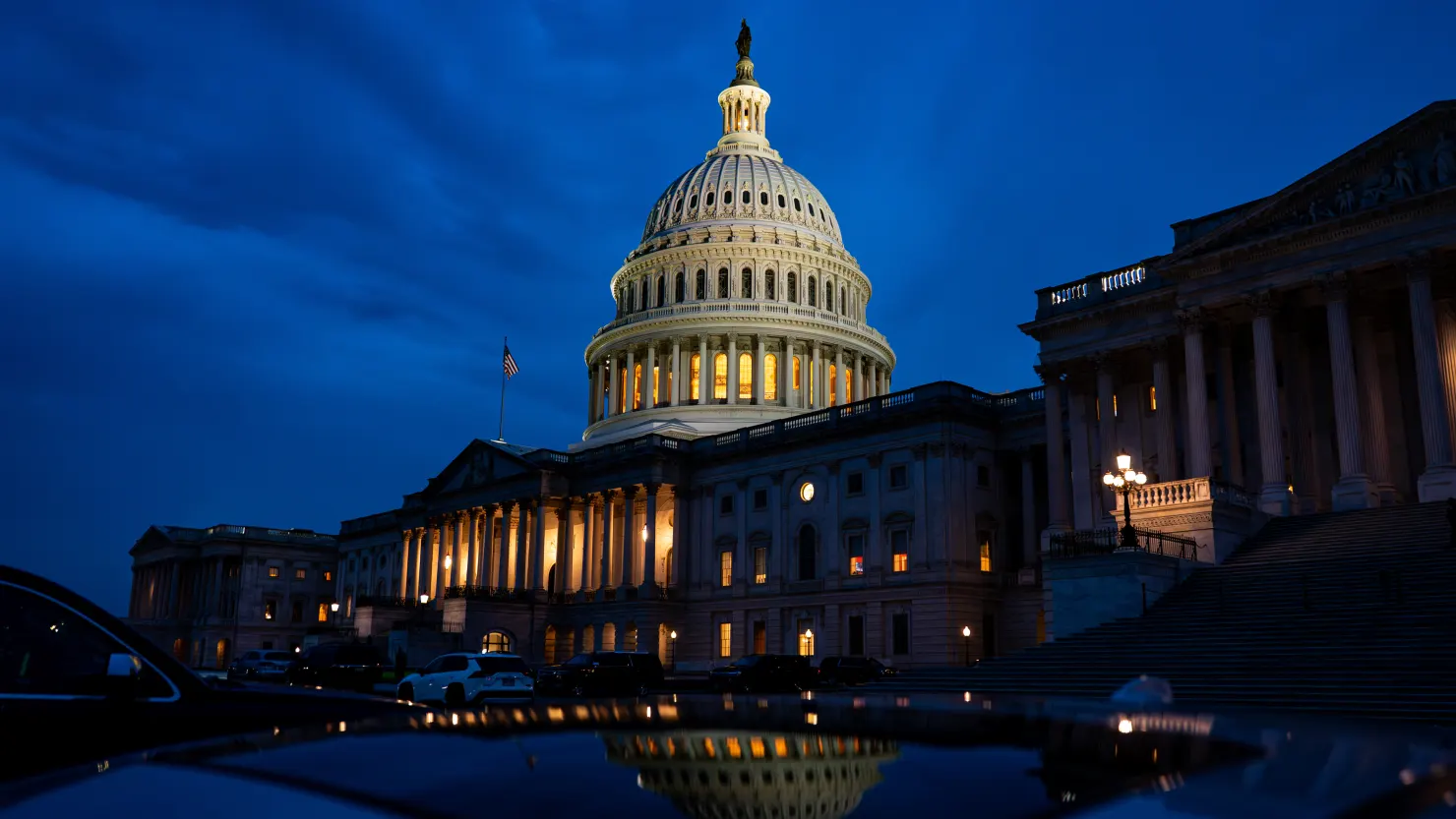
Markets watch Washington as House vote could reopen agencies within days
MARKET INSIDER – The U.S. government slipped into a partial shutdown early Saturday, underscoring once again how political gridlock—not economic weakness—has become a recurring risk for the world’s largest economy. The lapse came despite the Senate approving a bipartisan funding deal just hours earlier, leaving investors, federal workers, and global partners waiting on a final House vote expected as soon as Monday.
The Senate passed the package by a 71–29 margin, advancing five full-year appropriations bills alongside a short-term stopgap extension. The temporary measure was designed to buy lawmakers more time to resolve disputes over funding for the Department of Homeland Security, one of the most politically sensitive agencies in Washington. But because the House of Representatives had already adjourned for the weekend, the legislation could not be cleared before funding authority expired.
House Speaker Mike Johnson signaled support for the Senate deal after Donald Trump publicly urged Republicans to back it. Johnson has indicated the House will take up the measure immediately upon returning to Washington, raising expectations that the shutdown will be brief—especially compared with last year’s record 43-day impasse.
Still, the shutdown triggered standard federal contingency procedures. Office of Management and Budget Director Russell Vought instructed agencies to begin orderly shutdown activities while keeping essential personnel on duty. Appropriations lapsed for a wide swath of government, including the Departments of State, Defense, Treasury, Homeland Security, Labor, Health and Human Services, Transportation, Education, and Housing and Urban Development.
At the heart of the delay was Homeland Security funding, which was carved out of the main agreement and placed under a short-term extension. The issue became a flashpoint amid Republican divisions, as Senator Lindsey Graham temporarily blocked the bill, demanding votes on tougher measures targeting sanctuary city policies and new safeguards related to past federal investigations. Although his hold ultimately fell away, it cost lawmakers crucial time.
For global investors, the episode reinforces a familiar but uncomfortable reality. Even as U.S. growth remains resilient and financial markets stay liquid, fiscal governance has become episodic and unpredictable. Each shutdown—however brief—adds to perceptions of policy risk, complicates budget planning, and feeds volatility in currency and bond markets.
The immediate expectation is that Congress will resolve the impasse within days. The longer-term question is more structural: how often can the world’s largest economy flirt with shutdowns before political dysfunction itself becomes a measurable drag on U.S. credibility, capital flows, and global market confidence?
