
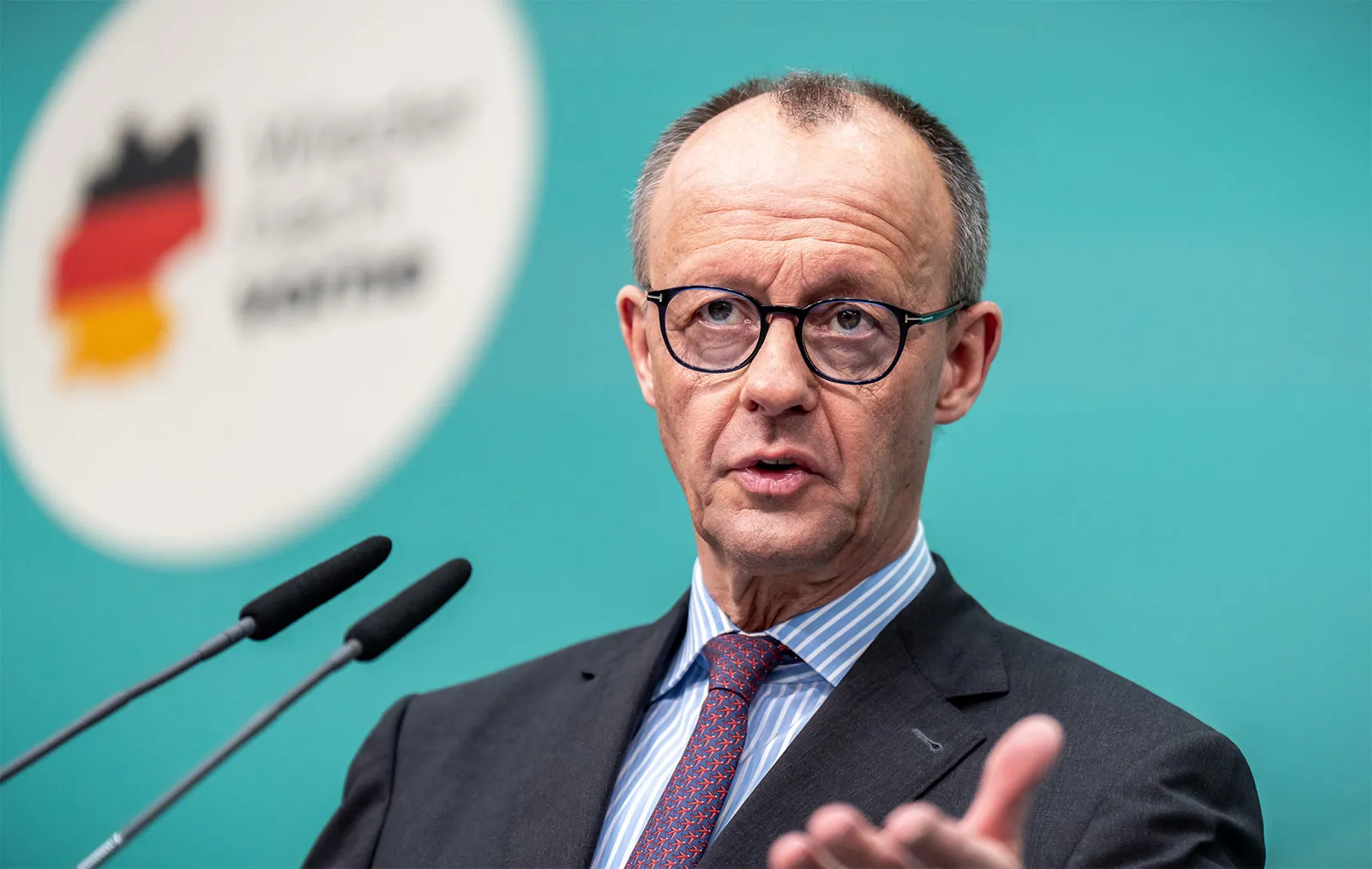
Merz questions Washington’s strategy as war risks ripple across oil markets, NATO, and global power balance
MARKET INSIDER – A growing rift between Washington and Tehran is no longer just a regional flashpoint—it’s fast becoming a test of U.S. global leadership, energy security, and the future of Western alliances. German Chancellor Friedrich Merz has issued a blunt assessment: the United States appears strategically adrift in its confrontation with Iran, while Tehran is gaining leverage in both negotiations and perception.
Speaking during a public visit in Germany, Merz argued that Iran has proven “stronger than expected,” warning that Washington lacks a credible exit strategy—an echo of past U.S. entanglements in conflicts like Iraq and Afghanistan. His remarks underscore a growing concern among European leaders that the crisis is drifting without a clear resolution, raising the risk of prolonged instability with global economic consequences.
At the center of Merz’s critique is what he described as Iran’s tactical advantage. According to the German leader, Tehran is “negotiating very skillfully—or very skillfully not negotiating,” effectively stalling while strengthening its position. The implication is stark: a geopolitical contest once dominated by U.S. influence is now tilting toward a more multipolar dynamic, where adversaries can exploit strategic hesitation.
The economic fallout is already being felt across Europe’s largest economy. Merz warned that the conflict is directly weighing on Germany’s output, highlighting the vulnerability of global supply chains and energy markets. The Strait of Hormuz—a critical artery for roughly a fifth of the world’s oil—remains a focal point. Any prolonged disruption could send energy prices higher, intensify inflationary pressures, and complicate monetary policy across major economies.
Beyond economics, the geopolitical implications may prove even more significant. Merz suggested the crisis could accelerate a structural shift within NATO, with Europe stepping into a more assertive leadership role as confidence in U.S. strategic direction weakens. His call for a stronger, more unified European Union reflects a broader recalibration already underway in global power dynamics.
For investors and policymakers alike, the message is clear: this is no longer just about Iran. It’s about the durability of U.S. influence, the resilience of global energy systems, and the speed at which Europe may pivot toward strategic autonomy. If Washington fails to define a clear endgame, the biggest winner may not be Tehran—but a reshaped world order where power is more fragmented, and far less predictable.
