
Vietnam continues to position itself as one of the most attractive growth markets in Southeast Asia. Over the last few years, the country has evolved far beyond its image as a low-cost manufacturing destination and is now becoming a strategic regional hub for production, retail, sourcing, and consumer expansion.
In 2026, Vietnam’s economic momentum remains strong despite global uncertainty. According to Vietnam’s National Statistics Office, the country recorded GDP growth of 7.83% in Q1 2026, while registered foreign direct investment surged by 42.9% year-on-year, reaching USD 15.2 billion in the first quarter alone. Retail sales also increased by more than 11%, highlighting the continued strength of domestic consumption and the expansion of the middle class.
These figures explain why more international companies are accelerating their Vietnam market entry plans. However, while opportunities are significant, succeeding in Vietnam requires much more than simply opening a representative office or signing a distribution agreement.
For many foreign businesses, the biggest surprise is not the opportunity itself, but the complexity of the market.
Why Vietnam Is Attractive, But Difficult to Navigate
Vietnam sits at the center of several global economic shifts. As manufacturers continue diversifying production away from China, Vietnam has emerged as one of the biggest beneficiaries of supply chain restructuring. Major multinational corporations, including Samsung, Apple suppliers, Intel, and Adidas, continue expanding operations in the country. In May 2026, Reuters reported that Samsung plans to invest another USD 1.5 billion into a semiconductor testing plant in northern Vietnam, reinforcing the country’s role in global electronics manufacturing.
At the same time, domestic demand is rising quickly. Vietnam’s urban middle class is growing, consumer behavior is modernizing, and digital commerce is expanding rapidly across both major cities and secondary provinces.
From the outside, this creates the impression of a fast-moving and highly accessible market. But the reality on the ground is far more nuanced.
Doing business in Vietnam as a foreigner often requires navigating a fragmented distribution structure, regional business differences, informal networks, and relationship-driven decision-making processes. Many foreign companies underestimate how long market entry actually takes.
Unlike mature Western markets, Vietnam is not fully centralized. Relationships often matter as much as pricing, and execution capability frequently matters more than strategy presentations. This is why many businesses with excellent products still struggle after entering the market.
This video explores the realities of entering the Vietnam market, from navigating complex distribution channels to building long-term partnerships and sales strategies. Featuring practical insights from experienced professionals, it highlights both the opportunities and challenges of doing business in one of Southeast Asia’s fastest-growing economies.
Understanding Vietnam Distribution Channels
One of the most important aspects of any Vietnam market entry strategy is understanding how distribution really works.
Vietnam’s distribution ecosystem is highly layered. In many industries, products pass through multiple intermediaries before reaching the final customer. Depending on the sector, a foreign company may work with importers, master distributors, regional wholesalers, sub-dealers, retailers, and increasingly, e-commerce operators at the same time. This creates both opportunities and risks.
For foreign brands, distributors provide immediate access to networks, relationships, and local operational knowledge. In the B2B Vietnam industries, distributors remain essential because they already understand procurement habits, payment practices, and local customer expectations.
However, the system can also become difficult to control. Pricing inconsistencies, territory overlaps, and channel conflicts are common challenges in Vietnam distribution channels. A product may enter the market through one partner but eventually appear in competing territories through secondary networks. This is one reason why foreign companies often struggle to maintain pricing discipline in Vietnam.
Choosing Between Distributors and Direct Sales
A major Vietnam market entry decision involves choosing whether to work through distributors or build an internal sales operation. For many companies entering Southeast Asia for the first time, distributors are the safest and fastest route. They reduce operational complexity and allow foreign brands to access existing customer relationships immediately.
This approach is especially common in industrial sectors, construction materials, machinery, electronics, chemicals, and technical B2B industries. However, relying entirely on distributors creates limitations. Foreign companies may lose visibility on customer feedback, brand positioning, and pricing execution. Over time, some brands realize they have little direct control over how their products are actually sold in the market.
As a result, many successful businesses gradually shift toward hybrid models. They continue working with distributors while simultaneously building internal sales, marketing, or technical support teams in Vietnam. This approach takes longer and requires greater investment, but it usually creates stronger long-term market positioning.
Why Relationships Matter More Than Most Foreign Companies Expect
One of the biggest cultural realities of doing business in Vietnam is that trust develops slowly. Vietnam remains a highly relationship-oriented market. Local partners generally prefer to work with companies that demonstrate consistency, patience, and long-term commitment rather than those focused only on short-term transactions.
This is particularly important when building partnerships with distributors, Vietnam suppliers, or local retailers. Foreign companies often enter Vietnam expecting rapid sales growth within the first year. In reality, building credibility can take several years. Local partners want to see whether a company is serious about supporting the market before committing resources or customer relationships.
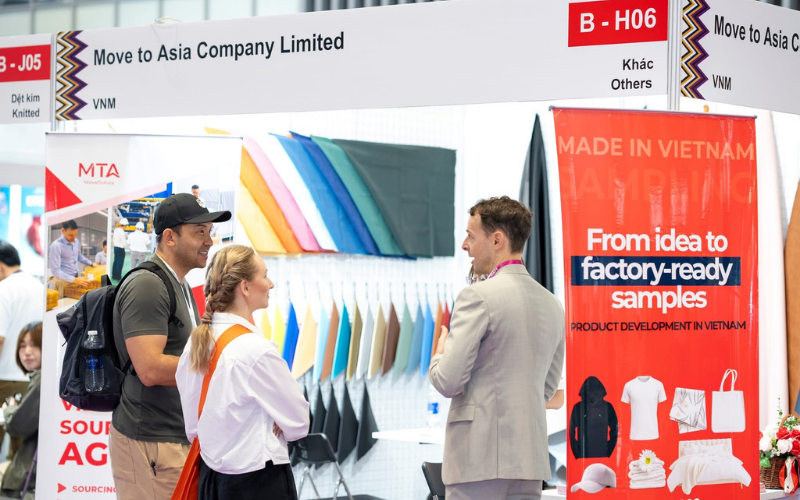
This explains why many successful international companies spend significant time visiting partners, participating in exhibitions, supporting local teams, and investing in relationship-building activities long before seeing strong financial returns. In Vietnam, trust is often considered part of the business model itself.

Vietnam Retail Market and E-Commerce Expansion
The Vietnam retail market has changed dramatically over the past decade. Traditional trade still dominates many categories, particularly outside large urban centers. However, modern retail chains, convenience stores, and digital commerce platforms are expanding rapidly.
Vietnam’s e-commerce ecosystem continues growing as younger consumers become increasingly comfortable with online purchasing, social commerce, and mobile payments. The growth of TikTok Shop, Shopee, Lazada, and Facebook commerce has reshaped how brands enter the market.
For international brands, this creates new opportunities to test products before committing to large-scale physical distribution. At the same time, competition has intensified. Digital advertising costs are increasing, local competitors move quickly, and price sensitivity remains high. Counterfeit products and unauthorized sellers also continue to challenge brand control. This means companies need a much more integrated Vietnam sales strategy than before. Online and offline channels can no longer be treated separately.
The most successful companies in Vietnam are often those capable of combining retail presence, local partnerships, digital visibility, and strong after-sales support into one coordinated strategy.
Hanoi and Ho Chi Minh City Are Different Markets
Many foreign businesses mistakenly approach Vietnam as a single unified market. In reality, Hanoi and Ho Chi Minh City operate very differently.
Ho Chi Minh City is generally faster-moving, commercially aggressive, and highly entrepreneurial. Businesses there often adopt new trends quickly and are typically more open to experimentation.
Hanoi, meanwhile, tends to be more relationship-driven and traditional in business culture. Decision-making can involve longer trust-building processes and more structured networks.
These differences impact everything from negotiation styles to distribution expansion. A strategy that performs well in southern Vietnam may not automatically succeed in the north. This is why experienced companies often scale gradually, expanding region by region rather than trying to cover the entire country immediately.
Vietnam Supply Chain and Manufacturing Momentum
Vietnam’s supply chain capabilities continue improving as foreign investment increases. In 2026, manufacturing remains one of the primary drivers of economic growth. According to multiple economic reports, Vietnam’s exports grew nearly 20% in Q1 2026, supported heavily by foreign-invested manufacturers.
Textiles, electronics, furniture, industrial equipment, and consumer goods remain among the country’s strongest export sectors. At the same time, infrastructure investment is accelerating. Reuters reported that Vietnam plans to mobilize billions of dollars in foreign financing to support transportation and infrastructure development between 2026 and 2030.
Still, foreign businesses should avoid assuming Vietnam operates at the same level as fully developed logistics markets. Distribution efficiency, warehousing systems, and last-mile logistics quality can vary significantly depending on location and industry. Local adaptability remains essential.

Why Patience Is the Real Competitive Advantage
Perhaps the most important lesson for foreign companies is that Vietnam is not a quick-win market. The businesses that succeed in Vietnam are rarely the ones expecting immediate returns. Instead, they are usually companies willing to invest patiently over several years while gradually building market credibility, local partnerships, and operational understanding.
This is particularly true in the B2B Vietnam sectors, where sales cycles are long and trust-based relationships dominate purchasing decisions. In many cases, Vietnam market entry requires a three-to-five-year perspective rather than a short-term sales target. That patience is often rewarded.
Vietnam remains one of the fastest-growing economies in Asia, with strong manufacturing expansion, rising domestic consumption, increasing FDI inflows, and continuous infrastructure investment. According to the Asian Development Bank, Vietnam’s GDP growth is projected to remain above 7% in 2026, keeping the country among the strongest-performing economies in the region.
For companies willing to commit long-term, Vietnam offers more than short-term sales opportunities. It offers strategic positioning within one of the world’s most dynamic growth regions.
Final Thoughts
Vietnam’s business environment in 2026 presents enormous opportunities for international companies, but entering the market successfully requires realism, patience, and local adaptation.
Foreign businesses must understand that Vietnam market entry is not simply about finding a distributor or launching products online. Success depends on building relationships, understanding regional dynamics, adapting sales strategies, and committing to long-term execution.
Whether the goal is B2B Vietnam expansion, export development, retail growth, or broader Southeast Asia business expansion, companies that invest in trust, local knowledge, and strategic partnerships are the ones most likely to succeed. Vietnam is still a growth market, but increasingly, it is a market that rewards experience, consistency, and long-term thinking more than speed alone.
