
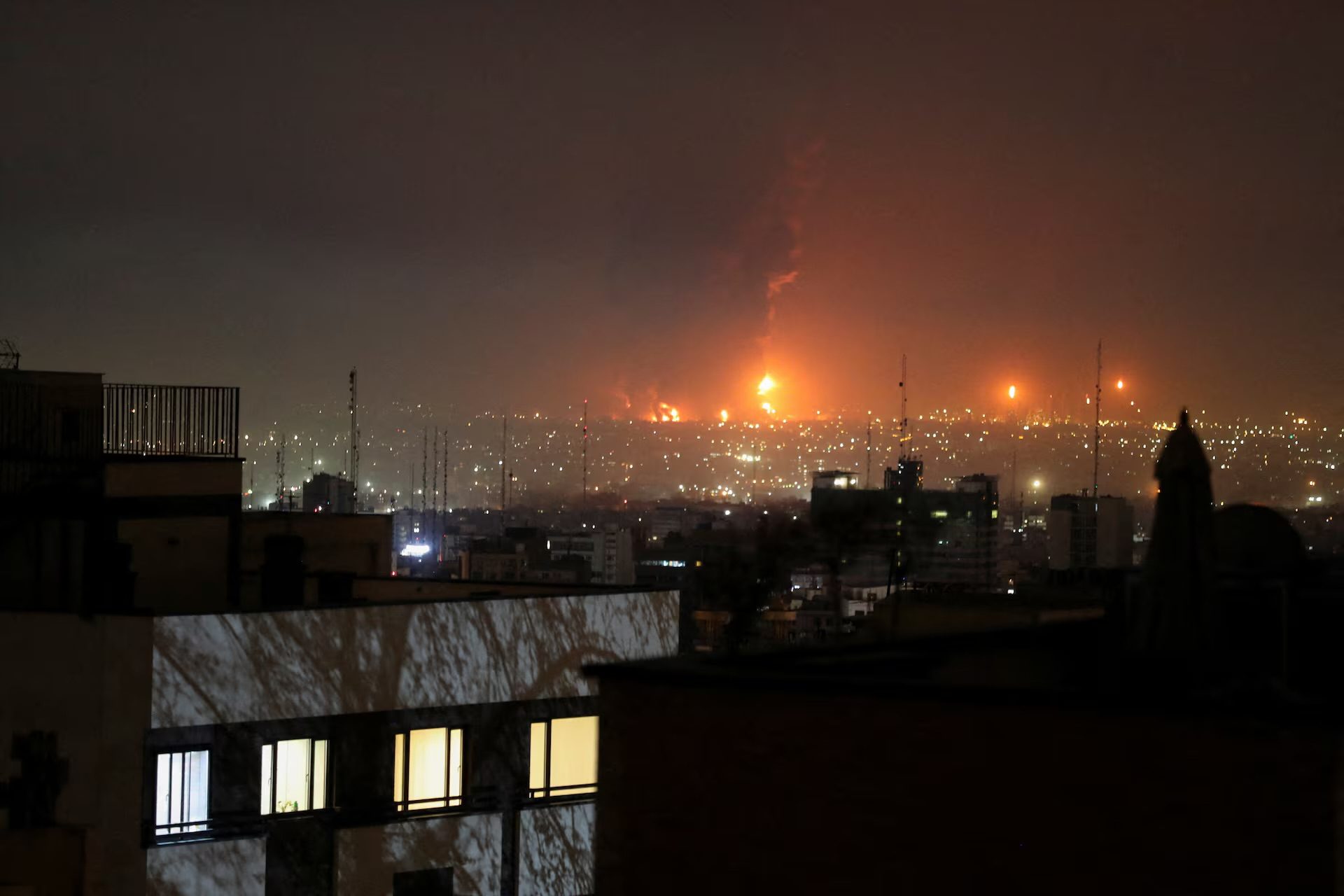
Satellite Images Reveal Widespread Damage Across Iran, but Analysts Warn Tehran Retains Powerful Missile and Drone Capabilities
MARKET INSIDER – The true cost of the recent Iran-Israel-US conflict is becoming clearer, with newly analyzed satellite imagery revealing extensive damage to more than 50 military facilities across Iran. The findings offer one of the most detailed assessments yet of how six weeks of fighting altered the military balance in the Middle East—while raising new questions about regional stability, energy security, and the future of deterrence.
Commercial satellite data reviewed by the BBC indicates that airbases, naval facilities, missile sites, and key command centers linked to Iran’s military and the Islamic Revolutionary Guard Corps (IRGC) suffered significant damage. The scale of destruction underscores the growing role of precision strikes, intelligence-driven warfare, and space-based surveillance in modern conflicts.
Among the hardest-hit targets were more than ten military airports, where runways and aircraft were reportedly struck. Satellite imagery suggests at least 17 aircraft were destroyed during attacks on military zones near Tehran’s Mehrabad International Airport, while additional strikes on Shiraz Air Base damaged or destroyed at least 13 aircraft. Naval infrastructure also sustained major losses, with visible damage reported at the strategic port of Bandar Abbas and the Konarak naval base along the Gulf of Oman.
The conflict appears to have also reached the upper ranks of Iran’s military leadership. Imagery reviewed by analysts shows substantial damage to IRGC facilities, including naval headquarters and command centers near Tehran. Iranian naval commander Alireza Tangsiri was reportedly killed in an Israeli strike earlier in the conflict, highlighting the increasingly targeted nature of modern military operations.
Yet despite the destruction, evidence suggests Iran is already rebuilding. Following a ceasefire reached with the United States in April, satellite imagery showed repair work underway at several ballistic missile bases, including the reopening of tunnels and access roads damaged during the fighting. Intelligence experts note that Iran’s military doctrine has long relied less on conventional air and naval forces and more on its extensive missile and drone networks, which remain a central pillar of the country’s deterrence strategy.
The findings also challenge claims that Iran’s military capabilities have been completely eliminated. While U.S. President Donald Trump has repeatedly stated that Iran’s air force, navy, air defenses, and much of its offensive capability were destroyed, recent footage appears to show Iranian F-14 fighter jets and Mi-28 attack helicopters still operating. Security analysts argue that although Tehran suffered significant losses, it retains enough missile and unmanned aerial vehicle capacity to threaten U.S. forces and regional allies if tensions reignite.
The broader lesson extends far beyond Iran. As commercial satellites increasingly expose battlefield realities in near real-time, governments can no longer easily control wartime narratives. The next phase of competition may not be about who wins the war, but who can rebuild military capacity faster—and whether Iran’s surviving missile arsenal proves more strategically important than the aircraft and bases it lost.
