
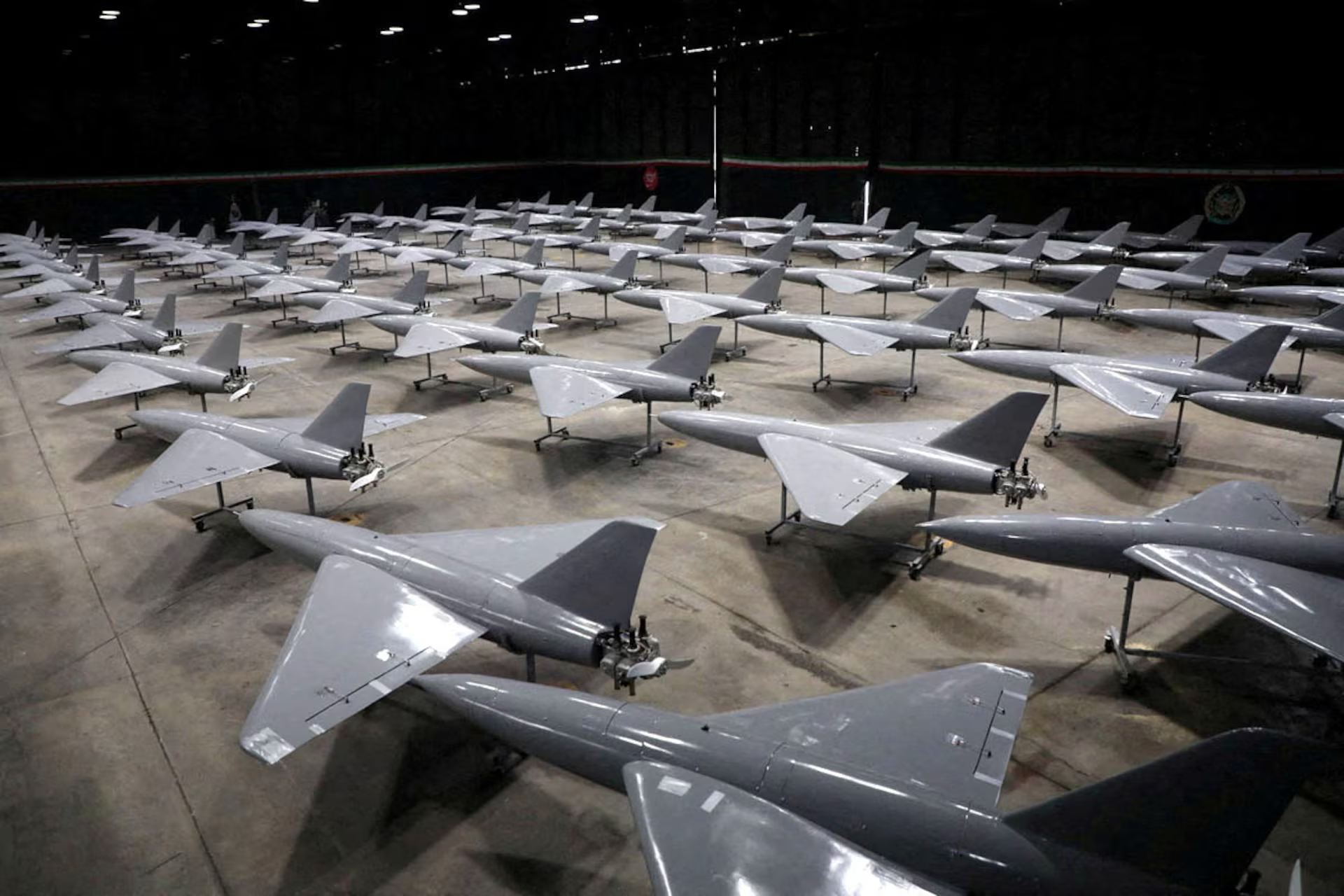
Intelligence officials have not established that Moscow helped select the targets, but the attacks’ precision and reported use of Russian-enhanced drones have intensified scrutiny of Russia-Iran military cooperation.
MARKET INSIDER — US intelligence analysts are investigating whether Russia supplied targeting information or drone technology used in Iranian attacks on CIA facilities in Saudi Arabia and Iraq, according to people familiar with the assessments.
No firm conclusion has been reached, and officials have not established that Moscow deliberately helped Iran identify CIA locations. The inquiry nevertheless signals growing concern that Russian support for Tehran may be expanding from general military assistance to operations against sensitive US intelligence infrastructure.
Such involvement, if confirmed, could deepen direct confrontation between Washington and Moscow and complicate efforts to contain the Iran war.
Key highlights
- US analysts are examining possible Russian assistance in Iranian attacks on CIA facilities.
- At least two CIA sites were reportedly struck in March, including the agency’s station at the US Embassy in Riyadh.
- A Western intelligence assessment reportedly judged that Russia probably helped target regional CIA facilities.
- Analysts suspect Russian-enhanced Shahed drones may have been used in the Riyadh attack.
- The CIA has declined to comment, while Russia, Iran and Saudi Arabia have not responded publicly.
- Investigators have not ruled out the possibility that the CIA station was hit accidentally during a wider attack on the embassy.
What happened at the CIA facilities?
Iranian drones struck at least two sites associated with the CIA in March, according to reporting based on intelligence and regional sources. One was the CIA station housed inside the US Embassy in Riyadh, while another was in eastern Iraq. Some sources indicated that other facilities may also have been hit but did not identify them.
Saudi Arabia’s Defence Ministry said two drones struck the Riyadh embassy complex, causing a limited fire and material damage but no casualties. Initial reporting at the time said there was no evidence that the CIA station itself had been deliberately selected as the target, the Reuters’ March report showed.
Later intelligence analysis raised new questions because of the strike’s apparent coordination. Two Western officials briefed on the intelligence said one drone penetrated a vulnerable section of the embassy’s exterior before a second flew through the opening and detonated.
That description has not been independently confirmed, and neither the CIA nor the governments involved have publicly verified the alleged sequence.
Why do analysts suspect Russian assistance?
Four people familiar with US intelligence told Reuters that analysts were examining whether Russia provided targeting intelligence, improved drone systems or both.
An internal assessment from an unidentified Western intelligence agency reportedly concluded that Russia probably played a role in targeting CIA facilities in the region. Two officials also said analysts believed the Riyadh strike involved modified versions of Iran’s Shahed drones incorporating Russian enhancements.
Russia has previously provided Iran with targeting and technical support for attacks on US interests in the Gulf, according to US officials cited in the reporting. The unresolved question is whether that cooperation extended specifically to locating or attacking covert CIA operations, according to Reuters investigation
The precision of a strike is not, by itself, proof of external involvement. Intelligence agencies will need to determine what navigation equipment was recovered, how the drones were programmed and whether Iran possessed independent information about the facilities.
What is the Kometa-M system?
One potential connection under examination is the Kometa-M, a Russian satellite-navigation system reportedly supplied to Iran to improve the accuracy and resilience of Shahed-136 drones.
The technology is designed to help drones resist electronic jamming that can disrupt conventional satellite guidance. If fitted to Iranian aircraft, it could increase their ability to reach fixed targets in heavily defended areas.
The Wall Street Journal previously reported that Russia had provided the system to Iran. The Kremlin denied the allegation and described the report as false.
Even if Russian components were used, however, that would not prove Moscow supplied the coordinates of CIA facilities or authorized the attacks. Technology transfer and direct operational targeting are distinct levels of involvement and carry substantially different geopolitical consequences.
Could the CIA station have been hit accidentally?
That possibility remains open. Some analysts believe Iran may have targeted the US Embassy generally and struck the CIA station by chance.
CIA stations are commonly located within US embassies, while other agency facilities can include offices, logistics sites and safe houses whose locations are highly classified. A successful hit therefore does not necessarily demonstrate that Iran knew which part of the compound contained intelligence personnel.
The evidence currently supports reporting that Russia may have assisted Iran, not a definitive conclusion that Moscow directed or enabled the individual strikes. Headlines should preserve that distinction.
Why confirmation would matter
If Russia knowingly helped Iran attack CIA facilities, the episode would represent a significant escalation in the two countries’ security partnership.
Moscow and Tehran already share an interest in limiting US influence, but participation in selecting sensitive American intelligence targets would move their cooperation closer to direct confrontation with Washington.
It could also expose Russia to additional US sanctions, covert retaliation or other countermeasures. Washington might strengthen air defences and intelligence protection across Gulf embassies, increasing security costs and placing further pressure on host governments.
Concern about Russian targeting support intensified after Iran struck a US base in Jordan with ballistic missiles, killing two American soldiers. That attack showed Tehran’s improving ability to reach specific military facilities and increased scrutiny of the intelligence and technology behind its weapons.
Implications for markets and Asia
The investigation does not create an immediate, measurable market shock on its own. Its importance lies in the risk that confirmation of Russian participation would broaden what has largely been treated as a US-Iran conflict.
A wider confrontation involving Moscow could reduce the prospects for diplomacy, prolong threats to Gulf infrastructure and reinforce the geopolitical premium in oil, shipping and defence assets. Markets would also have to consider the risk of tighter sanctions affecting Russian or Iranian energy trade.
Asia would be particularly exposed to an extended conflict because the region depends heavily on oil and liquefied natural gas shipped from the Gulf. Persistent security threats could raise freight and insurance costs even when physical production remains available.
The most consequential evidence would be an official US intelligence finding, forensic confirmation that Russian systems were installed in the drones, or proof that Moscow supplied coordinates for protected facilities. Until then, Russia’s role should be described as an active intelligence hypothesis rather than an established fact.
