
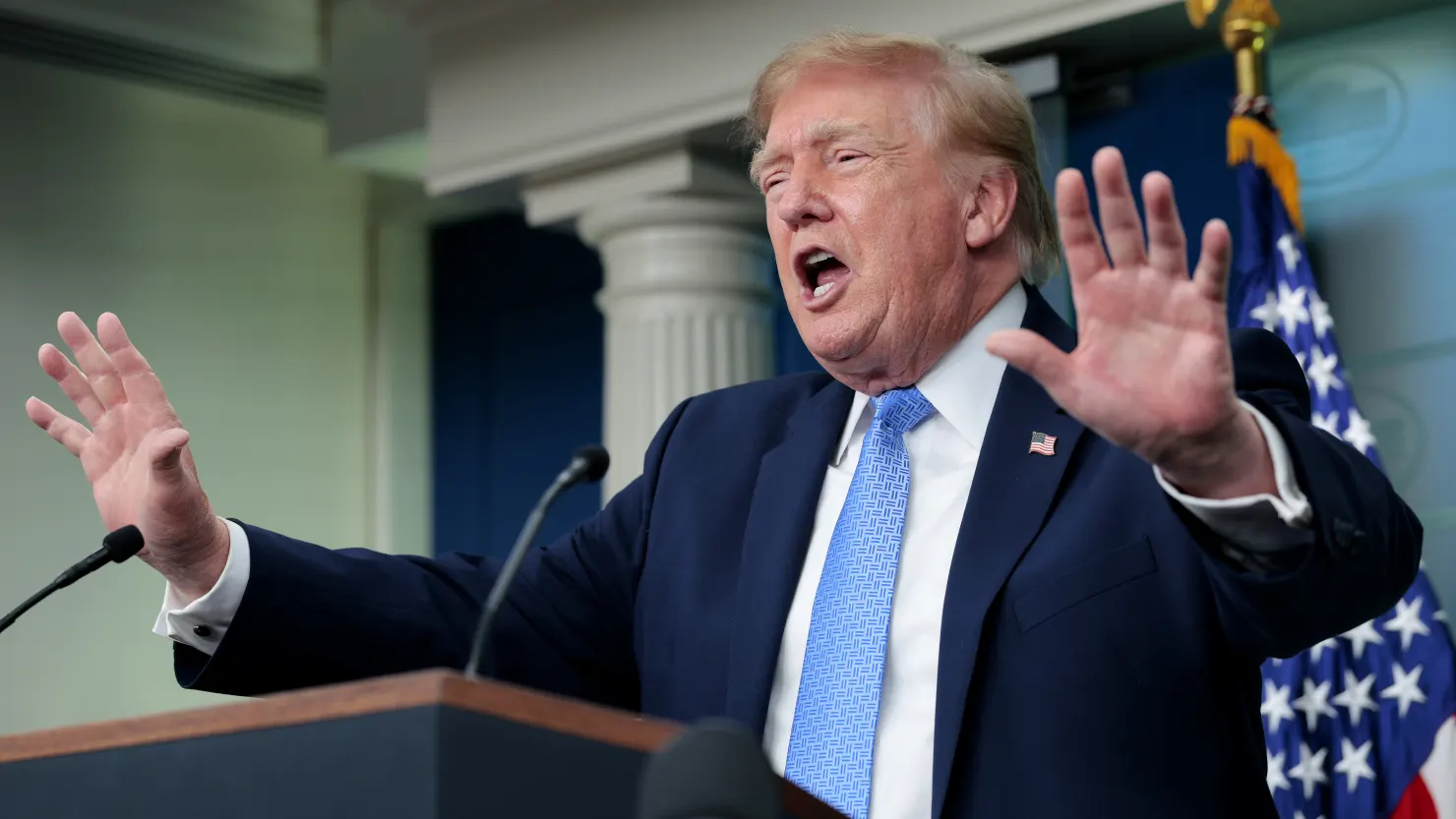
The U.S. president played down the likelihood of renewed strikes, lifting hopes for diplomacy while maintaining military and economic pressure on Tehran.
MARKET INSIDER — President Donald Trump said the war with Iran could end “fairly soon” and suggested further U.S. military action was unnecessary for now, helping push oil prices lower on Tuesday. His remarks followed a meeting with Qatar’s prime minister, whose government has been mediating between Washington and Tehran. For energy markets, the softer tone offered relief after months of concerns about disrupted Middle Eastern supplies. However, Trump retained the option of renewed strikes, while disagreements over negotiations and Iran’s conditions left the path to a settlement uncertain.
Key Highlights
- Trump expressed optimism about ending the conflict but kept military options available.
- Brent traded around $91.56 a barrel and WTI near $85.80 as concerns about further escalation eased.
- Qatar’s mediation remains central, with no confirmed agreement or timetable for ending the conflict.
Trump signals restraint while maintaining pressure
Speaking at the White House on Monday after meeting Qatari Prime Minister Sheikh Mohammed bin Abdulrahman Al Thani, Trump said he saw progress toward ending the conflict.
He described Iran as weakened militarily and economically and said Tehran was communicating politely with Washington. Those assessments reflected the president’s characterization of the situation.
Trump also said regional governments, including Qatar, Saudi Arabia, the United Arab Emirates, Bahrain and Kuwait, preferred maintaining existing pressure on Iran. He referred to the naval blockade and Operation Iron Gate, an initiative targeting ground routes used to transport advanced weapons and other materials.
His position therefore left substantial restrictions in place even as he played down the need for additional strikes. Trump reiterated that preventing Iran from obtaining a nuclear weapon remained a central U.S. demand.
Diplomatic signals remain uneven
Qatar’s involvement has created an avenue for exchanging proposals, but the two sides continue to offer different accounts of the diplomatic process.
Reuters reported on November 5, citing a senior Iranian official, that Tehran had submitted a nuclear proposal through Qatar. The official said discussions would depend on Washington meeting seven Iranian demands. That account described a conditional proposal rather than an agreed settlement.
Iranian security chief Mohsen Rezaei has also disputed Washington’s portrayal of peace talks, underscoring the gap between the public positions of the two governments.
These differences leave several questions unresolved: whether the parties can agree on the sequence of concessions, what commitments would accompany sanctions relief, and how any arrangement would improve security for commercial shipping.
Trump’s remarks offered no firm deadline for resolving those issues.
Oil retreats as escalation fears ease
Crude prices extended their decline on Tuesday as traders reassessed the likelihood of further military action.
Brent futures traded around $91.56 a barrel, roughly 1% lower and near their lowest levels in ten weeks. U.S. West Texas Intermediate fell more than 1% to approximately $85.80, following a decline of more than 4% in the previous session. Prices reflected an early trading snapshot rather than closing levels.
The reaction suggests that expectations of restraint are reducing the additional amount traders are willing to pay for the risk of supply disruption. It does not establish that exports, shipping access or insurance costs have returned to normal.
That distinction matters for the durability of the decline. Diplomatic optimism can move futures prices immediately; restoring dependable physical supply requires operational changes and credible security arrangements.
What the shift means for markets
A sustained fall in crude prices could ease fuel expenses for transport companies and energy-importing economies, while reducing one source of inflation pressure. The benefits would depend on how long lower prices persist and how quickly they reach businesses and consumers.
Energy producers, meanwhile, could face weaker revenue expectations if the geopolitical premium continues to unwind.
For investors, the next meaningful developments will be concrete: mutually acknowledged negotiations, agreed conditions for a settlement, changes to the blockade and evidence of safer tanker movements.
Trump’s softer rhetoric has changed the market’s immediate assessment of escalation risk. Whether that becomes lasting relief will depend on what Washington and Tehran do next.
