
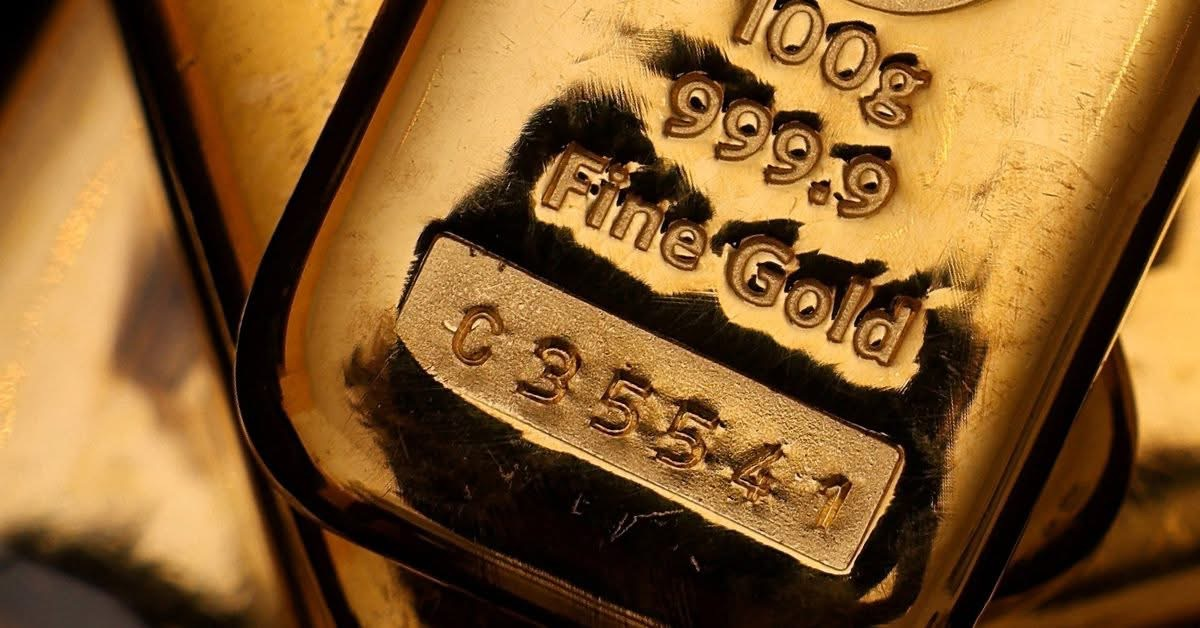
Bullion slipped ahead of U.S. inflation data as investors balanced persistent tightening expectations against geopolitical uncertainty and stronger Chinese imports.
MARKET INSIDER — Gold fell on Thursday after the Federal Reserve held interest rates steady, with investors awaiting U.S. inflation figures to assess whether another increase remains likely in December.
Spot gold declined 0.7% to $4,037.98 an ounce at 04:10 GMT, while December U.S. gold futures were little changed at $4,049.80. Although expectations for a December hike eased following the decision, markets continued to assign a high probability to further tightening.
The pullback highlights the competing forces shaping bullion: geopolitical risks can support demand for protection, while persistent inflation can keep interest rates elevated and increase the appeal of income-producing assets.
Key Highlights
- Spot gold fell 0.7% to $4,037.98 an ounce in early Thursday trading.
- The Fed held rates at 3.75%–4%, with two policymakers favouring an immediate increase.
- U.S. PCE inflation data will provide the next test for rate expectations, while stronger Chinese imports offer a separate signal of physical demand.
Fed holds rates, but inflation concerns persist
The Federal Open Market Committee voted 10–2 to leave its benchmark rate unchanged on Wednesday.
Its statement described economic activity as expanding strongly, domestic spending as resilient and inflation as elevated. Governors Lisa Cook and Beth Hammack dissented, preferring a quarter-percentage-point increase.
That combination makes the pause difficult to interpret as the end of tightening. Officials are seeking more information before deciding their next move, while disagreement within the committee demonstrates that some already see sufficient grounds to act.
Traders assigned approximately a 78% probability to a December increase following the announcement, down from 84% beforehand, according to CME FedWatch figures cited in the market report.
The modest decline in those odds offered some relief, but it left another hike as the market’s dominant expectation.
Inflation data becomes the next catalyst
The Personal Consumption Expenditures report was scheduled for 12:30 GMT on Thursday—8:30 a.m. in New York and 7:30 p.m. in Vietnam.
The Fed’s 2% inflation objective is measured using the PCE price index. Investors will assess both the headline reading and the underlying trend excluding food and energy.
A stronger-than-expected report could reinforce expectations that rates must rise further. A softer result could weaken that case, although one monthly release would not settle the broader inflation outlook.
For gold, the market reaction will depend partly on what happens to the dollar and inflation-adjusted bond yields.
Bullion pays no interest. When investors can earn higher real returns on relatively safe bonds, holding gold becomes more costly in terms of forgone income. Conversely, falling real yields can improve its relative appeal.
Higher inflation therefore does not automatically translate into higher gold prices. The policy response—and how it changes expected real returns—also matters.
Geopolitical risks pull gold in different directions
Persistent Middle East uncertainty remains central to the commodity outlook, but its effect on gold is not straightforward.
Escalation can encourage purchases of defensive assets. At the same time, disruption to energy supplies and shipping can increase inflation pressure, reinforcing expectations of tighter monetary policy.
These channels can work against each other, helping explain why bullion may fall even while geopolitical risks remain elevated.
A reported diplomatic initiative added another development for traders to assess. The Wall Street Journal reported that U.S. Vice President JD Vance sent a letter to Iranian Security Council chief Mohsen Rezaei seeking to revive peace negotiations.
An approach to restart talks is not a settlement. Its market significance will depend on whether it produces concrete progress on security and trade flows.
Chinese imports provide a physical-demand signal
China’s net gold imports through Hong Kong increased by more than 28% in September from August, reaching a five-month high, according to Hong Kong trade data cited in the report.
The increase points to stronger flows through an important regional trading route. It does not, however, measure all Chinese gold imports or establish how much of the metal reached jewellery buyers, investors or inventories.
There is also a timing distinction: September trade figures describe earlier physical flows, while Thursday’s prices reflect current positioning and expectations.
For Asian gold markets, local-currency movements matter alongside the international price. A decline in dollar-denominated bullion may provide limited relief to buyers if their domestic currency weakens against the dollar.
Other precious metals retreat
Silver fell 1.5% to $53.15 an ounce, while platinum declined 1.5% to $1,515.70. Palladium slipped 0.6% to $1,004.25 in the same early-session snapshot.
Their declines show that the weakness extended beyond gold, although these metals also face distinct industrial-demand and supply conditions.
The immediate focus remains on PCE inflation and the resulting adjustment in rate expectations. Gold’s proximity to $4,000 gives traders a visible reference point, but whether prices hold above it will depend on demand and financial conditions rather than the significance of the round number alone.
