
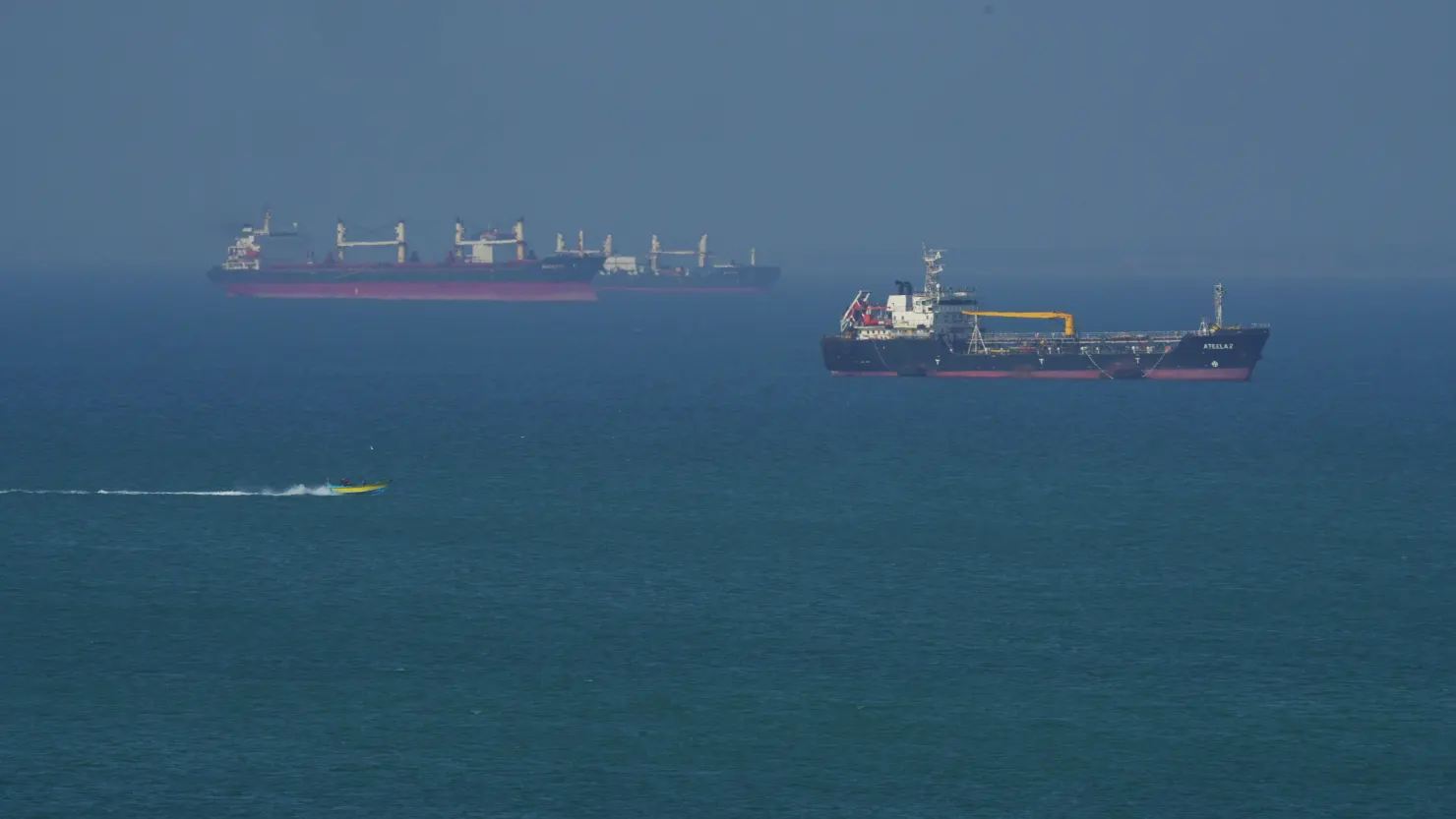
Separate maritime reports describe attacks on vessels near Oman, while diplomatic outreach and reported U.S. military planning leave the conflict’s direction uncertain.
MARKET INSIDER — Iran said four tankers caught fire after striking mines near the Strait of Hormuz, raising fresh concerns about shipping security as Washington pursues diplomatic contacts while reportedly reviewing options for renewed military action.
The Iranian account has not been independently verified. A separate UK Maritime Trade Operations report described explosives attached to a tanker by a small boat—an incident that does not establish Iran’s claim of four mine strikes.
For energy markets, the immediate risk is further disruption to an already constrained export route, alongside threats to Saudi infrastructure from Yemen’s Houthi forces.
Key Highlights
- Iran claims four tankers struck mines, but independent maritime reports do not confirm that account.
- UKMTO reported an explosive-device attack near Oman; the resulting fire was extinguished and the crew were safe.
- Reported U.S. military planning and diplomatic outreach are proceeding simultaneously, with no confirmed decision on renewed strikes.
Iranian claims differ from maritime incident reports
The Islamic Revolutionary Guard Corps said three tankers struck mines while using what it described as an unauthorised southern route near the Omani coast. Iran’s army separately said a fourth tanker caught fire east of the strait.
The timing, identities and flags of the vessels cited by Iran were not immediately clear.
UKMTO reported a tanker incident approximately 25 nautical miles northeast of Khasab, Oman. According to its account, a small boat approached the vessel and attached two explosive devices above the waterline. The explosions caused an engine-room fire and temporarily disabled the tanker. A subsequent update said the fire had been extinguished and the crew were safe.
These accounts should not be combined into a single verified tally. Explosives attached to a hull, a projectile strike and a vessel encountering a sea mine describe different mechanisms.
The distinction also matters for assessing whether particular routes are safe. Clearance of sea mines would not, by itself, eliminate the threat from boats, missiles or other attacks.
Dispute over the safety of transit routes
Iran’s Revolutionary Guards challenged a U.S. Central Command statement that American forces had cleared mines from the primary transit routes through Hormuz.
IRGC spokesman Hossein Mohebi called for independent evidence supporting the U.S. assertion.
The competing statements leave commercial operators facing an information problem as well as a physical threat. Shipping companies need confidence in route security, emergency assistance and insurance availability before committing vessels and crews.
Even where a passage remains technically navigable, owners may delay sailings or demand higher compensation for the risk.
That can restrict effective transport capacity without a complete closure of the waterway.
Saudi Arabia faces a separate threat
Yemen’s Iran-aligned Houthis said they conducted six operations against Saudi targets, including airports and oil facilities.
Saudi authorities had not confirmed the claimed strikes in the supplied report. They did say air defences intercepted and destroyed a Houthi drone directed toward the Mecca region.
The claims followed a meeting between senior Saudi and Iranian officials in Tehran, where the two sides agreed to pursue dialogue over regional differences.
Continued threats against Saudi infrastructure complicate efforts to reduce the conflict’s economic effects. Security concerns now involve both maritime transit and the facilities needed to process, transport and export energy.
However, claims of attacks should not be treated as evidence that production or export capacity has been lost. That requires confirmation of damage and operational consequences.
Diplomacy continues alongside military planning
Vice President JD Vance reportedly sent a letter through Qatari mediators to Mohsen Rezaei, head of Iran’s Supreme National Security Council, proposing a framework for talks.
President Donald Trump offered a different description of the outreach, saying it concerned assistance with medical supplies and other needs. He said Vance had consulted him and received permission to proceed.
The differing accounts make it difficult to determine the scope of any negotiating initiative.
Meanwhile, The Wall Street Journal reported that Adm. Brad Cooper, the senior U.S. commander in the region, briefed Trump at the White House on military options involving Iran. The discussions also covered the continuing U.S. blockade, according to the report, which cited unnamed officials.
Reports have linked possible renewed action to the period after the November 3 U.S. midterm elections. Military planning and a presidential briefing, however, do not establish that an operation has been approved or scheduled.
Why Asian energy buyers are exposed
For Asian importers, the principal transmission channels are the availability of cargoes, freight charges, insurance costs and delivery times.
Additional disruption around Hormuz could force buyers to seek alternative supplies, potentially over longer distances. Damage to Saudi infrastructure would create a separate constraint that changing shipping routes might not resolve.
Import-dependent economies could consequently face higher energy bills and pressure on corporate margins. Airlines, transport operators and manufacturers would be exposed through fuel and input costs, while governments could face demands to cushion consumers.
These are potential consequences of sustained disruption, rather than confirmed effects of the latest incidents.
What investors should watch
The most useful evidence will come from vessel operators, maritime authorities and energy producers: confirmed damage, cargo delays, changes in export loadings and the availability of insured shipping capacity.
Diplomatic statements will matter most when accompanied by practical measures that improve navigation or reduce attacks.
For now, the latest reports increase uncertainty around the safety of Gulf shipping. Whether they produce a lasting supply shock depends on the damage actually sustained and the willingness of commercial vessels to continue transiting the region.
