
Hardline succession signals continuity in Tehran as war drives crude above $100
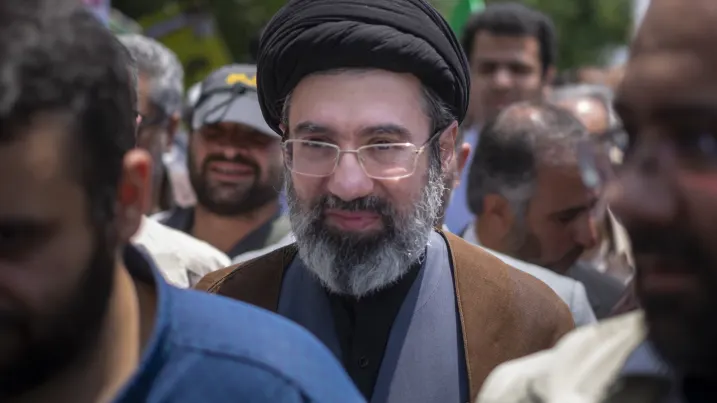
Iran has named Mojtaba Khamenei as the country’s new supreme leader, succeeding his father Ali Khamenei following his death in a U.S.-Israeli airstrike earlier in the conflict. The appointment signals that hardline forces remain firmly in control of Iran’s political and military apparatus at a moment of escalating war in the Middle East.
The decision was announced by the Assembly of Experts, the 88-member clerical council responsible for selecting Iran’s supreme leader. In a statement issued shortly after midnight in Tehran, the assembly confirmed that Mojtaba Khamenei had been chosen by a decisive vote to become the third supreme leader of the Islamic Republic, granting him ultimate authority over Iran’s political system, armed forces, and security institutions.
The succession immediately reverberated through global markets. Oil prices surged sharply as investors weighed the possibility that the leadership transition could harden Tehran’s stance in the ongoing conflict. Global benchmark Brent crude jumped above $100 per barrel, while U.S. crude futures climbed more than 20% in early trading, reaching their highest levels since 2022 amid fears of prolonged disruption to shipments through the Strait of Hormuz.
Washington had already signaled opposition to Mojtaba Khamenei’s potential rise. Donald Trump previously warned that the United States should have a say in Iran’s leadership transition and suggested that any successor lacking U.S. approval might struggle to remain in power. Israeli officials had also indicated they could target whoever assumed the leadership role.
Inside Iran, however, the transition appears to have been quickly consolidated. Iran’s armed forces and the Islamic Revolutionary Guard Corps reportedly pledged loyalty to the new leader shortly after the announcement, signaling institutional backing at a time when the country faces intense external pressure.
The war itself continues to escalate. U.S. and Israeli strikes have targeted Iranian military facilities and energy infrastructure, while Tehran has launched retaliatory attacks across the region. Iranian officials say more than 1,300 civilians have been killed during the campaign, while American and Israeli casualties have also been reported.
Markets are increasingly focused on the economic consequences. The surge in crude prices has already rattled global equities and revived fears of inflation, particularly as the conflict threatens energy flows from the Persian Gulf.
For geopolitical analysts, Mojtaba Khamenei’s rise represents both continuity and risk. As a cleric with deep ties to Iran’s security networks and economic institutions, he is expected to maintain the ideological and strategic direction established by his father. But assuming power in the middle of a regional war also places him at the center of one of the most volatile geopolitical crises in decades.
The leadership transition may therefore shape not only Iran’s domestic politics, but also the trajectory of the war—and the stability of global energy markets—in the months ahead.
