
The eurozone economy remains resilient, but the Iran war has left policymakers facing higher prices and weaker growth risks.
MARKET INSIDER — The European Central Bank raised its deposit rate by 25 basis points to 2.5% on Thursday, responding to an energy-driven increase in inflation while leaving the door open to further tightening.
The widely expected decision was the ECB’s second rate increase of 2026. Inflation reached 3.3% in August as energy prices surged, placing it well above the central bank’s 2% target.
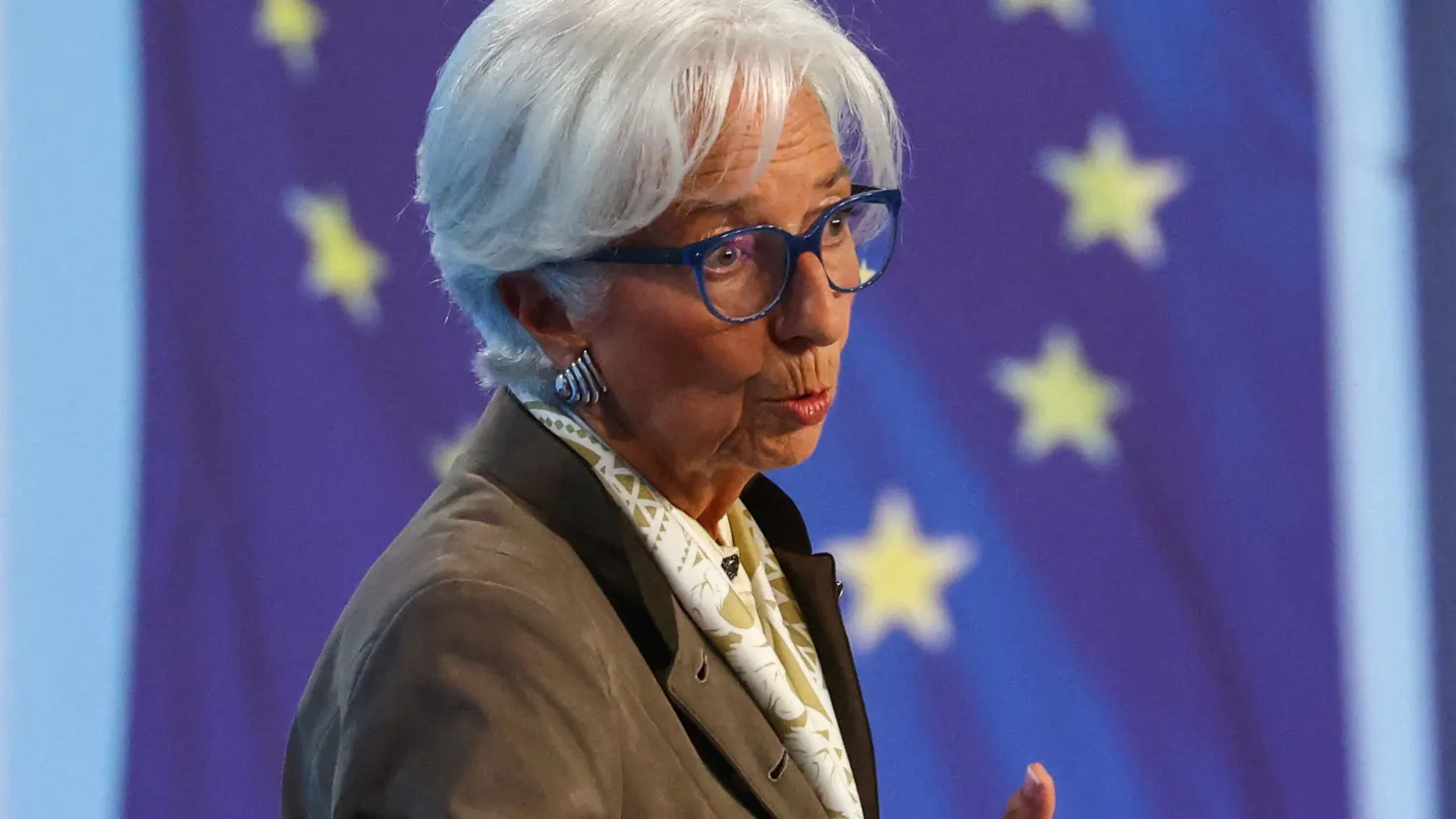
President Christine Lagarde warned that the Middle East conflict and developments in Ukraine could keep inflation elevated while weakening growth—an increasingly difficult policy combination that limits the ECB’s ability to support the economy through lower borrowing costs.
Key Highlights
- The ECB raised its deposit rate to 2.5%, with its refinancing and marginal-lending rates increasing to 2.65% and 2.9%.
- Headline inflation is projected to average 3% in 2026 and 2.5% in 2027, remaining above target for longer than previously expected.
- Markets expect at least one additional increase, but falling wage pressure and already-high bond yields argue for a cautious, meeting-by-meeting approach.
ECB delivers its second increase of 2026
The ECB’s Governing Council increased all three of its principal policy rates by 25 basis points.
The deposit-facility rate—the main instrument through which the ECB currently sets its monetary stance—rose from 2.25% to 2.5%. The rate on main refinancing operations increased to 2.65%, while the marginal-lending rate reached 2.9%.
The move follows a quarter-point increase in June, which was the ECB’s first rate rise since 2023. Policymakers subsequently paused before resuming tightening in September.
Financial markets had fully priced Thursday’s decision, making the outlook for subsequent meetings more important than the increase itself.
The ECB reiterated that it would not commit to a predetermined path. Future decisions will depend on incoming economic data, underlying inflation and the strength with which higher rates are transmitted through lending and financial markets.
“The outlook remains highly uncertain, with risks to the upside for inflation and to the downside for economic growth,” the Governing Council said. (reuters.com)
Energy pushes inflation to 3.3%
Eurozone inflation accelerated to 3.3% in August, its highest level in approximately three years.
Energy prices increased 14.3% from a year earlier as the conflict involving Iran disrupted shipping through the Strait of Hormuz and pushed oil and natural-gas prices sharply higher.
Brent crude climbed above $105 a barrel following the ECB decision, reinforcing concerns that the shock will persist long enough to spread into transport, food, manufactured goods and services.
The eurozone is a net energy importer, making it particularly vulnerable. Higher oil and gas prices transfer income abroad, reduce household purchasing power and increase costs for businesses at the same time.
That creates a stagflationary risk: inflation remains too high even as economic growth comes under pressure.
The ECB cannot produce additional oil or resolve shipping disruptions through interest rates. Its objective is instead to prevent the initial energy increase from becoming embedded in wages, corporate pricing and inflation expectations.
New projections show inflation staying above target
The ECB expects headline inflation to average 3% in 2026 and 2.5% in 2027.
Inflation excluding energy and food is projected at approximately 2.5% in 2026, 2.6% in 2027 and 2.3% in 2028, indicating that underlying price pressure may remain above the 2% target even after the direct effect of energy begins to fade.
At the same time, the central bank raised its 2026 economic-growth forecast slightly to 0.9%, from 0.8% in June, reflecting greater-than-expected resilience.
The projections depend heavily on what happens to oil and gas prices.
If energy futures decline as assumed, headline inflation should gradually move lower. If the conflict continues and prices remain near current levels, inflation could stay above target for substantially longer.
The second-round effects matter most. Policymakers will watch whether workers seek higher wages to compensate for energy and food costs and whether companies raise prices across products unrelated to the original oil shock.
Underlying inflation has moderated in some areas, while wage growth has continued to slow. Those developments distinguish the current episode from 2022, when eurozone inflation eventually exceeded 10%.
They also explain why the case for several additional increases remains disputed.
Markets price another hike—but not a clear endpoint
The immediate market reaction suggested investors interpreted the decision as relatively hawkish.
The euro declined approximately 0.3% to around $1.159, while eurozone government-bond yields reached fresh multiyear highs. The rate-sensitive two-year German yield traded around 3.07%, and the STOXX Europe 600 fell about 0.7%. (reuters.com)
Markets assigned roughly even odds to another quarter-point increase in October and close to a 90% probability of at least one further rise by December.
Those probabilities describe the expected rate level at future meetings. They should not be interpreted as certainty that the ECB will increase rates in both October and December.
Investor expectations remain unusually divided.
A Deutsche Bank client survey found that more than one-third expected the deposit rate to peak at 2.75%. Approximately one-quarter thought the cycle had already ended at 2.5%, while another quarter anticipated a terminal rate of 3%.
The distribution illustrates how strongly the outcome depends on geopolitics rather than conventional economic forecasting.
Has the bond market already tightened policy?
The ECB is increasing short-term rates while long-term borrowing costs are already rising sharply.
European government-bond yields have reached multiyear or multidecade highs as investors respond to inflation, heavier public borrowing and the global selloff in U.S. Treasuries.
Higher market yields tighten financial conditions even without another ECB decision. Companies face more expensive refinancing, mortgage rates remain elevated and governments pay more to issue debt.
That creates a risk of excessive tightening.
If the ECB delivers several rate increases while bond markets independently raise long-term yields, the combined effect could weaken investment and consumption more than policymakers intend.
Ed Hutchings, head of rates at Aviva Investors, said further tightening appears likely but cautioned that markets may have gone too far by pricing more than two additional increases.
Others see the September move as only an intermediate step. Patrick Ernst of J.P. Morgan Private Bank said the ECB had made clear that an energy-led inflation risk remained active, while Aberdeen economist Felix Feather expects another increase in December.
Implications for banks, companies and households
Higher rates can support bank earnings by improving the return on loans and liquid assets, provided that deposit costs do not rise equally quickly.
But the benefit diminishes if borrowers struggle to repay debt or demand for credit weakens. Banks with large exposure to commercial property, highly leveraged companies or fiscally vulnerable governments face greater risk.
For households, higher rates increase mortgage and consumer-credit costs while expensive energy reduces disposable income.
Industries with heavy energy use—including chemicals, metals, glass, transport and manufacturing—face the greatest margin pressure. Utilities and energy producers may benefit from higher prices, although government interventions can limit profitability.
European exporters face a mixed environment. A weaker euro improves the value of overseas sales and can support competitiveness, but slower global growth and trade tensions may reduce demand.
Global and Asian market implications
The ECB’s move adds to a broader global tightening trend.
The Federal Reserve is considering a rate increase at its September 15–16 meeting, while the Bank of Japan is also expected to tighten policy next week.
If all three central banks raise rates within a short period, global liquidity conditions could deteriorate even if the differences between individual policy rates remain limited.
Emerging markets would face higher funding costs and more selective capital flows. Countries dependent on imported energy could experience simultaneous pressure from expensive oil, weaker currencies and reduced monetary-policy flexibility.
Asian exporters may benefit if European demand remains resilient, but a sustained eurozone slowdown would affect electronics, machinery, textiles and consumer-goods shipments.
Higher European yields could also encourage global investors to allocate more capital to euro-denominated bonds, reducing the relative appeal of riskier emerging-market assets.
What investors should watch
The first variable is energy. Brent remaining above $100 and European natural gas continuing to rise would make another ECB increase more likely.
Second-round inflation indicators are more important than headline prices alone. Investors should monitor wage settlements, services inflation, producer prices and corporate pricing expectations.
Bank lending will show how strongly policy is affecting the real economy. A sharp decline in credit demand or tightening of lending standards would argue for a pause.
Government-bond spreads also deserve attention. Higher rates affect eurozone members differently, and a disorderly increase in borrowing costs for highly indebted countries could complicate the ECB’s inflation strategy.
Finally, Lagarde’s meeting-by-meeting language means every major data release can change the projected rate path.
The September increase reflects the ECB’s determination to prevent an energy shock from becoming permanent inflation. But raising rates cannot repair Gulf shipping routes or increase Europe’s energy supply.
The central bank’s challenge is to contain inflation expectations without turning an externally imposed energy shock into a domestically generated recession.
