
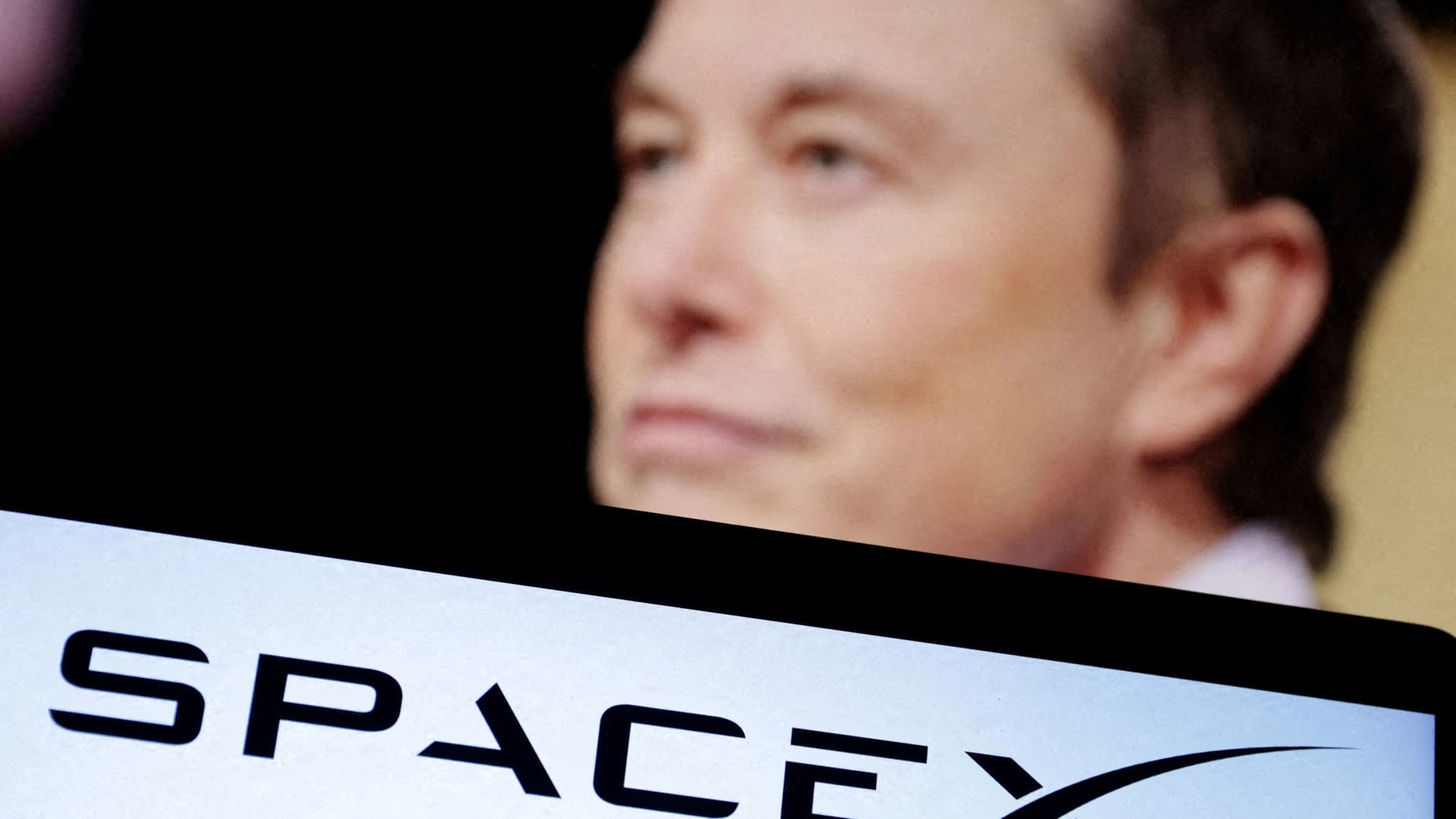
The Starmind project would put data centers in orbit, testing whether solar power in space can outweigh the costs of launching, cooling and maintaining computing hardware.
MARKET INSIDER — SpaceX has secured U.S. regulatory authorization for a constellation of up to one million satellites designed to operate as data centers in space, advancing Elon Musk’s ambition to build orbital infrastructure for artificial intelligence. The Federal Communications Commission’s November 25 decision clears an important regulatory hurdle for the proposed Starmind network. However, it does not establish that the system can be built economically or operated at its intended scale. Cooling equipment in a vacuum, financing deployment and managing congestion in orbit remain central challenges, according to eu-assets.contentstack.com
The decision also intensifies a debate over how expanding commercial activity in space could affect astronomy and other satellite operators.
An authorization with deployment deadlines
The FCC described Starmind as the first U.S. authorization for a constellation dedicated to orbital data centers. Its computing modules would process information for use on Earth, with radiofrequency communications supporting backup and emergency operations alongside optical links.
The approval includes a staged deployment schedule. SpaceX must place at least one authorized satellite into operation by November 25, 2033, followed by 10% of the maximum constellation by November 2035 and 50% by November 2038. The remaining deployment is required by November 2040.
These are regulatory milestones, rather than confirmation that construction, financing or launch capacity is already secured, the eu-assets.contentstack.com mentioned.
Why move computing into space?
The commercial argument centers on energy.
Supporters envision solar-powered computing infrastructure that could reduce pressure on terrestrial electricity grids and limit the land and water requirements associated with large data centers.
For AI developers, the attraction is an additional source of computing capacity beyond the constraints of ground-based infrastructure. For SpaceX, the concept would connect its launch capabilities with demand for AI processing.
Those potential benefits must ultimately be measured against the full cost of deploying and operating hardware in orbit. Access to sunlight is only one component of the economics; spacecraft manufacturing, communications, maintenance and replacement also matter.
Cold space does not make cooling easy
A fundamental engineering challenge is removing the heat produced by computing equipment.
On Earth, cooling systems can transfer heat to surrounding air or water. In the vacuum of space, there is no surrounding air to carry heat away through convection. Spacecraft must ultimately reject waste heat through thermal radiation, using surfaces designed for that purpose.
NASA’s thermal-control guidance explains that this process depends on factors including radiator area, surface properties and temperature. Increasing computing power therefore creates demanding thermal-design requirements.
Astrophysicist Adam Becker has questioned whether a million-satellite computing network is feasible, pointing to the scale of the technical and financial obstacles. His skepticism underscores the distance between obtaining permission and demonstrating a workable system.
Astronomers challenge the decision
The American Astronomical Society, Viasat and Amazon’s Kuiper Systems were among the organizations that filed petitions opposing SpaceX’s application.
The FCC found that granting the application served the public interest and addressed orbital-debris requirements. It dismissed concerns about environmental effects and optical astronomy that it considered outside its authority. That jurisdictional position does not resolve the underlying scientific objections, the eu-assets.contentstack.com reported.
The AAS warned that a large constellation could impair astronomical observations and undermine investments in research facilities. Reflective satellites could interfere with observations and alter the appearance of the night sky.
Other concerns include emissions associated with launches and atmospheric reentry, as well as collisions that could create additional debris and threaten spacecraft providing essential services.
The investment case still needs proof
For investors, the FCC decision advances a potentially significant infrastructure project, but leaves its commercial performance untested.
The next meaningful evidence will come from working satellites: how reliably they process data, how effectively they dissipate heat and how their costs compare with computing on Earth.
Successful demonstrations could support demand across launch services, spacecraft components, communications and computing hardware. Scaling those demonstrations into a commercially competitive network would require a much larger commitment of capital and operational capacity.
Starmind now has a regulatory path forward. Its economic case will depend on what SpaceX can demonstrate in orbit.
