
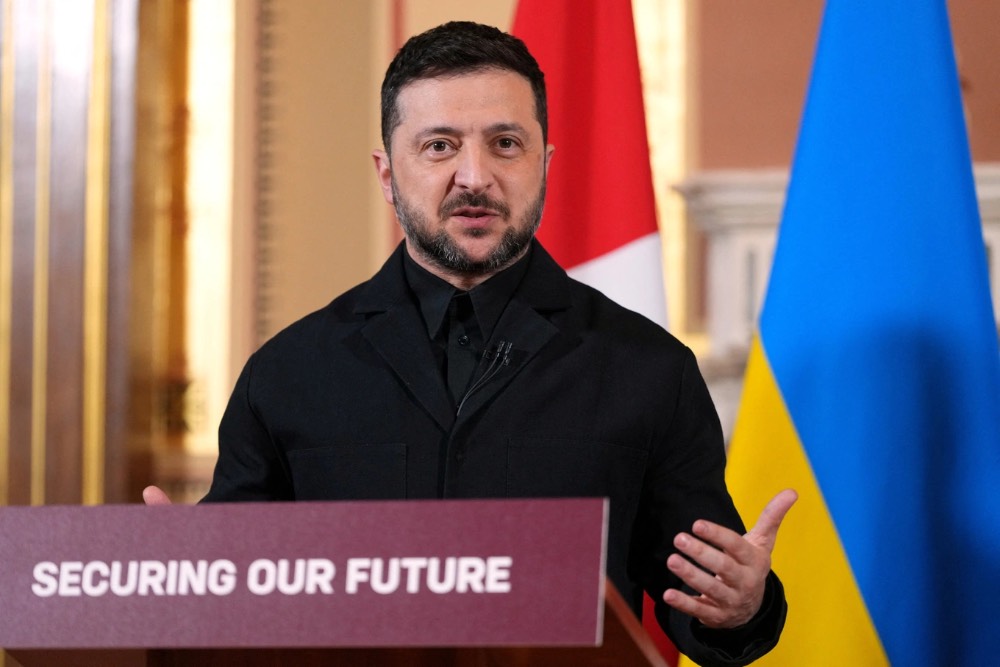
In his New Year’s address to the nation, Volodymyr Zelensky delivered a resolute message: Ukraine wants the war to end, but not at the price of its sovereignty, security, or long-term survival.
Speaking from his office in Kyiv, with a decorated Christmas tree behind him, Zelensky acknowledged the profound exhaustion felt across the country after nearly four years of full-scale war — a period longer than the Nazi occupation of many Ukrainian cities during World War II. Yet he made clear that fatigue has not translated into surrender.
Ukraine seeks peace, he said, but not peace “at any cost.” Any agreement that is weak or ambiguous would only postpone the conflict rather than resolve it. Zelensky stressed that signatures placed on fragile compromises merely fuel future war, while his own signature would only appear on a deal strong enough to secure lasting stability.
He emphasized that Ukraine’s objective is not a temporary ceasefire measured in weeks or months, but a durable peace that guarantees safety for Ukraine and Europe for years to come. According to the president, weeks of intensive diplomacy led by the United States have brought negotiators close to such an outcome.
Zelensky revealed that a peace framework is approximately 90% complete, with the remaining 10% representing the most decisive and sensitive issues. That final portion, he said, will determine not only the fate of Ukraine, but also the future security architecture of Europe.
At the heart of the unresolved disputes lies the question of territory. Russia currently controls roughly 19% of Ukrainian land in the south and east. However, Vladimir Putin has demanded that Ukraine withdraw from additional parts of eastern Donbas that Russian forces have not managed to occupy.
Zelensky firmly rejected those demands, describing them as deceptive. Ukraine’s position, he reiterated, is to freeze the conflict along current battle lines rather than concede further territory under pressure. Any territorial compromise, he added, must ultimately be decided by the Ukrainian people, not imposed through coercion.
The Ukrainian leader also referenced his recent meeting with Donald Trump in Florida, noting that the talks contributed to narrowing differences and advancing the peace framework. While progress has been made, Zelensky cautioned that the final decisions remain the most difficult.
Concluding his address, Zelensky sought to balance realism with resolve. Ukrainians are weary, he admitted, but they are not broken. Ending the war is a national priority, but ending Ukraine is not an option.
The message was unmistakable: peace is possible, but only a strong, credible agreement can ensure that it lasts — and that Ukraine emerges intact.
