
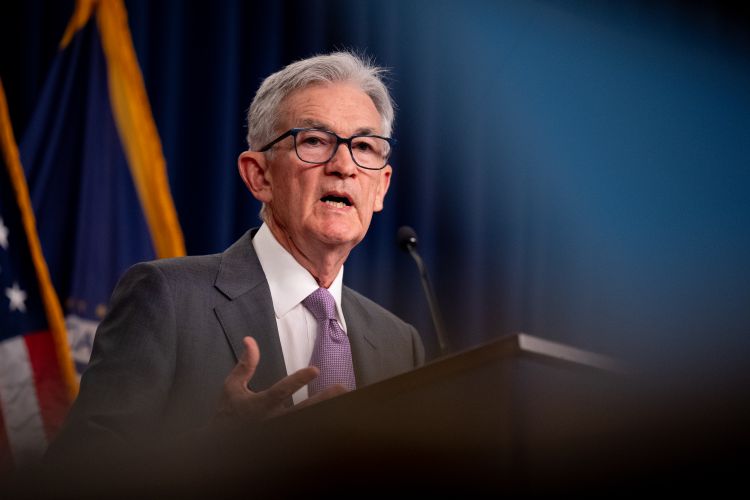
Fed chair calls investigation an unprecedented bid to politicize U.S. monetary policy
MARKET INSIDER – U.S. central bank independence is under extraordinary pressure after Jerome Powell said federal prosecutors have opened a criminal investigation into his conduct—an action he described as an attempt to intimidate the Federal Reserve amid escalating clashes with Donald Trump over interest rates. The revelation has sent shockwaves through Washington and global markets, raising concerns about whether monetary policy can remain insulated from political power.
In a video statement released Sunday, Powell confirmed that the U.S. Department of Justice had issued grand jury subpoenas related to his June testimony before the Senate Banking Committee on a multi-year renovation of historic Federal Reserve buildings. Powell said the probe threatens a potential indictment and should be viewed not as a response to wrongdoing, but as retaliation for the Fed’s refusal to set rates according to presidential demands.
Powell emphasized that Congress had been fully briefed on the renovation project through testimony and public disclosures, calling the investigation’s stated rationale a pretext. The New York Times first reported the probe, noting it is overseen by the U.S. Attorney’s Office for the District of Columbia, led by Jeanine Pirro, a former prosecutor appointed by Trump. The White House declined to comment, while the Justice Department said prosecutors have been instructed to prioritize potential abuse of taxpayer funds.
The confrontation unfolds against a long-running feud between Trump and Powell. Since returning to the White House in January 2025, Trump has repeatedly attacked the Fed for not cutting rates as aggressively as he prefers and has openly discussed replacing Powell when his term as chair ends in May. Former Fed governor Kevin Warsh and National Economic Council Director Kevin Hassett are widely seen as leading contenders.
Capitol Hill reaction was swift and bipartisan. Senator Thom Tillis, a Republican on the Senate Banking Committee, warned he would block any Trump nominee to the Fed Board until the matter is resolved, citing concerns over institutional credibility. Senator Elizabeth Warren, the committee’s top Democrat, accused Trump of trying to turn the central bank into a political instrument.
Market strategists say the episode could have lasting consequences. Brian Jacobsen of Annex Wealth Managementnoted that while Powell’s term as chair expires in May, his term as a Fed governor runs until January 2028—meaning he could legally remain on the board, limiting Trump’s ability to rapidly reshape Fed leadership.
The irony is stark: Powell was first nominated by Trump in 2017, yet their relationship deteriorated as the Fed resisted pressure for faster rate cuts. Now, as the investigation unfolds, the stakes extend far beyond one official. At issue is whether U.S. monetary policy will continue to be guided by data and evidence—or whether political intimidation will redraw the boundary between central banking and executive power.
