
Lower duties, energy realignment, and geopolitics collide—but legal questions linger
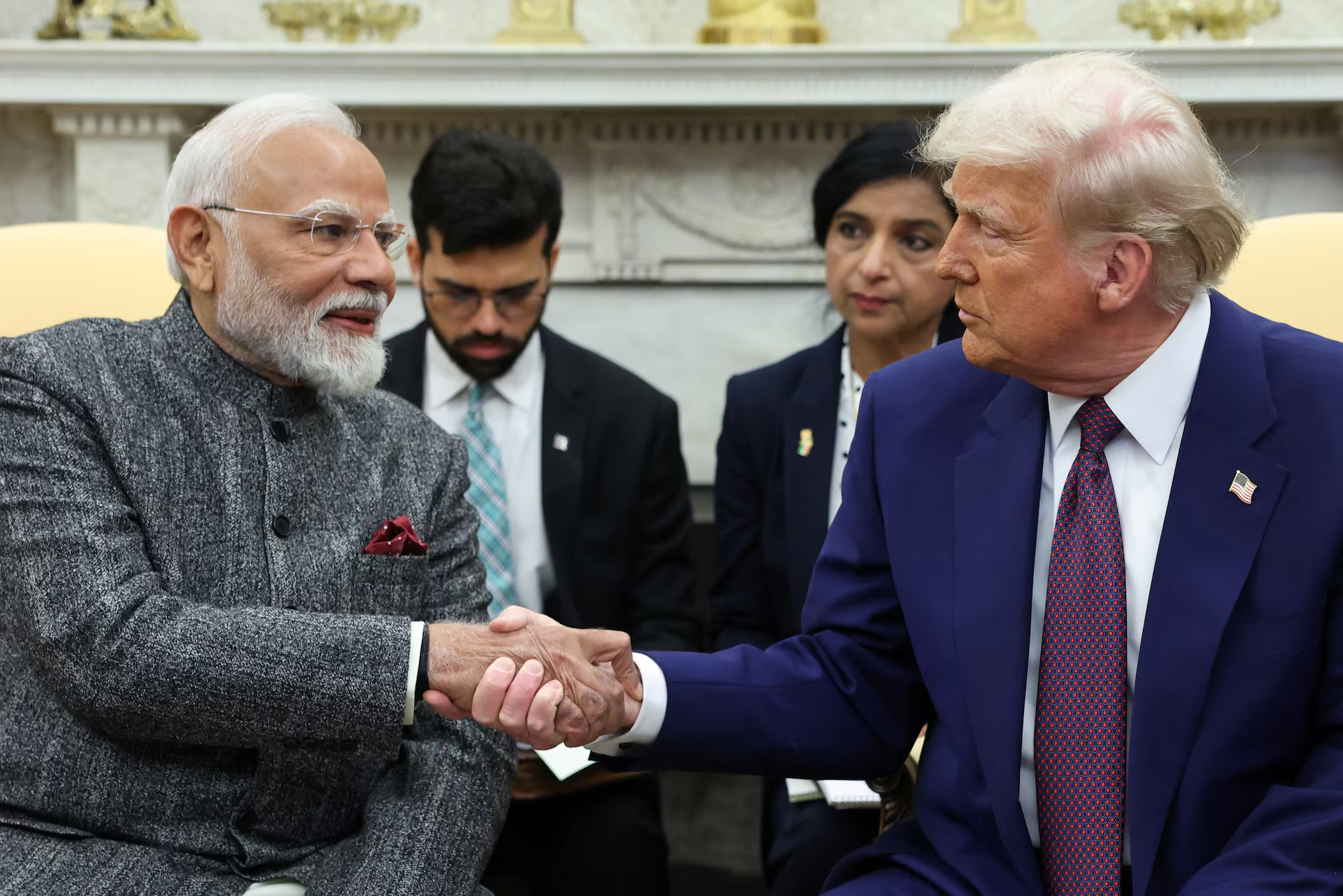
MARKET INSIDER – In a move with sweeping implications for global trade, energy markets, and geopolitics, Donald Trump said the United States and India have reached a trade deal that will immediately slash tariffs and reshape bilateral commerce. The announcement, made after a call with Narendra Modi, signals a renewed push by Washington to use trade as both an economic and geopolitical weapon—particularly against Russia.
According to Trump, the agreement lowers the U.S. “reciprocal” tariff on Indian goods from 25% to 18% with immediate effect, while India will move to reduce tariffs and non-tariff barriers on U.S. products to zero. Trump also said Modi committed to sharply increasing purchases of American goods—ranging from energy and technology to agriculture and coal—totaling more than $500 billion, while curbing India’s purchases of Russian oil in favor of supplies from the U.S. and potentially Venezuela.
The deal, as described by Trump on Truth Social, goes well beyond tariffs. He framed India’s shift away from Russian oil as a strategic step to help end the war in Ukraine, linking energy flows directly to global security outcomes. “When two large economies and the world’s largest democracies work together,” Modi later wrote on X, “it benefits our people and unlocks immense opportunities.” He confirmed the reduction in U.S. tariffs and praised Trump’s leadership on global peace and stability.
Yet beneath the headline-grabbing announcement lies a familiar uncertainty. No formal text of the agreement has been released, and it remains unclear whether anything has been signed. The White House and the Office of the U.S. Trade Representative did not immediately provide further details. Trade lawyers and Democratic lawmakers have once again questioned whether Trump can finalize binding trade deals without congressional approval—a controversy that has followed several of his trade moves since returning to office. Trump and his allies argue that Congress has effectively delegated that authority to the executive branch.
Industry veterans urge caution. Lori Mullins of Rogers & Brown Custom Brokers noted that markets have learned not to react prematurely to Trump’s trade proclamations. In practice, tariff changes only become enforceable once they appear in the Federal Register with specific codes and implementation dates—a step that has not yet occurred.
The backdrop makes the announcement particularly consequential. Last year, trade talks between Washington and New Delhi stalled over India’s continued reliance on Russian oil, prompting Trump to slap a 25% tariff on Indian goods on top of an earlier reciprocal levy. Trump now says that rate will drop to 18% immediately. The timing is also notable: the announcement came just a week after India finalized a sweeping free trade agreement with the European Union—what Modi called the “mother of all deals”—raising expectations that U.S.–India negotiations could accelerate.
If implemented as described, the deal would mark one of the most significant shifts in U.S.–India economic relations in decades, with ripple effects across energy markets, global supply chains, and geopolitical alliances. But until the legal and procedural details are published, investors and exporters are left navigating a familiar Trump-era paradox: markets move on the headline, while the fine print decides what actually changes.
