
U.S President signals strategic patience amid troop buildup; contrasts with Netanyahu’s call for ground role
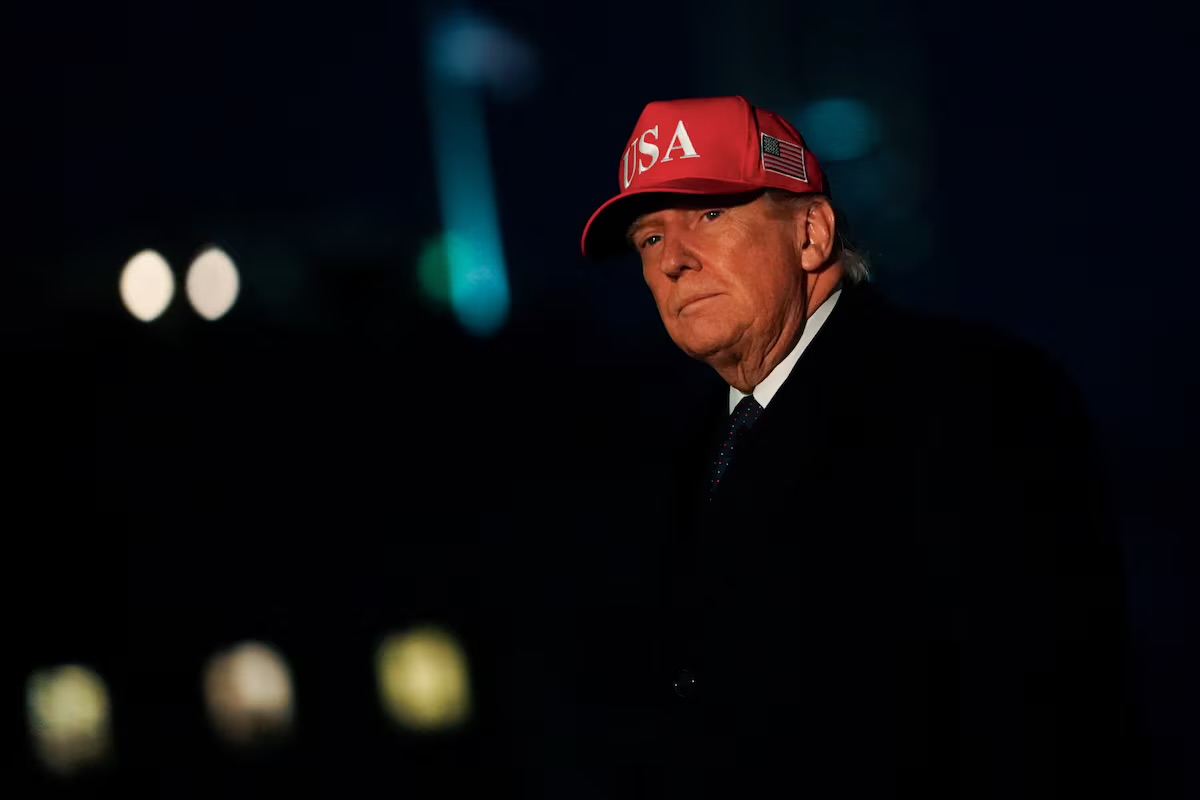
MARKET INSIDER – U.S President Donald Trump stated Friday, March 21, 2026, that the United States could withdraw from the ongoing war with Iran “right now” and still leave Tehran’s military capabilities crippled for at least a decade—but he rejected that outcome as unacceptable. In a roughly 15-minute phone interview with MSNBC’s Stephanie Ruhle, Trump argued that an immediate exit would allow Iran to eventually rebuild, whereas prolonged U.S. pressure would ensure it “never rebuild[s].” “If we left right now, it would take them at least 10 years to rebuild, but rebuild they will,” he said. “If we stay longer, they’ll never rebuild.”
The remarks arrive against a backdrop of escalating U.S. military commitments: multiple outlets reported the Pentagon is deploying up to 2,500 additional Marines from San Diego to the Middle East—the second such movement of thousands of troops in the past week—following earlier announcements of ground-force reinforcements aimed at securing energy routes and countering Iranian disruptions in the Strait of Hormuz. Trump, speaking from the Oval Office Thursday, had explicitly ruled out putting “boots on the ground in Iran,” yet the deployments suggest a broadening operational footprint focused on regional stability rather than direct invasion.
Israeli Prime Minister Benjamin Netanyahu offered a contrasting view the same day, insisting “there has to be a ground component” to achieve meaningful regime change in Iran—though he appeared to frame it as enabling an internal uprising by the Iranian people rather than a full U.S.-Israeli occupation. “There are many possibilities for this ground component,” Netanyahu said, underscoring Israel’s proximity-driven urgency.
Trump acknowledged broad alignment with Israel on goals for Iran but highlighted the key divergence: “They live right next door. We don’t. That’s a big difference.” The exchange reflects the delicate balance the administration is navigating—projecting overwhelming military dominance while avoiding the political and logistical quagmire of a prolonged ground war, even as energy markets remain gripped by fears of sustained Strait disruptions and oil prices hover above $100 per barrel.
For global investors and policymakers, Trump’s comments inject a measure of strategic ambiguity into an already volatile conflict. A longer U.S. commitment could cement Iran’s military rollback and potentially stabilize energy flows through coalition-backed escorts, offering relief to inflation-weary economies from Europe to Asia. Yet any perception of open-ended involvement risks entrenching higher-for-longer oil premiums, tighter monetary policy, and renewed equity caution. The coming weeks will test whether Washington’s calibrated pressure—bolstered by fresh Marines but short of full boots-on-the-ground invasion—forces Tehran toward capitulation, or if Netanyahu’s push for deeper ground involvement pulls the alliance toward a riskier, more protracted phase. Either path will reverberate far beyond the Gulf, shaping 2026’s macroeconomic trajectory.
