
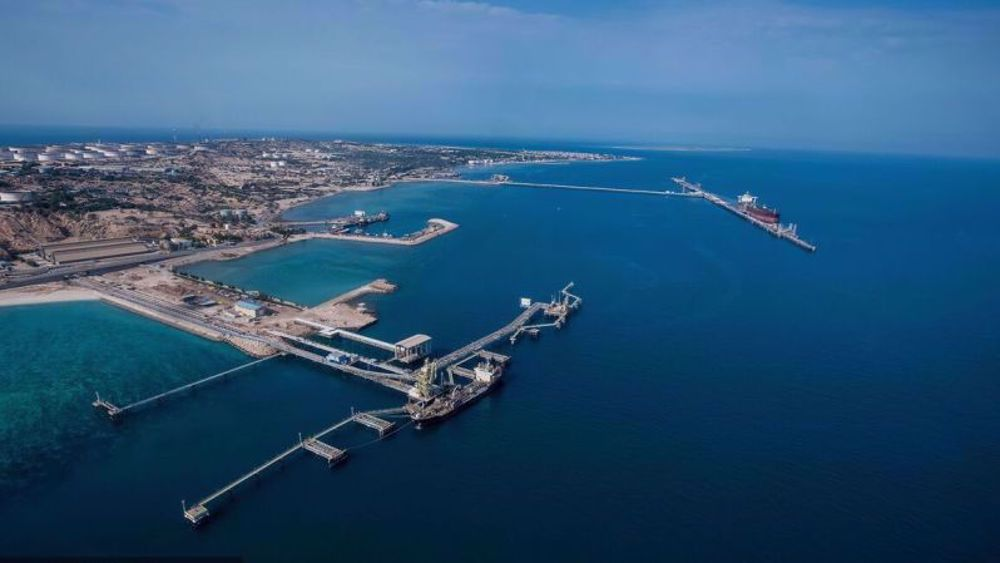
From Abu Musa to Larak, Iran’s “unsinkable carriers” may determine control of the world’s most critical energy chokepoint.
MARKET INSIDER – As tensions escalate in the Middle East, the battle for global energy stability is no longer abstract—it is geographically precise. A cluster of seven Iranian-controlled islands is emerging as the decisive factor in who controls the Strait of Hormuz, the narrow corridor through which roughly 20% of the world’s energy supply flows.
At the center of this strategic equation is not just Kharg Island, which handles up to 90% of Iran’s crude exports, but a wider defensive arc of islands—Abu Musa, Greater Tunb, Lesser Tunb, Hengam, Qeshm, Larak, and Hormuz. Together, they form what analysts describe as Iran’s “arch defense,” effectively allowing Tehran to monitor, disrupt, or block maritime traffic at will.
The military logic is straightforward. The geography of the Gulf forces large tankers and warships into narrow lanes, often within striking distance of these islands. From these positions, Iran’s Islamic Revolutionary Guard Corps can deploy drones, missiles, naval mines, and fast-attack boats—turning fixed land into what strategists call “unsinkable aircraft carriers.”
This creates a formidable challenge for any external force. Even if United States naval groups can project power into the region, securing safe passage would likely require neutralizing multiple island positions simultaneously. Analysts suggest such operations could involve amphibious assaults, airborne deployments, and sustained airstrikes—potentially taking days or even weeks.
But the military calculus is only part of the equation. Control of these islands carries significant political risk. Several of them, particularly Abu Musa and the Tunb islands, are subject to longstanding territorial disputes with the United Arab Emirates. Any attempt to seize or transfer control could trigger diplomatic fallout—even among allies—complicating post-conflict stability.
The stakes are amplified by what lies beyond the battlefield. Disruptions in Hormuz have already driven oil prices into triple digits, fueling inflation and destabilizing global markets. Securing the strait is not just a military objective—it is an economic imperative with worldwide consequences.
Yet even a successful operation would not guarantee stability. Holding these islands would expose occupying forces to sustained missile and drone attacks from the Iranian mainland, potentially locking them into a prolonged and politically costly engagement.
The deeper reality is that Hormuz is not controlled by a single point—but by a system. And that system favors defense. Geography, proximity, and asymmetric capabilities give Iran a structural advantage that is difficult to dislodge without significant escalation.
The contrarian insight: the true power in modern conflict may not lie in fleets or firepower—but in geography. In Hormuz, a handful of islands may matter more than entire armies—and controlling them could determine not just the outcome of a war, but the direction of the global economy.
