
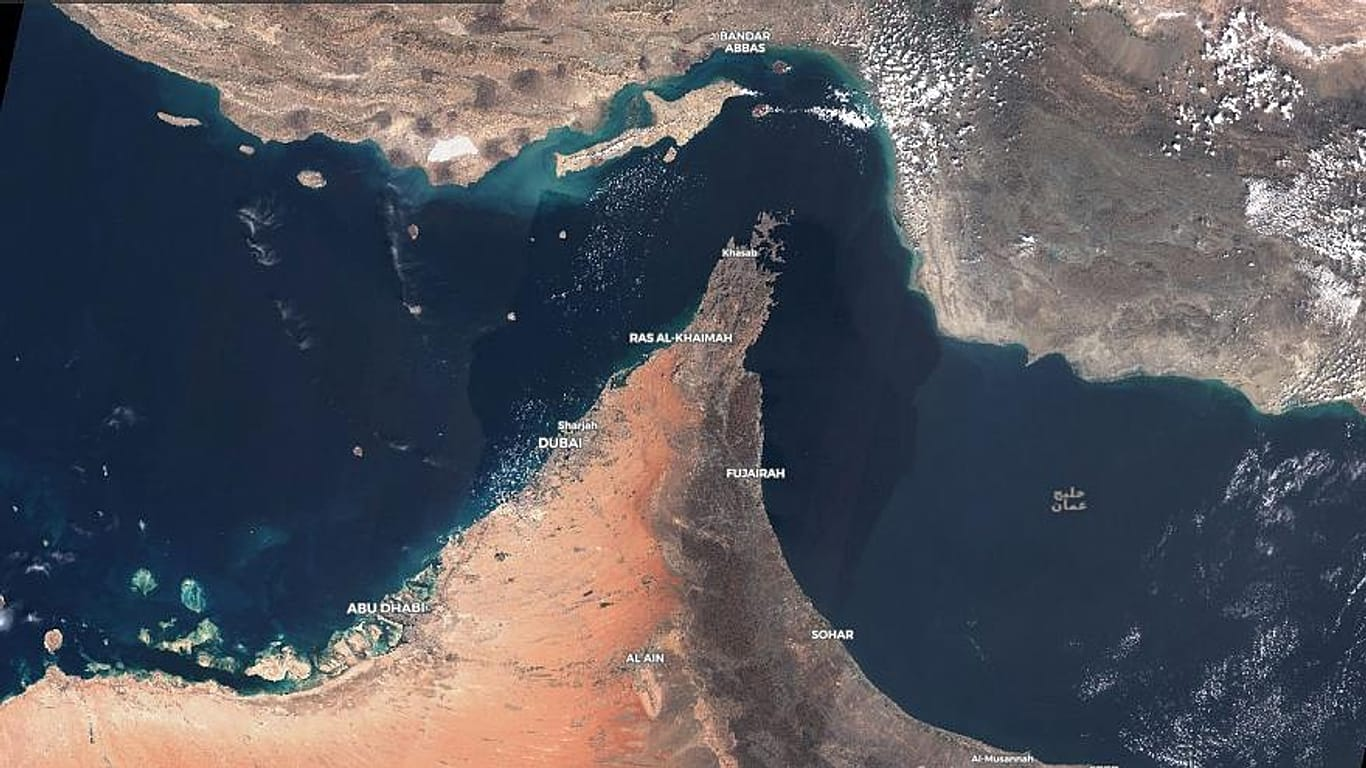
Tehran seeks control of a vital oil chokepoint, reshaping global trade and energy markets
MARKET INSIDER – The world’s most critical energy artery is no longer just a geopolitical flashpoint—it is becoming a potential toll booth. Iran’s latest demand to end its conflict with the United States and Israel—recognition of its sovereignty over the Strait of Hormuz—signals a dramatic escalation that could redraw the economics of global trade and energy flows.
Roughly 20% of the world’s oil and liquefied natural gas passes through this narrow corridor. Now, Tehran appears ready to convert that strategic leverage into a recurring revenue stream worth billions, while simultaneously holding a powerful lever over inflation, supply chains, and energy security from Asia to Europe.
The shift follows an unexpected realization in Tehran: disrupting Hormuz is easier—and more effective—than previously assumed. Shipping traffic has slowed to near paralysis amid Iranian attacks, sending oil prices surging and forcing governments to scramble for alternative supply routes. Analysts note that Iran’s success in choking global trade has likely emboldened its ambitions to institutionalize control. What began as a wartime tactic is rapidly evolving into a long-term economic strategy.
At the center of this strategy is a proposed tolling system. Iranian lawmakers are reportedly exploring legislation that would require vessels transporting oil, LNG, and goods through Hormuz to pay transit fees. Estimates suggest that charging around $2 million per tanker could generate up to $600 million per month from oil shipments alone, rising above $800 million when LNG is included—placing it on par with revenues from the Suez Canal, one of the world’s most lucrative trade corridors.
Such a move would fundamentally challenge international maritime law. Under the United Nations Convention on the Law of the Sea, global shipping lanes like Hormuz are governed by the principle of free transit passage. Legal experts argue there is no precedent for a country successfully imposing tolls on an international strait, and Western leaders have already signaled strong opposition. U.S. Secretary of State Marco Rubio has warned that any such system would be “illegal” and “dangerous,” with G7 nations calling for the immediate restoration of toll-free navigation.
Yet enforcement may prove more complex than legal theory suggests. Early signals indicate that a de facto system could already be emerging. Shipping intelligence reports suggest some vessels are rerouting closer to Iranian waters, with unconfirmed cases of operators paying for safe passage. Meanwhile, Iran’s Revolutionary Guard is reportedly registering approved ships, hinting at the architecture of a controlled transit regime taking shape in real time.
For Tehran, the incentives are clear. Heavily constrained by sanctions, Iran is searching for low-cost mechanisms to offset economic isolation. Monetizing Hormuz offers a rare opportunity: a geographically anchored asset that cannot be relocated, bypassed easily, or replaced in the short term. For the global economy, however, the implications are far more profound. A priced chokepoint at Hormuz would act as a hidden tax on energy, feeding directly into inflation, shipping costs, and geopolitical risk premiums worldwide.
The deeper question now facing policymakers and investors is not whether Iran can legally enforce such a system—but whether it can normalize it through gradual practice. If even a fraction of global shipping begins to accept paid passage as the cost of certainty, Hormuz could quietly evolve from a flashpoint into a monetized gateway—reshaping the rules of global trade without a single formal agreement.
