
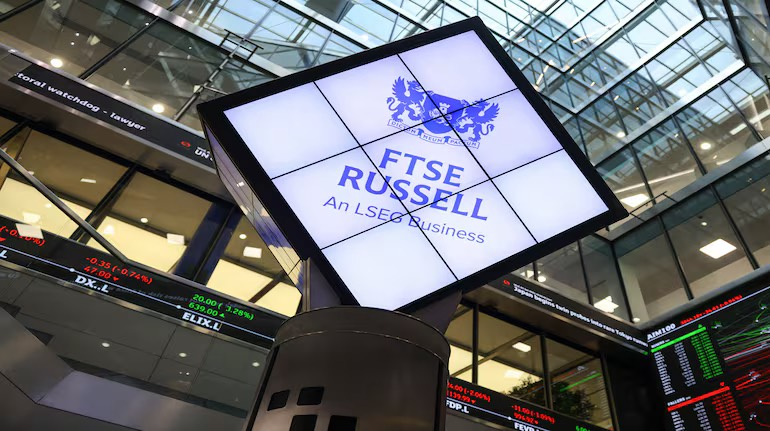
FTSE Russell reclassification could unlock billions—if trust and access gaps are resolved
MARKET INSIDER – Vietnam’s long-awaited elevation to Emerging Market status by FTSE Russell is more than a symbolic milestone—it is a structural shift that could redirect billions of dollars in global capital flows toward one of Asia’s fastest-growing economies. For international investors tracking benchmark-driven allocations, the move instantly places Vietnam on the radar of major funds managing trillions in emerging market assets.
The implications extend far beyond portfolio rebalancing. As Vietnam begins to enter global indices with measurable weightings, even modest allocations could translate into hundreds of millions—if not billions—of dollars in passive inflows. For a market still considered relatively underpenetrated, this influx has the potential to reshape liquidity, valuations, and investor perception at scale.
The most immediate impact will likely come from institutional capital. Emerging market funds—many benchmarked to FTSE indices—are structurally required to allocate capital to newly upgraded markets. Even a small index weighting could trigger sizable inflows, amplifying demand for Vietnamese equities and tightening spreads in a market historically dominated by local investors. This dynamic mirrors earlier upgrade cycles seen in markets like China and Saudi Arabia, where index inclusion catalyzed sustained foreign participation.
Beyond capital inflows, the upgrade carries broader economic implications. Vietnam’s financial sector stands to benefit from increased deal activity, deeper capital markets, and stronger integration into global finance. At the same time, there is cautious optimism that the market will gradually diversify beyond its heavy concentration in banking and real estate, opening pathways for industrials, technology, and consumer sectors to gain prominence.
Yet the narrative is not without friction. Despite the upgrade, structural constraints—such as foreign ownership limits, settlement inefficiencies, and regulatory inconsistencies—continue to temper enthusiasm among institutional investors. Governance concerns and lingering skepticism among local investors, many of whom still favor gold and real estate, highlight a trust deficit that cannot be resolved overnight. Crucially, Vietnam remains under observation for further upgrades by global index providers like MSCI, where stricter criteria around market accessibility and transparency apply.
For investors, the opportunity is nuanced. Passive vehicles such as ETFs and established investment trusts like VinaCapital Vietnam Opportunity Fund and Vietnam Enterprise Investments Ltd offer structured exposure, but active management may outperform in a market where information asymmetry and regulatory complexity remain high. The next phase will reward those who can navigate both macro tailwinds and micro-level inefficiencies.
Vietnam’s upgrade is not the finish line—it is the opening act of a larger capital market transformation. The real question for global investors is not whether money will flow in, but whether Vietnam can build the institutional trust and market infrastructure needed to sustain it. If it succeeds, the country could become one of the defining emerging market stories of the next decade.
