
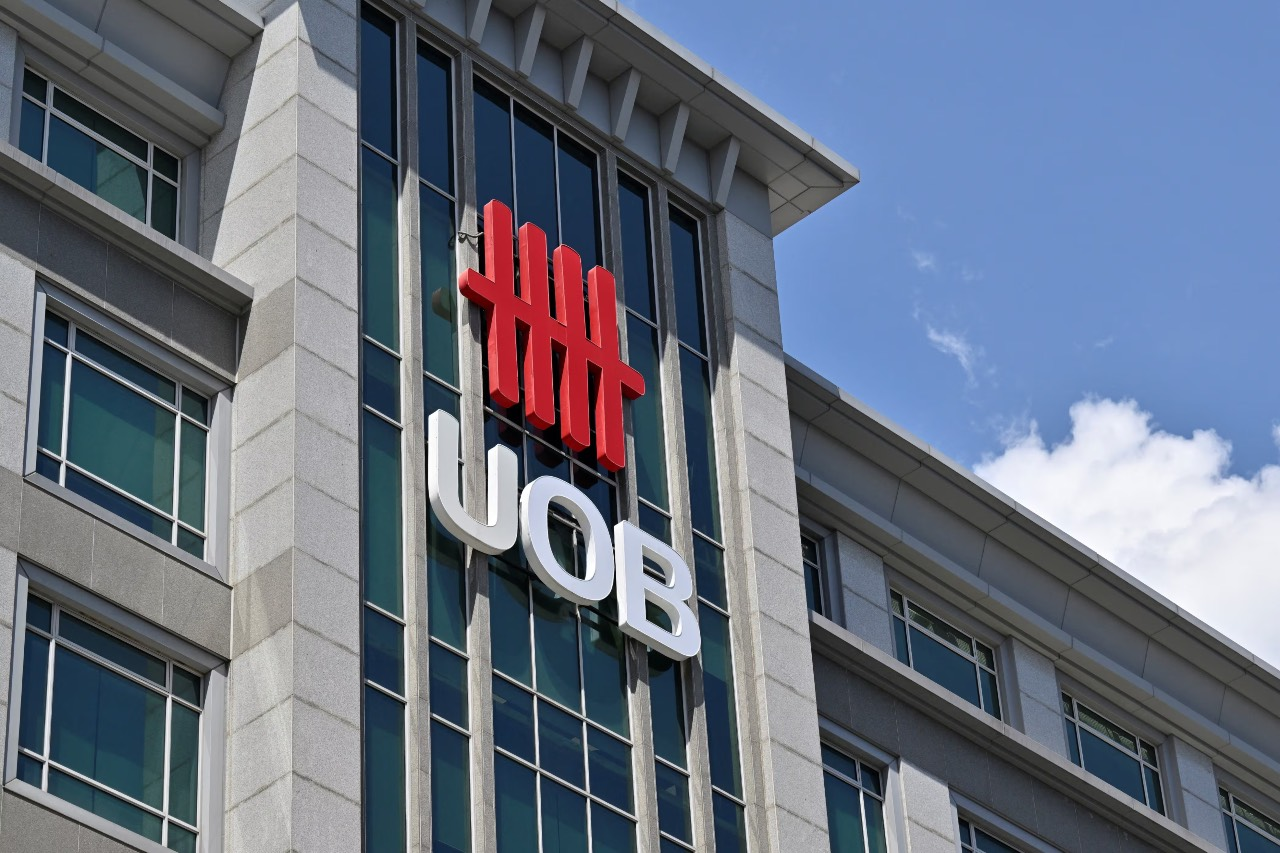
The Singapore lender will retain access to investment products through a 10-year distribution agreement, while Allianz gains scale, licenses and retail reach across Southeast Asia.
MARKET INSIDER — United Overseas Bank has agreed to sell UOB Asset Management to Allianz Global Investors for S$555 million ($434 million), allowing the Singapore lender to concentrate on wealth advice and product distribution while giving Allianz a significantly larger investment platform across Asia.
The transaction covers UOB’s entire ownership of the fund manager, excess cash held by the business and a 10-year distribution partnership. UOB expects the sale to generate a pre-tax gain of approximately S$330 million and add 14 basis points to its common equity tier 1 capital ratio.
Key Highlights
- AllianzGI will acquire UOB Asset Management for S$555 million, including excess cash and distribution rights.
- UOB Asset Management oversees about S$42 billion in client assets across eight Asian markets.
- A 10-year agreement will allow UOB to continue distributing investment products in five Southeast Asian countries.
- UOB expects a S$330 million pre-tax gain and a 14-basis-point improvement in its CET1 ratio.
UOB changes its role, rather than leaving investment management
UOB is not withdrawing from the investment-product business. Instead, it is separating manufacturing from distribution.
After the transaction closes, AllianzGI will own and operate UOB Asset Management, while UOB will continue advising clients and distributing UOBAM and AllianzGI funds through its banking network.
The arrangement will cover Singapore, Indonesia, Malaysia, Thailand and Vietnam, including unit trusts, mutual funds and other investment products. The distribution partnership will begin after completion of the acquisition, which is expected in 2027 and remains subject to regulatory approvals, according to Reuters.
This model allows UOB to retain the customer relationship and potential fee income without carrying the full operational burden of owning an asset manager. Investment research, fund administration, product development, regulatory compliance and technology all require scale, particularly as investors demand broader international products and lower fees.
For UOB, the sale therefore represents a shift toward what it considers its stronger competitive advantages: wealth advice, regional customer relationships and distribution.
The bank serves more than eight million customers across ASEAN. Combining that customer network with AllianzGI’s global investment platform could allow UOB to expand its product offering faster than it could by developing every capability internally.
Allianz buys scale and distribution across Asia
UOB Asset Management managed approximately S$42 billion, equivalent to €28 billion, as of December 31, 2025. It operates in Singapore, Brunei, Indonesia, Japan, Malaysia, Taiwan, Thailand and Vietnam.
Adding those assets will lift AllianzGI’s client assets under management in Asia-Pacific above €170 billion. The transaction will also immediately double AllianzGI’s assets under management in Singapore, where the firm has operated since 1999, Allianz citied.
The strategic value extends beyond the assets themselves. Acquiring UOBAM gives AllianzGI established teams, regulatory licenses and local investment capabilities in several Southeast Asian markets where building a business independently could take years.
UOBAM contributes regional and single-country equity strategies, Southeast Asian market expertise and Sharia-compliant products. AllianzGI can combine those capabilities with its international equity, fixed-income, multi-asset and private-market offerings.
The 10-year distribution agreement may be equally important. Asset managers frequently struggle to reach retail investors even when they have competitive products. Access to UOB’s branch, advisory and digital networks gives AllianzGI a ready-made route to customers across some of ASEAN’s largest economies.
The purchase price represents about 1.3% of UOBAM’s reported assets under management. That ratio should not be treated as a conventional valuation multiple, however, because the S$555 million consideration also includes excess cash and the value of the distribution agreement.
Sale strengthens UOB’s capital position
UOB expects to record a pre-tax gain of approximately S$330 million, excluding one-off transaction expenses.
The bank also estimates that the disposal will increase its CET1 ratio by about 14 basis points. CET1 is the highest-quality form of regulatory capital and provides a buffer against unexpected losses.
A 14-basis-point increase is not transformative for a bank of UOB’s size, but it creates additional flexibility for lending, dividends, share repurchases or investment in faster-growing businesses.
The sale may also improve the bank’s capital efficiency. Owning a fund-management company ties up management resources and capital, while product distribution can generate fees with a lighter operating structure.
The principal trade-off is that UOB will surrender the future earnings and strategic control associated with owning the asset manager. The financial success of the transaction will therefore depend partly on whether increased distribution revenue and improved capital deployment compensate for the earnings being sold.
UOB shares were down approximately 0.5% by midday Wednesday, broadly matching the Straits Times Index. The limited initial reaction suggests investors viewed the deal as strategically meaningful but not large enough to materially change the bank’s near-term earnings outlook, Reuters noted.
Allianz accelerates its Singapore expansion
The UOBAM acquisition is Allianz’s second major Singapore-related transaction announced in less than two weeks.
On July 24, Allianz agreed to acquire HSBC Life Singapore for S$2.7 billion and pay additional consideration for a 15-year exclusive distribution agreement with HSBC Singapore. The combined value of the insurer acquisition and associated distribution rights was reported at S$2.9 billion, the Allianz reported.
Together, the two announcements show Allianz using acquisitions and bank partnerships to expand simultaneously across insurance, retirement products and investment management.
Singapore offers several advantages as a regional base: a large pool of private wealth, an established regulatory framework and direct commercial connections with fast-growing Southeast Asian economies.
The two transactions also reveal the importance Allianz places on bank distribution. Its HSBC agreement provides access to insurance customers in Singapore, while the UOB partnership opens a broader channel for investment products across five ASEAN markets.
Rather than relying entirely on its own branches or digital platforms, Allianz is embedding its products within banking relationships that customers already use.
What the deal means for Vietnam and Southeast Asia
Vietnam is among the markets where the transaction may have a meaningful long-term effect.
UOB operates a banking subsidiary in Vietnam, while UOB Asset Management already has a local presence. After completion, AllianzGI will gain that established platform and the ability to distribute products through UOB’s regional network, subject to local regulatory requirements.
For Vietnamese investors, the combination could eventually expand access to international funds, retirement solutions and professionally managed multi-asset products. UOBAM’s local expertise could also help AllianzGI develop Vietnam-specific strategies for regional and global investors.
The acquisition reflects a wider institutional view that Southeast Asia’s asset-management market will grow alongside household wealth, pension savings and demand for alternatives to bank deposits and property.
Competition is likely to intensify as global managers seek partnerships with banks that already possess customer trust, distribution infrastructure and regulatory access. Local fund managers may face greater pressure to improve product quality, digital distribution and fees, but they could also benefit from partnerships that connect domestic capital markets with international investors.
The potential benefits will take time to materialize. The deal must obtain approvals across several jurisdictions, and integrating investment teams, products and operating systems across eight markets will be complex.
Employees and clients remain in place during the transition
All approximately 500 UOBAM employees across the region are expected to transfer to AllianzGI, which has committed to maintaining their employment.
UOB Asset Management will continue operating normally until the sale is completed. That continuity is important because fund-management acquisitions can create uncertainty for portfolio managers, institutional clients and distributors.
The most important operational question will be whether AllianzGI can retain UOBAM’s investment professionals and client relationships after ownership changes. The value of an asset-management franchise depends heavily on people, performance records and the confidence of investors whose funds can often be withdrawn.
Maintaining the UOBAM brand, investment process and personnel during the transition could reduce the risk of asset outflows.
What investors should watch next
Regulatory approval is the immediate condition. The transaction involves licensed entities in multiple jurisdictions, and completion is not expected until 2027.
Investors should also monitor whether UOB provides more detail about the earnings contribution being sold, the treatment of the S$330 million gain and how the released capital will be used.
For Allianz, the central test will be asset retention. The acquisition’s economics depend not only on the S$42 billion currently managed but also on whether those assets remain on the platform and whether UOB’s distribution network produces meaningful net inflows.
Product integration will be another important measure. AllianzGI must demonstrate that its global investment capabilities can be successfully distributed to retail and wealth-management clients across markets with different regulations, currencies and investor preferences.
The transaction ultimately represents more than the sale of a fund-management subsidiary. UOB is betting that customer advice and distribution offer better capital efficiency than owning investment-product manufacturing. Allianz is making the opposite—but complementary—calculation: that global investment scale becomes more valuable when connected to a trusted regional banking network.
