
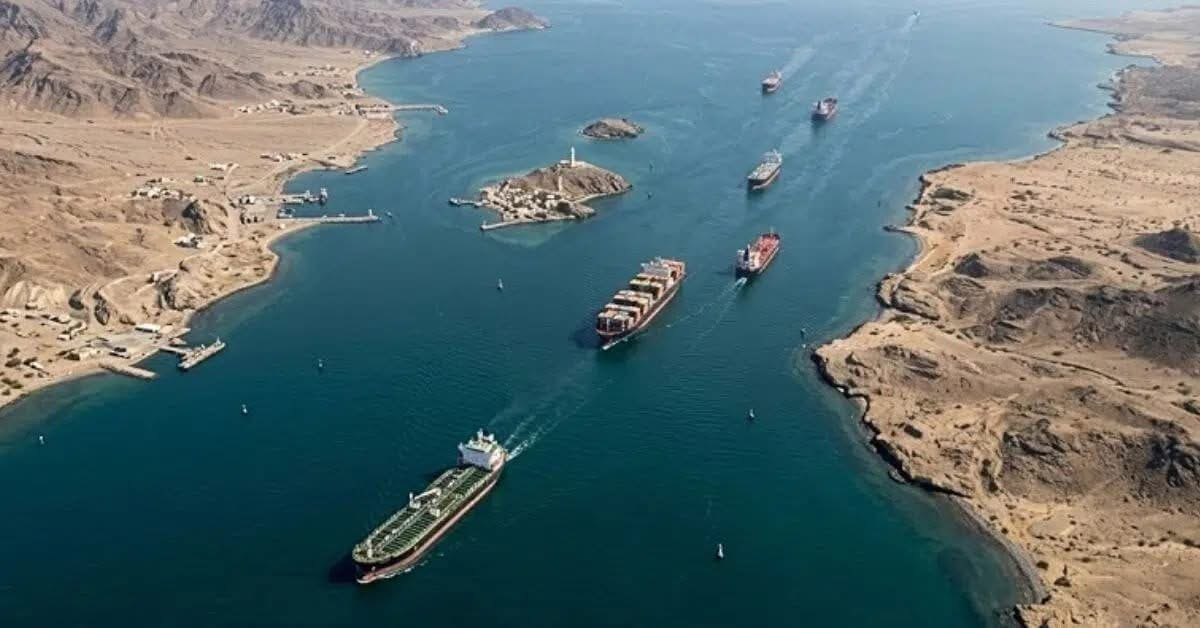
Tehran links restored shipping and nuclear talks to U.S. concessions, while attacks on Saudi Arabia cloud prospects.
MARKET INSIDER — Iran has proposed reopening the Strait of Hormuz and restarting nuclear negotiations with the United States within seven days if Washington accepts its conditions, offering a potential route toward easing a major disruption to global energy supplies.
Foreign Minister Abbas Araghchi outlined the proposal on the sidelines of the United Nations General Assembly. He linked it to an earlier ceasefire framework that collapsed in July and whose terms Washington has previously rejected.
The offer is a diplomatic proposal, not an agreed reopening timetable. Oil prices eased on Friday, but continued attacks on Saudi Arabia and severely reduced shipping activity underscored the obstacles to restoring reliable trade.
Key Highlights
- Iran says Hormuz could reopen within seven days if the United States meets conditions linked to the earlier Islamabad agreement.
- Brent traded near $105.56 as investors weighed renewed diplomacy against continuing regional attacks.
- A political agreement would need to translate into safer shipping, available insurance and sustained cargo movements to normalize supply.
Tehran returns to an earlier negotiating framework
Araghchi said Iran’s conditions were consistent with the Islamabad Memorandum of Understanding, a June ceasefire agreement between Washington and Tehran that subsequently broke down.
“If certain conditions are met, the Strait of Hormuz will be open at the end of seven days, and talks will be restarted,” he told reporters.
The conditional wording is important. The proposal does not establish a fixed reopening date, and the report does not indicate that Washington has accepted its terms.
It also brings an existing disagreement back to the negotiating table: the Trump administration has previously said it would not return to the June framework.
Restarting nuclear discussions would be a separate milestone from reaching a nuclear agreement. Even if the parties agreed on shipping access, the broader dispute could remain unresolved.
Oil eases, but disruption remains substantial
November Brent crude futures traded about 1% lower at $105.56 a barrel, while November West Texas Intermediate futures were down approximately 1.8% at $92.94 in the source report’s Friday snapshot.
The modest decline suggests investors were allowing for the possibility of diplomatic progress without fully removing the risk of further supply disruption.
The Strait of Hormuz normally handles roughly a fifth of global oil supply. Its importance means that changes in shipping access can affect crude availability, freight costs and inflation expectations well beyond the Middle East.
Preliminary tracking data reported by Reuters showed nine commodity-vessel transits on Thursday, down from 14 the previous day. The figures were published on Friday, making the distinction between the observation date and reporting date important.
Vessel counts also do not directly measure the volume of oil delivered. Ships differ in size, cargo and direction of travel, while some movements involve commodities other than crude.
China becomes part of the diplomatic effort
The Iran conflict has featured in this week’s U.S.-China summit in Washington, where President Donald Trump and President Xi Jinping have also discussed trade, artificial intelligence and Taiwan.
Trump has sought Beijing’s assistance in pressuring Tehran toward a settlement. Indirect U.S.-Iran discussions have meanwhile resumed around the U.N. gathering in New York, according to the source report.
David Perdue, the U.S. ambassador to China, told CNBC that Washington had repeatedly warned Beijing against providing Iran with direct or indirect assistance, including intelligence, components or military equipment.
Those comments describe Washington’s position. They do not establish that China has accepted a particular mediation arrangement or that either side has secured Iranian agreement to new terms.
For markets, the value of Chinese involvement would lie in whether it helps produce commitments that both Washington and Tehran are prepared to implement.
Saudi attacks complicate the outlook
The diplomatic initiative comes as fighting continues elsewhere in the region.
Saudi authorities reported that the Houthis launched dozens of missiles and drones at Saudi targets on Friday morning, and said six ballistic missiles were intercepted. Emergency alerts were issued in Mecca, Jeddah and Yanbu.
Iranian President Masoud Pezeshkian sought to distance Tehran from those attacks, telling Fox News that the Houthis were responsible for their own actions and that Iran was not at war with Saudi Arabia.
His position highlights a practical complication: an understanding between Washington and Tehran would not necessarily resolve every source of danger facing regional energy infrastructure and shipping.
A reopening of Hormuz could therefore coexist with continued disruption on other export routes.
Reopening would take more than an announcement
The immediate market response to an agreement could be faster than the recovery in physical shipments.
Shipowners would need confidence that vessels could transit safely. Insurers would need to assess coverage, while exporters and buyers would have to coordinate loading schedules, vessel availability and delivery windows.
Recent reporting that insurance costs for tankers loading at Saudi Arabia’s main Red Sea port have risen sharply illustrates the wider logistical pressure. Restoring access to one route would not automatically remove costs across the region.
For Asian energy importers, a sustained recovery in shipments could ease supply uncertainty and eventually lower delivered fuel costs. Airlines, transport operators and energy-intensive manufacturers could benefit if those savings pass through.
However, benchmark crude prices, freight charges, insurance and exchange rates all influence the final cost to buyers. A diplomatic headline alone would not guarantee immediate relief.
What investors should watch next
The first test is an explicit U.S. response to Iran’s conditions, followed by clarity on the sequence of reciprocal steps and when any seven-day period would begin.
The next evidence would be operational: fewer attacks, more completed vessel transits, stronger export loadings and improving insurance availability.
Investors should also distinguish an agreement to resume talks from a ceasefire, and a ceasefire from dependable commercial access. Each would represent progress, but each addresses a different part of the disruption.
Iran’s offer creates a possible opening. Its market significance will depend on whether both sides turn conditional statements into commitments that shipping operators can trust.
