
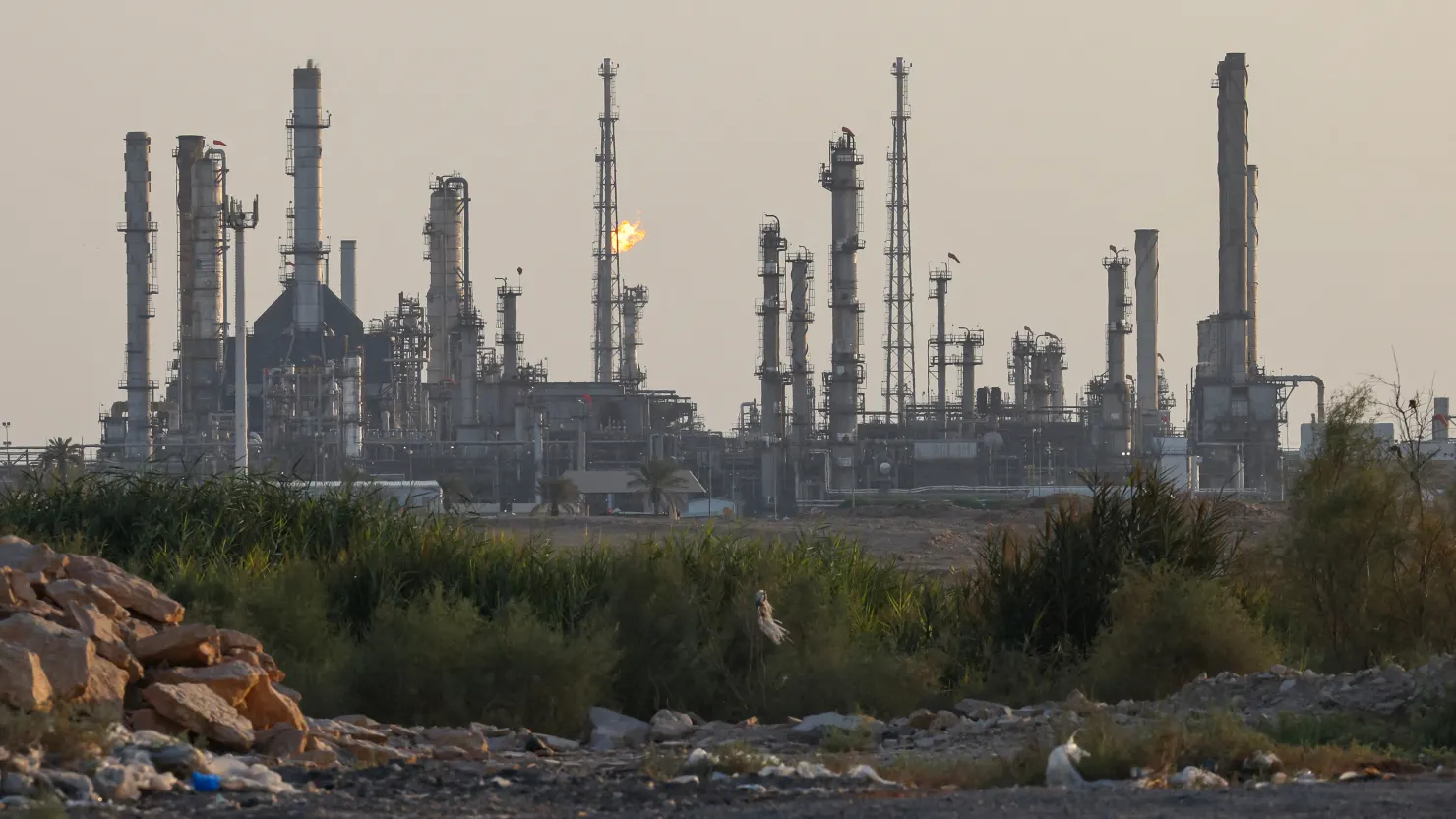
Damage at Rabigh remains unconfirmed, while fresh Gulf security incidents threaten energy infrastructure despite continued diplomatic efforts.
MARKET INSIDER — Yemen’s Iran-backed Houthis claimed Sunday that they struck Saudi Arabia’s Rabigh oil refinery, adding to concerns over regional energy security as Washington and Tehran remain divided over terms to end their war. The group claimed a direct hit, but the extent of any damage or operational disruption remained unclear. Separately, President Donald Trump warned that further U.S. strikes against Iran could follow in 2027 if negotiations fail. Oil prices nevertheless edged lower in early Asian trading Monday, with Brent near $92 a barrel as markets assessed the latest developments.
Key Highlights
- The Houthis claimed an attack on Rabigh, but damage and any impact on refinery operations remained unconfirmed.
- Qatar continues mediation efforts between Washington and Tehran amid warnings of renewed U.S. strikes.
- Brent and WTI edged lower despite additional security incidents involving Gulf infrastructure and shipping.
Rabigh attack claim awaits confirmation
The Houthis said they targeted the Rabigh refinery on Saudi Arabia’s western Red Sea coast on November 22. Reuters reported that Saudi authorities had not immediately commented on the claimed strike.
Earlier Sunday, the Saudi-led coalition said it intercepted and destroyed a Houthi drone approaching the kingdom’s western region. That statement did not establish whether the claimed refinery attack caused damage.
Rabigh, approximately 165 kilometers north of Jeddah, hosts Petro Rabigh, an integrated refining and petrochemical complex developed by Saudi Aramco and Japan’s Sumitomo Chemical, according to Reuters
For energy markets, the unresolved issue is whether the incident affected production, storage or shipments. An attack claim alone does not establish a loss of supply.
Gulf infrastructure and shipping face further threats
The refinery claim followed other reported security incidents across the Gulf over the weekend.
Bahraini authorities said an Iranian attack on a civilian industrial facility injured two people Saturday.
The United Kingdom Maritime Trade Operations agency also reported an incident involving a tanker and military forces in the Gulf of Oman on Sunday. It followed reports that two tankers had been struck by unidentified projectiles the previous day.
The agency provided no further details about Sunday’s incident and urged vessels to remain vigilant.
These developments add to uncertainty surrounding regional shipping and energy infrastructure. Since the U.S.-Israeli war with Iran began in late February, hostilities have disrupted trade through the Strait of Hormuz and increased pressure on global energy supply chains.
Trump warns of strikes while mediation continues
Trump warned of possible strikes against Iran in 2027 if negotiations fail, according to Fox News
The warning leaves the possibility of renewed military escalation alongside continuing diplomatic efforts. It does not amount to an announcement that a new operation has been ordered.
Qatar remains an intermediary between the two sides. Iranian Deputy Foreign Minister Kazem Gharibabadi said Saturday that Tehran was maintaining both in-person and virtual contact with mediators to explore another opportunity for diplomacy.
Reuters reported that a Qatari delegation held talks in Tehran on Friday night. Iranian officials have expressed willingness to pursue a negotiated settlement, while Trump has said Tehran’s proposed terms were unacceptable, Reuters reported.
Oil edges lower despite the security headlines
Brent crude futures slipped 0.22% to $92.35 a barrel in early Asian trading Monday. U.S. West Texas Intermediate futures declined 0.19% to $83.25.
The modest declines show that the latest headlines had not triggered an immediate oil-price surge at that point in the session. They do not establish that risks to supply have diminished.
The distinction between threats and confirmed disruption remains central. Damage that reduces refinery output could affect fuel availability, while interference with terminals or tankers could delay deliveries even where crude production continues.
What matters for global and Asian markets
For Asian energy buyers, the practical concerns are reliable deliveries, freight costs and the availability of refined fuels. Prolonged disruption could raise costs for transport, manufacturing and petrochemical businesses, even if benchmark crude prices remain relatively stable.
The next developments to watch are Saudi confirmation of conditions at Rabigh, further maritime safety reports and evidence of progress in Qatar-mediated talks.
Until those details emerge, the refinery claim remains a potential supply risk rather than a confirmed outage.
