
Markets slide as Trump vows “extremely hard” strikes, raising fears of prolonged Middle East conflict
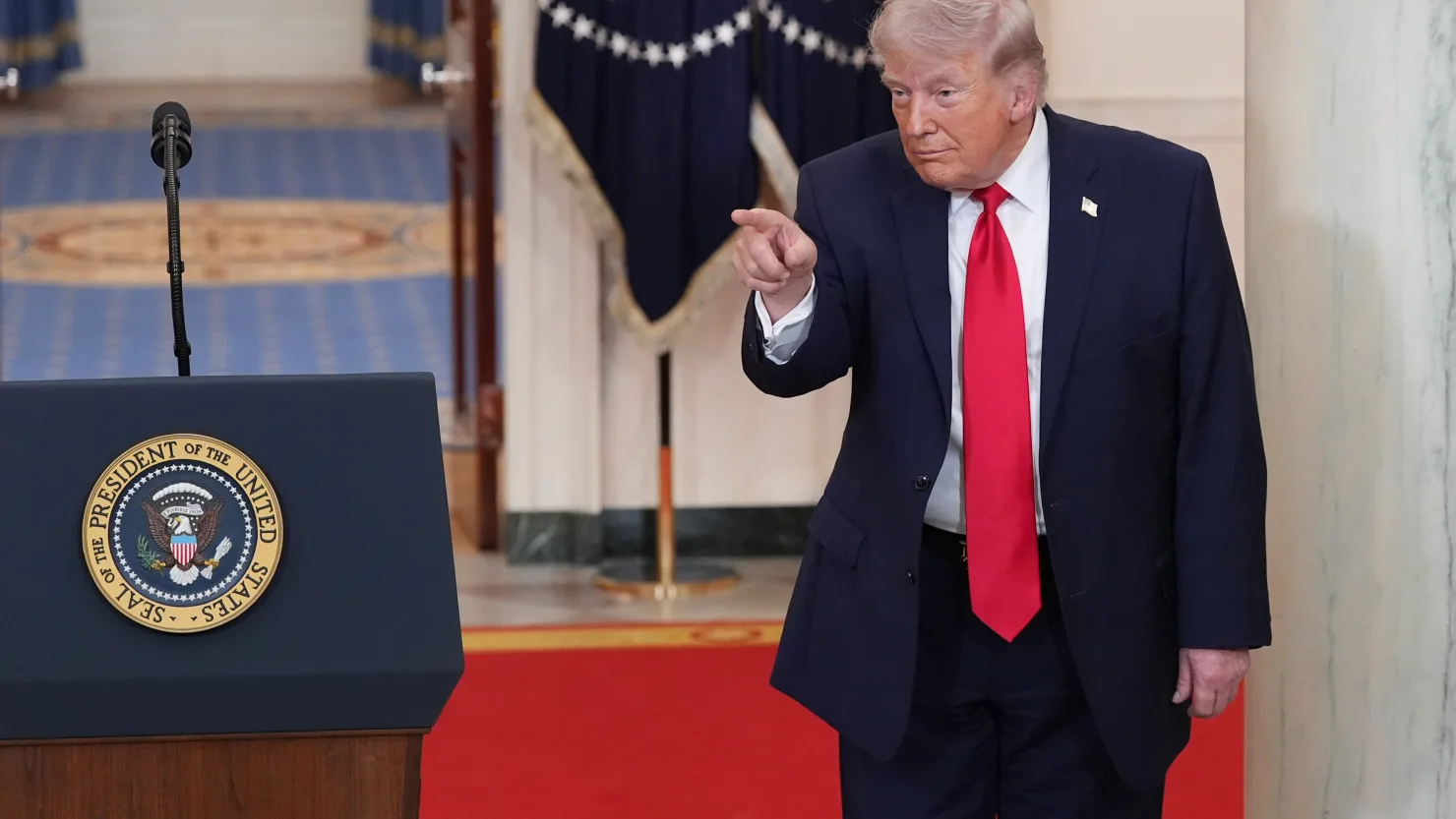
MARKET INSIDER – The global economy was jolted Wednesday night as Donald Trump warned that the war with Iran could stretch another “two to three weeks”—even as he insisted it is nearing its end. Financial markets reacted instantly, with oil prices spiking and equities retreating, underscoring investor anxiety over a conflict that threatens to destabilize energy flows and redraw geopolitical risk.
In a televised White House address, Trump doubled down on military escalation, signaling that the U.S. could unleash a new wave of strikes targeting Iran’s critical infrastructure if diplomacy fails. For global investors, the message was clear: the world’s most sensitive energy corridor is entering a period of heightened uncertainty, with ripple effects likely to hit inflation, supply chains, and capital markets worldwide.
Trump framed the ongoing campaign—dubbed “Operation Epic Fury”—as a decisive success, claiming U.S. and allied forces have crippled Iran’s military capabilities, from naval assets to missile systems. The conflict, which began on February 28 with coordinated strikes involving Israel, has already reshaped the regional power balance following the reported killing of Iran’s supreme leader, Ali Khamenei. Yet despite these claims of dominance, the president’s rhetoric pointed to further escalation rather than de-escalation.
“We’re going to hit them extremely hard over the next two to three weeks,” Trump said, outlining potential strikes on Iran’s power grid and energy infrastructure. Such moves could have immediate global consequences, particularly for oil markets, as Iran remains a critical player in OPEC supply dynamics. Any disruption—or threat thereof—raises the risk of a supply shock at a time when global demand remains fragile.
At the same time, Trump left the door open for negotiations, noting that “discussions are ongoing.” This dual-track strategy—military pressure paired with conditional diplomacy—mirrors past U.S. approaches but carries higher stakes given the scale of current operations. Investors are now pricing in both scenarios: a rapid ceasefire that could stabilize markets, or a prolonged conflict that drives energy prices higher and fuels volatility across global assets.
Trump also used the address to defend his broader Iran strategy, arguing that exiting the nuclear deal under Barack Obama was necessary to prevent Tehran from advancing its weapons program. He claimed earlier strikes had “obliterated” nuclear facilities, but accused Iran of attempting to rebuild capabilities—justifying the current offensive.
For global markets, however, the key question is not whether the war is “close to an end,” but whether escalation becomes self-reinforcing. If energy infrastructure is targeted, oil could surge sharply, reigniting inflation pressures from Europe to Asia and forcing central banks into difficult policy trade-offs.
The next two weeks may prove decisive—but not necessarily in the way policymakers intend. In a world already on edge, even a “short” war can have long-term consequences, and the biggest risk for investors may be underestimating just how quickly a regional conflict can become a global economic shock.
