
Republican defections signal growing political pressure as the Iran conflict enters its fourth month and economic costs mount.
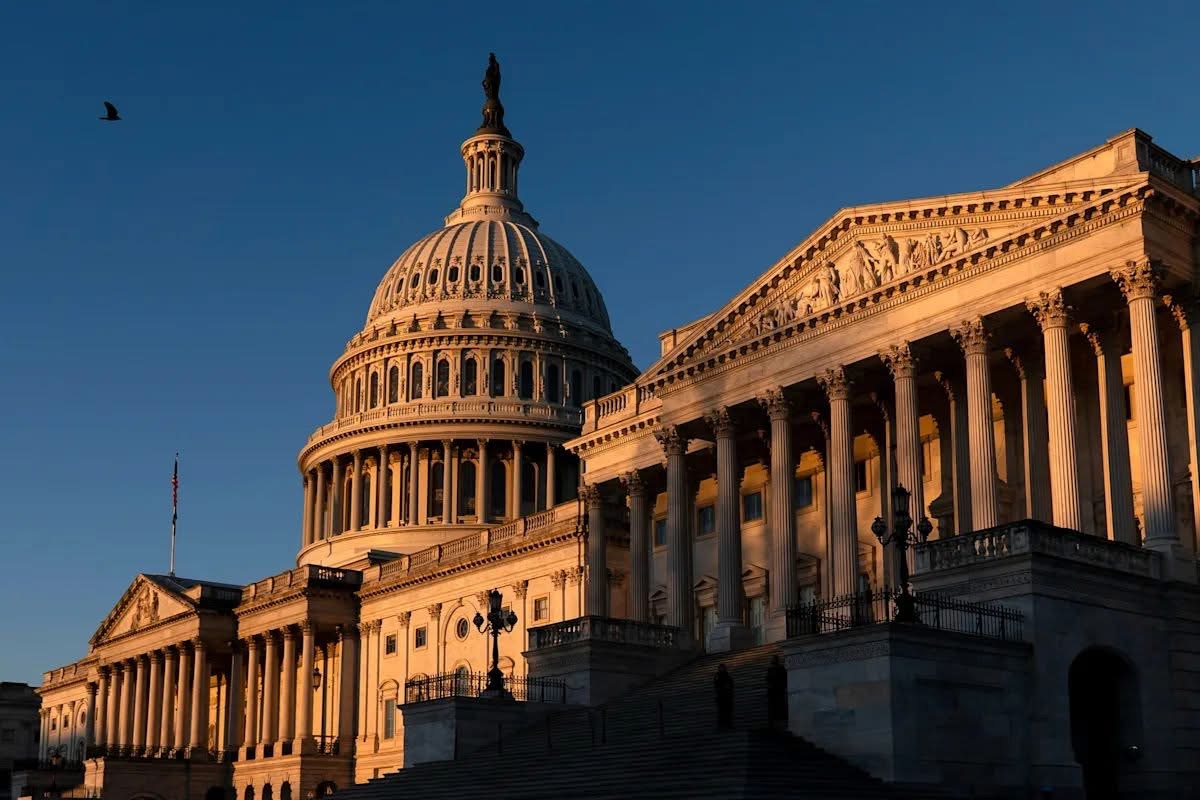
MARKET INSIDER – A growing backlash against the Iran war has reached the heart of Washington, with the U.S. House of Representatives voting to restrict President Donald Trump’s ability to continue military operations against Iran. While largely symbolic for now, the vote underscores a deeper political shift: concerns over a prolonged Middle East conflict are no longer confined to Democrats, but are increasingly surfacing within Trump’s own Republican Party.
The development carries implications far beyond Capitol Hill. Financial markets, energy traders, global investors, and U.S. allies are closely watching whether Washington’s political divisions could reshape the trajectory of a conflict that has already contributed to higher commodity prices, renewed geopolitical uncertainty, and fears of a broader regional escalation.
In a 215-208 vote on Wednesday, the Republican-controlled House approved a war powers resolution directing Trump to withdraw U.S. forces from Iran unless Congress formally declares war or authorizes military action. Four Republicans broke ranks to join Democrats, highlighting growing unease over a conflict that began with joint U.S.-Israeli airstrikes on Iran in late February and has now entered its fourth month.
Although the resolution still faces significant hurdles in the Senate and would likely trigger a constitutional battle over presidential war powers, the vote represents one of the most visible congressional challenges to Trump since his return to office. Republican leaders had previously delayed consideration of the measure amid concerns that it could pass, while similar efforts had repeatedly failed by narrow margins.
The political resistance comes as the economic consequences of the conflict become increasingly difficult to ignore. U.S. producer prices recorded their largest increase in four years in April, fueled by rising costs for energy, transportation, and consumer goods. Lawmakers opposing the war argue that American households are already feeling the impact through higher gasoline and food prices, while critics warn that an open-ended military campaign could further strain economic growth and government finances.
The vote also reflects broader cracks emerging within Trump’s political coalition. On the same day, lawmakers advanced legislation aimed at providing additional security assistance to Ukraine, another issue that has divided Republicans. Meanwhile, some members of the party have publicly challenged Trump’s appointments and policy initiatives, signaling a willingness to push back after months of near-unified support.
Democrats have framed the debate as a constitutional issue, arguing that only Congress has the authority to declare war under the U.S. Constitution. Representative Gregory Meeks, the sponsor of the resolution, described the vote as evidence that voters across the political spectrum are increasingly skeptical of another prolonged military engagement in the Middle East.
The White House maintains that military operations against Iran remain essential to preventing Tehran from developing a nuclear weapon and protecting U.S. national security interests. Supporters of the administration dismiss the resolution as political theater designed to weaken the president rather than address legitimate security threats.
Yet the significance of the vote may lie less in its immediate legal effect and more in what it reveals about the political mood in Washington. As inflation pressures rise and the November midterm elections approach, the Iran war is evolving from a foreign policy issue into a domestic political and economic battleground. For global investors, the key question is no longer whether the conflict affects markets—it already does. The bigger question is whether mounting political resistance in Washington ultimately limits America’s willingness to sustain another costly overseas war.
