
US. President escalates threats as war enters fourth week; Iran strikes near Israel’s nuclear center and Diego Garcia base
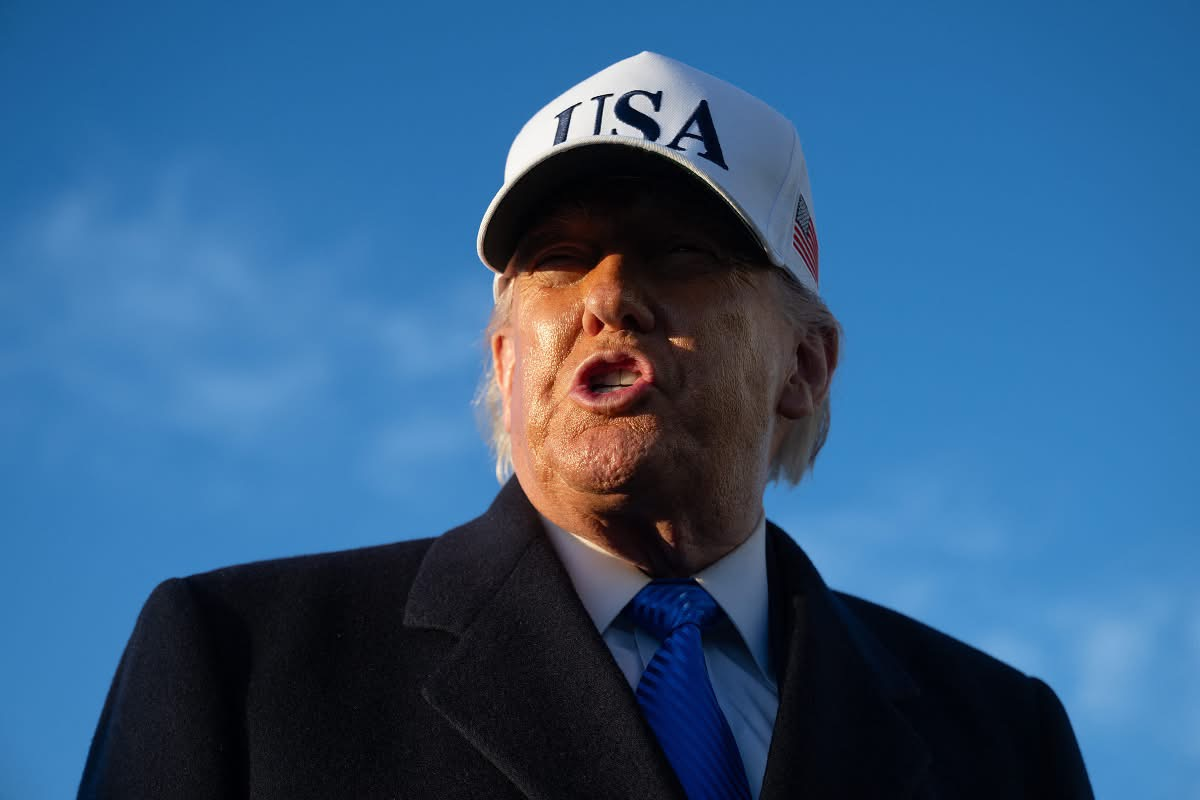
MARKET INSIDER – President Donald Trump delivered a stark ultimatum Saturday, March 22, 2026, declaring the United States will “obliterate” Iranian power plants—starting with the largest—if Tehran does not fully reopen the Strait of Hormuz within 48 hours. Posted from Florida during a weekend stay, the message intensifies pressure on Iran as oil prices remain elevated above $100 per barrel amid the war’s fourth week and persistent disruptions to the critical waterway carrying roughly 20% of global crude and LNG flows.
The threat follows a series of escalating strikes: Iran launched missiles late Saturday targeting communities near Israel’s main nuclear research center in Dimona (Negev desert), shattering buildings, injuring at least seven seriously, and damaging at least 10 apartment structures in nearby Arad. Israel’s military failed to intercept the projectiles, prompting Prime Minister Benjamin Netanyahu to call it “a very difficult evening” and army chief Gen. Eyal Zamir to warn “the war is not close to ending.” Iran also struck the joint U.K.-U.S. Diego Garcia base in the Indian Ocean—2,500 miles away—demonstrating extended reach, possibly via improvised space-launch adaptations or two-stage ICBMs, according to military experts.
Earlier Saturday, Israel denied responsibility for a strike on Iran’s Natanz nuclear enrichment site (hit previously in the war’s opening days and last June), with Iran’s judiciary reporting no leakage. The International Atomic Energy Agency is investigating, while Russia warned such attacks risk “catastrophic disaster” across the Middle East.
Trump’s administration has temporarily lifted sanctions on Iranian crude already loaded on tankers (about 140 million barrels), though Iran’s oil ministry claims it has “essentially no crude left in floating storage.” U.S. Central Command reported degrading Iran’s coastal anti-ship missile capabilities with 5,000-pound bunker busters, sinking over 120 naval vessels, and targeting drone, mine, and torpedo facilities. Three more amphibious assault ships and roughly 2,500 additional Marines are deploying to the region.
Global pressure mounts: the UAE joined 21 nations—including the U.K., Germany, France, and Japan—expressing readiness to help secure safe passage through the Strait. Yet Iran’s death toll exceeds 1,500, Israel reports 15 killed by missiles (plus four in the West Bank), and at least 13 U.S. service members have died alongside civilian casualties in Gulf states.
For global markets and energy watchers, Trump’s 48-hour deadline crystallizes the high-stakes gamble: rapid escalation targeting civilian power infrastructure could force Tehran’s hand on Hormuz but risks massive humanitarian fallout, further oil spikes, and broader regional contagion. If Iran complies—or if coalition escorts gain traction—prices could correct sharply; failure invites a deeper crisis with profound implications for inflation, supply chains, and monetary policy worldwide. With nuclear sites now in the crosshairs and ground clashes continuing in Lebanon, the next 48 hours could prove decisive in determining whether this war de-escalates or spirals further out of control.
